Category: Uncategorized

  • Winter Prep for Pre-War Building Boiler Chimneys: A Checklist for Supers and Boards

    Winter Prep for Pre-War Building Boiler Chimneys: A Checklist for Supers and Boards

    Winter Prep for Pre-War Building Boiler Chimneys: A Checklist for Supers and Boards - Crown Heights, Brooklyn

    Heating Season Readiness

    Winter Prep for Pre-War Building Boiler Chimneys: A Checklist for Supers and Boards

    Have the boiler flue inspected and cleaned before the first firing, confirm every flue in the stack is either in service or sealed, and get a written report with photos in the building file, all before the boiler contractor's fall startup.

    By the Crown Heights Chimney Sweep crewUpdated regularlyNo sales pitch

    How should a super prepare a pre-war building boiler chimney for winter?

    Schedule a chimney inspection before the boiler's fall startup, timed to the shutdown so the base of the flue can be cleaned of fallen tile and soot. Have the technician check the breeching, the cleanout, the flue interior by camera, the stack above the roof and every orphaned flue in the stack. Confirm CO detectors are working, then file the photo-documented report with the board before heating season.

    The Chimney Is the Part of the Heating Plant Nobody Services

    Every fall the boiler contractor arrives, tunes the burner, tests the controls and signs off. The flue that carries everything the boiler produces up through six stories of apartments usually gets a glance at the breeching and nothing more. In the large pre-war buildings on Eastern Parkway and the walk-ups on the side streets of Crown Heights, that flue is a masonry shaft that has been in service for close to a century, and NFPA 211 calls for it to be inspected at least once a year like any other chimney.

    This checklist is written for the super who schedules the work and the board member who has to approve it. It covers what to inspect, when to do it relative to the boiler shutdown, the orphaned-flue problem that most multi-flue stacks have, and the documentation a board should expect to see before the heat goes on.

    Timing: Do It Around the Shutdown, Not After Startup

    A boiler flue can only be cleaned and scanned properly when the boiler is off and cool. The ideal window is the end of the summer, after the boiler has been down for cooling-season maintenance and before the burner technician does the fall startup. That sequence lets our crew clean the base of the flue and the breeching, run the camera, and flag anything the burner technician needs to know before the boiler is tuned against a flue that is partly blocked.

    Buildings that run the boiler year-round for domestic hot water need a planned short outage, coordinated with residents, which is easier in September than in a cold snap. Supers in the pre-war co-ops of Prospect Heights and the apartment blocks of Flatbush run into the same scheduling, and the fall calendar fills quickly, so booking the chimney visit in late summer is the practical move.
    Detail related to winter prep for pre-war building boiler chimneys: a checklist for supe in Crown Heights, Brooklyn

    The Inspection Checklist, Base to Cap

    This is the sequence our crew follows on a pre-war boiler stack. A boiler chimney inspection that skips any of these steps is a receipt, not a report.

    1. Breeching and connectorThe horizontal run from the boiler to the chimney is checked for corrosion, open seams, sagging and soot load. Barometric dampers and spill switches are confirmed present and free to move.
    2. Cleanout and base of flueThe cleanout door is opened and the base of the flue is cleared of fallen tile, mortar and soot. A deep pile of debris here means the flue above is shedding material, which the camera then confirms.
    3. Full-length camera scanA camera runs the flue from the base to the top, recording tile condition, open joints, offsets, condensation staining and any blockage. In a converted gas boiler flue we look specifically for acid erosion of the joints.
    4. Every other flue in the stackEach additional flue is identified and traced: in service, abandoned, or open to a fireplace or an old incinerator. Abandoned flues are checked for openings into apartments and for debris.
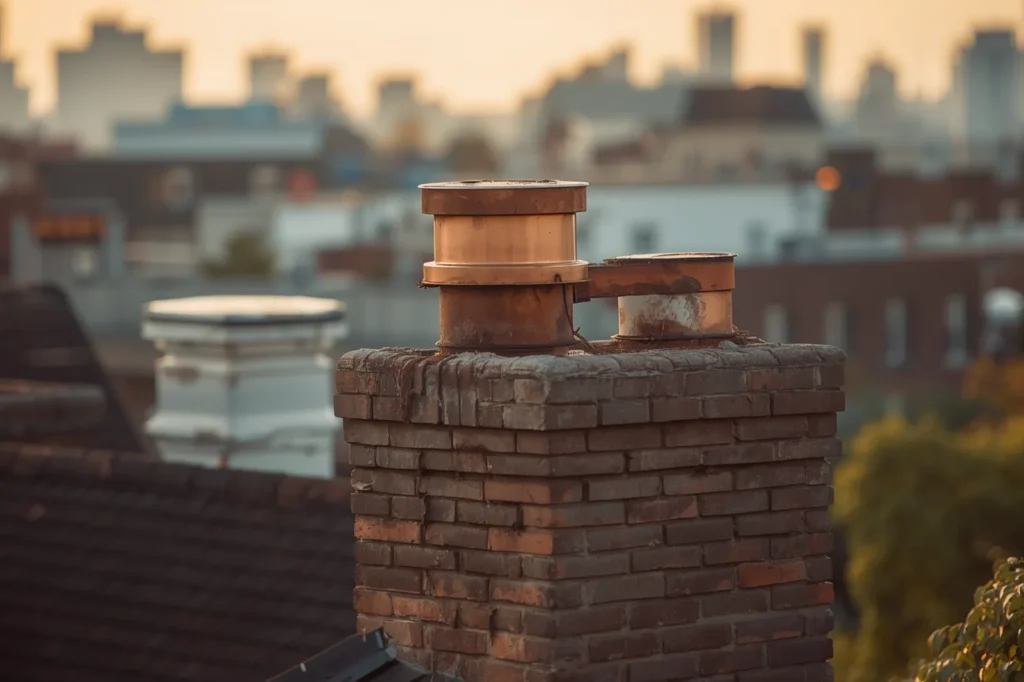
    5. Stack above the roofThe crown, cap, brick faces, mortar joints and flashing at the roof and parapet are inspected and photographed. A cracked crown on a boiler stack lets water into the flue, which accelerates tile loss.
    6. Written report with photosFindings are tiered as safety, repair this season, or monitor, with photos and a recommended scope. The report goes to the super, the managing agent and the board.

    Orphaned Flues and the Carbon Monoxide Risk

    Pre-war stacks were built with many flues: one for the boiler, often one for an incinerator, and several for the coal stoves and fireplaces that apartments once had. Most of those flues are now abandoned, and abandoned does not mean sealed. An orphaned flue with an open thimble behind a kitchen cabinet, or a cracked tile shared with the boiler flue, is a path for boiler exhaust into living space. These are the signs that something in the stack is not where it should be.

    • Soot or a sulfur smell in an apartment on an upper floor, especially near a kitchen or closet wall on the chimney line
    • A carbon monoxide alarm that has tripped anywhere in the building, even once and even if it reset
    • Boiler spill switch trips or short-cycling, which often means the flue is restricted or the draft is being pulled through an opening in another flue
    • Stains or damp patches on walls along the chimney line in cold weather with no rain, pointing to gas condensation in an unlined flue
    • Debris accumulating in the cleanout faster than usual, a sign the tile above is breaking down
    • An old water heater or small appliance still venting into a flue that was sized for a much larger boiler

    When the Flue Needs a Liner, Not Just a Cleaning

    Many Crown Heights buildings converted from oil to gas over the past decade, and some did it with the original masonry flue. Gas exhaust is cool and wet, and in a flue sized for a large oil burner it condenses into acidic water that washes out the mortar joints and softens the clay flue tile. The camera finds the evidence: white staining, open joints, tile fragments at the base. Once the joints are gone, the flue is open to the brick and no longer a proper vent.

    The fix is a stainless steel liner sized to the boiler's input and the stack height from the NFPA 54 venting tables and the manufacturer's instructions, insulated where the stack runs up an exterior wall, with a tee and cleanout at the base and a sealed top plate. The NYC Fuel Gas Code limits lining systems for gas appliances to clay tile in good condition, listed liners, or other approved corrosion-resistant materials, and bars venting a second appliance in the space around a liner. A board should expect the liner recommendation to come with the camera footage that justifies it.

    For a flue that is sound but dirty, the work is cleaning and documentation only, and we say so. Boards in East Flatbush and Bedford-Stuyvesant buildings sometimes receive liner quotes with no inspection behind them, and the first thing we recommend is a camera scan to confirm whether the flue actually needs it.

    What the Board Should Have in the File Before Heat Goes On

    A board carries the liability for the heating plant, and the chimney is part of it. The file for each heating season should contain the chimney inspection report with the camera stills, photos of the stack from the roof, the cleanout and breeching condition, a list of every flue in the stack and its status, and the tiered recommendations with the scope and timing of any repair. If a liner was installed, the listed-system documentation and the special inspection paperwork belong in the same file.

    That report is also what a buyer's attorney, an insurer or an engineer doing a facade or energy review will ask for. A one-line invoice reading boiler chimney cleaned satisfies none of them. On the Parkway buildings with parapet-top stacks and flat roofs, the roof-level photos matter as much as the flue scan, because the crown and flashing are where water enters and water is what ends the life of a flue.

    Our crew works with supers and managing agents across Crown Heights on exactly this schedule, and we are glad to coordinate with your boiler contractor so the shutdown, the chimney work and the startup happen in the right order.

    Frequently Asked Questions

    Our boiler contractor inspects the boiler every fall. Does the chimney need a separate inspection?

    Yes. Boiler technicians tune the burner and check the breeching, but they do not run a camera up the flue, inspect the stack from the roof or trace the other flues in the chimney. NFPA 211 calls for an annual inspection of the chimney itself, and in a pre-war masonry stack that is a separate skill and a separate visit, best timed just before the boiler startup.

    What is an orphaned flue and why does it matter?

    An orphaned flue is one that no longer serves an appliance but was never properly sealed, such as an old incinerator or coal stove flue in a pre-war stack. If it has an open thimble into an apartment or shares a cracked wall with the boiler flue, it can carry boiler exhaust and carbon monoxide into living space. Every flue in the stack should be identified and either in service or sealed.

    How do we schedule the chimney work around domestic hot water?

    The flue needs the boiler off and cool for cleaning and camera work. Most buildings plan a short outage with notice to residents, ideally in late summer alongside other boiler maintenance. We coordinate the time with your boiler contractor so the flue is cleaned and scanned, the findings are shared, and the burner is tuned afterward against a clean flue.

    The building converted to gas years ago and has had no problems. Do we still need a liner?

    Only the camera can answer that. Some flues hold up for a while and then fail quickly as the mortar joints wash out, and the first sign is often debris in the cleanout or condensation stains in apartments. If the scan shows sound tile and tight joints, the report says so and the work is cleaning only. If it shows erosion, a sized stainless liner is the fix, and we show the footage that justifies it.

    What documentation should the board expect from a chimney inspection?

    A written report with camera stills of the flue interior, photos of the stack from the roof, the condition of the breeching and cleanout, a list of every flue in the stack and its status, and recommendations tiered by urgency with a scope for any repair. If a liner is installed, the listed-system documentation and special inspection paperwork should be included. A one-line invoice is not a report.

    Ask the crew a question

    No obligation. We reply during business hours, emergencies by phone 24/7.

    Get the Boiler Stack Scanned Before Fall Startup

    Our Crown Heights crew coordinates with your boiler contractor, inspects base to cap, and delivers a photo-documented report your board can file.

  • Chimney Crown vs Chimney Cap: The Two Parts That Fail First on Crown Heights Roofs

    Chimney Crown vs Chimney Cap: The Two Parts That Fail First on Crown Heights Roofs

    Chimney Crown vs Chimney Cap: The Two Parts That Fail First on Crown Heights Roofs - Crown Heights, Brooklyn

    Top of the Stack

    Chimney Crown vs Chimney Cap: The Two Parts That Fail First on Crown Heights Roofs

    The crown is the sloped masonry top that sheds water off the brick and the cap is the metal cover that keeps rain and animals out of the flue, and on a rowhouse stack both are usually the first things to fail and the cheapest to fix early.

    By the Crown Heights Chimney Sweep crewUpdated regularlyNo sales pitch

    What is the difference between a chimney crown and a chimney cap?

    A chimney crown is the sloped concrete or mortar slab covering the top of the brick stack, built to shed rain away from the masonry and seal the gap around the flue tile. A chimney cap is a screened metal cover over the flue opening that keeps rain, birds and debris out. The crown protects the structure, the cap protects the flue, and a sound chimney needs both.

    Two Parts, Two Jobs, Confused on Every Estimate

    Owners call us about a cap when the crown is the problem, and about the crown when a cap is all they need. The two sit within inches of each other at the top of the stack, and both are up on a roof where nobody looks, so the confusion is understandable. It is also expensive, because a cap does nothing for a cracked crown and a recast crown does nothing for rain falling straight down an open flue.

    This guide defines each part, explains how freeze-thaw winters on Brooklyn flat roofs take them apart, and lays out when a crown can be repaired versus recast and how a cap is sized for the multi-flue stacks common on Crown Heights rowhouses.

    The Crown: A Sloped Roof for the Brick

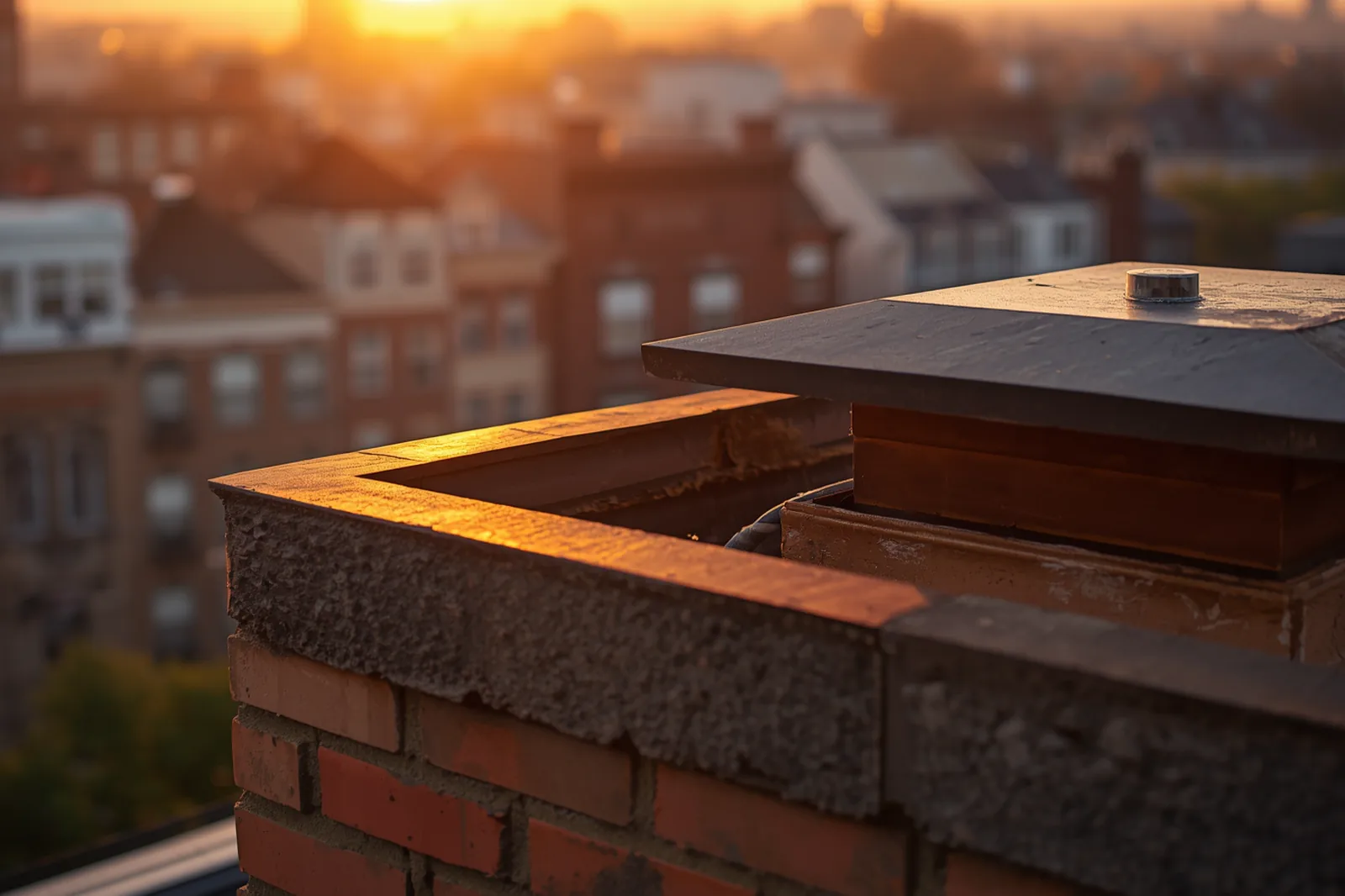
    The crown is the top surface of the masonry chimney. Built correctly, it is a concrete slab that covers the full width of the stack, slopes away from the flue on every side, overhangs the brick with a drip edge so water falls clear of the face, and has a flexible joint where it meets the clay flue tile so the tile can expand without cracking the slab. Its only job is to keep water out of the brick and the mortar joints below it.

    Most rowhouse stacks in Crown Heights were never given that. They got a mortar wash, a thin layer of the same mortar used to lay the brick, troweled flat or nearly flat across the top. Mortar is not concrete. It is porous, it has no reinforcement, and it was poured hard against the flue tile with no room for movement. After a century of winters, those washes are cracked through and often patched with roofing cement that separates within a season.

    Water that gets through the crown runs down between the tile and the brick, inside the stack. That is the water behind the white efflorescence and spalling brick faces on the top courses, the stains that appear high on an upstairs wall, and the open joints that eventually need tuckpointing or a rebuild of the top of the stack.

    Detail related to chimney crown vs chimney cap: the two parts that fail first on crown h in Crown Heights, Brooklyn

    The Cap: A Lid for the Flue

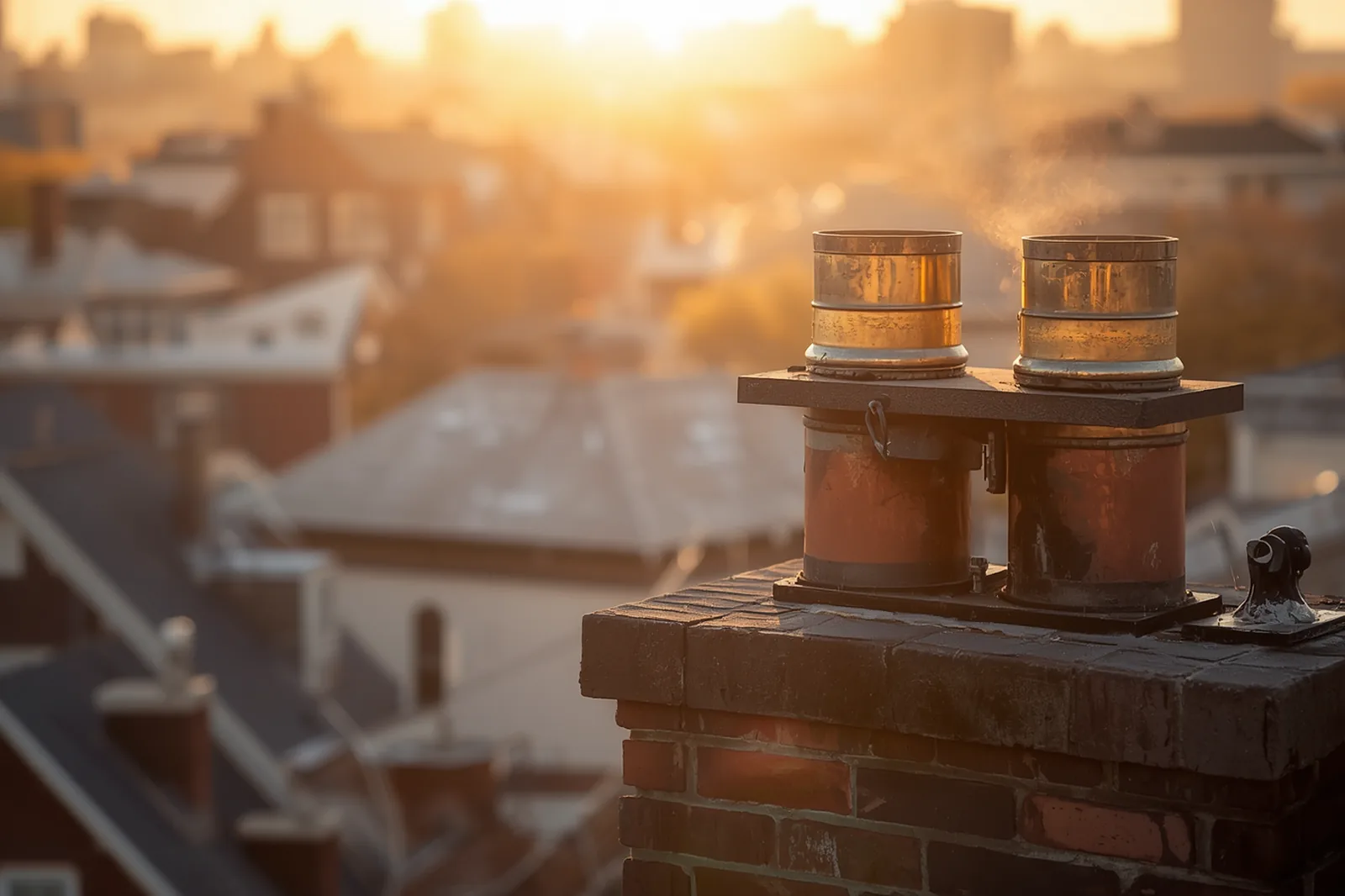
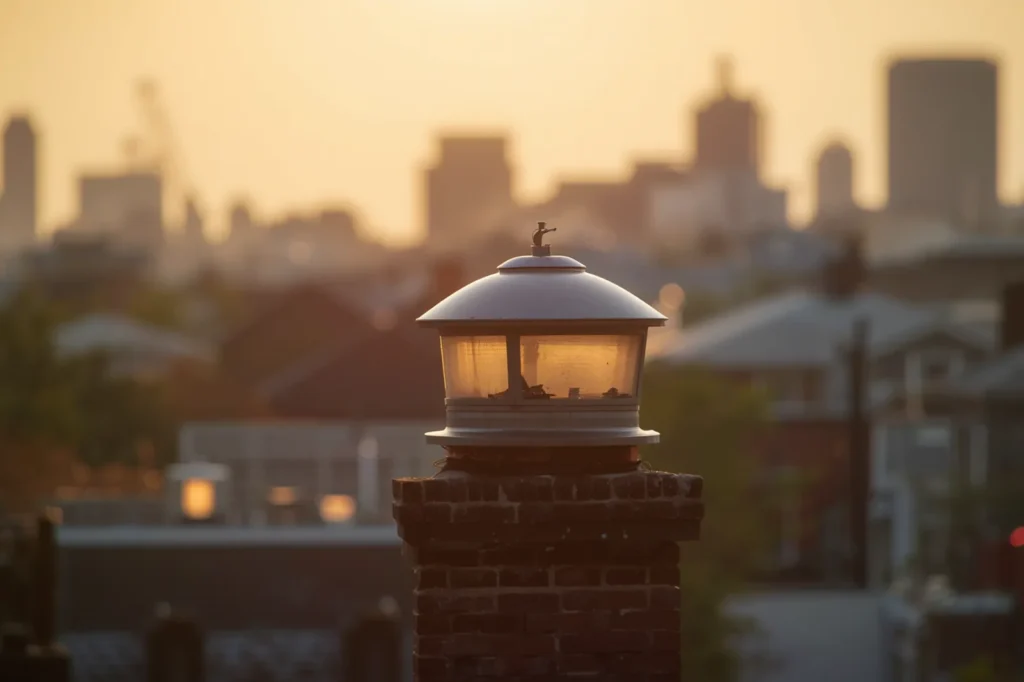
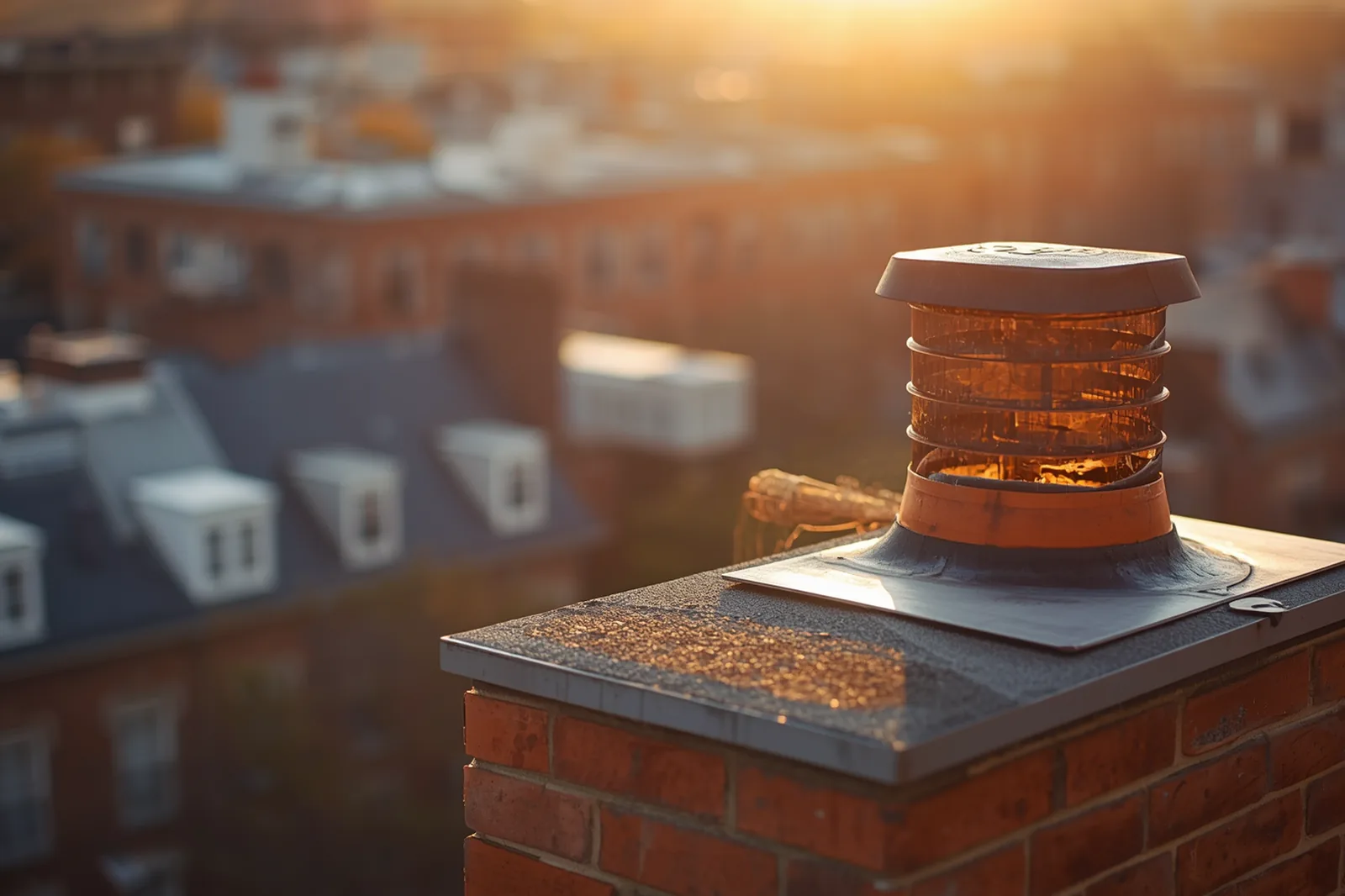
    The cap sits on top of the flue tile, or on the crown over a group of flues, and covers the opening. A proper cap has a solid hood to stop rain and snow from dropping straight down the flue, a mesh screen on the sides to keep out birds, squirrels, raccoons and wind-blown debris while letting exhaust out, and a mounting that clamps to the tile or bolts to the crown so a nor'easter cannot lift it.

    Without a cap, every rain lands on the smoke shelf, the damper and the firebox. The damper rusts and will not seat, ash turns to a wet paste that smells through the house in humid weather, and in a gas or oil flue the connector corrodes from the base up. Nesting birds are the other issue, and a nest in a flue can block it completely over a summer and send exhaust back into the house at the first fire of the fall.

    A cap does not protect the brick. If the crown is cracked and the cap is new, the stack still soaks. That is the single most common misunderstanding we clear up on cap installation calls, and it is why we photograph the crown before fitting one.

    How Freeze-Thaw Takes Them Apart

    Water expands when it freezes. On a Brooklyn roof in January, a crown or a mortar joint can go through that cycle many times in a single week, and each one pushes a crack a little wider. The signs below are what we look for from the roof, and each one points to the crown, the cap or both.

    • A hairline crack across the crown that has grown into an open gap, often running from the flue tile corner to the edge
    • The crown lifting or separating from the top course of brick along one side, with daylight visible at the joint
    • Pieces of crown or mortar wash lying on the roof membrane below the stack
    • Spalling or flaking brick faces on the top three or four courses only, with sound brick below
    • White efflorescence streaking down from the crown
    • A cap that is missing, rusted through, or lying on the roof after a storm
    • A rusted damper, wet ash smell or nesting material in the firebox, which points to no cap or a damaged screen

    Repair or Recast: How We Decide on a Crown

    Not every cracked crown needs to come off. The decision rests on what the crown is made of, how far the cracks go and whether the brick under it is still sound. We follow the same sequence on every stack.

    1. Sound the crown and check the overhangWe tap the surface for hollow spots, look for an overhang and drip edge, and confirm whether it is a true concrete crown or a mortar wash. A wash with no overhang is nearly always a recast candidate.
    2. Map the cracksHairline surface cracks in a solid concrete crown with intact edges can be sealed with a flexible crown coating. Cracks that pass through the full thickness, lift at the edge or run around the flue tile cannot.
    3. Check the top coursesIf the brick under the crown is spalled or the joints are open, the top courses are rebuilt first with a reclaimed brick match and Type N mortar so the new crown has a sound base.
    4. Form and pour a cast-in-place crownThe old wash is removed, forms are set to give an overhang with a drip edge on all sides, a bond break is wrapped around the flue tile, and a reinforced concrete crown is poured with a slope away from the flue.
    5. Seal and capThe tile joint is sealed with a flexible sealant, the crown is cured and coated, and a correctly sized stainless cap is fitted so the stack is protected top to bottom.

    Cap Sizing for Rowhouse Multi-Flue Stacks

    A detached frame house south of Empire Boulevard usually has one or two flues in a stack and takes a single-flue cap clamped to each tile. The limestone and brownstone rows between Eastern Parkway and Lincoln Place are different. A party-wall stack can carry three, four or more flues serving fireplaces on two floors and the boiler below, often with tiles of different heights poking through a mortar wash. A single clamp-on cap per tile works only when every tile is sound and projects far enough to grip.

    Where the tiles are flush, broken or crowded, the right answer is a multi-flue cap: a single stainless hood on legs bolted to the crown, sized to clear every flue by enough margin that the exhaust from one does not get pulled down into another. Getting that spacing right matters most when a wood fireplace and a gas boiler share a stack, because cross-draft between those two flues is how smoke ends up in a bedroom.

    The same stacks line the blocks in Prospect Heights and Bedford-Stuyvesant, and the sizing rules carry over. Whether the crown needs a crown repair or full recast first is the question we answer from the roof before any cap is ordered, because bolting a multi-flue cap to a crumbling wash just means doing the job twice. Owners in Flatbush frame houses with single stacks usually get away with a simpler cap, but the crown check still comes first.

    Frequently Asked Questions

    Can I just seal the cracks in my crown instead of recasting it?

    If it is a true concrete crown with an overhang, the edges are intact and the cracks are shallow surface cracks, a flexible crown coating can seal it and add years. If it is a thin mortar wash, or the cracks go through the full thickness or the crown has lifted from the brick, sealing is a short-term patch over a failing part. We tell you which one you have from the roof with photos.

    Does every chimney need a cap?

    Yes. An open flue takes rain, snow, birds and debris directly, and the damage shows up as a rusted damper, wet ash smell, blocked flues and corroded boiler connectors. A cap is one of the least expensive parts on a chimney and one of the most protective. The only caveat is that it must be sized and mounted correctly, and it must not be mistaken for a crown repair.

    What material should a chimney cap be?

    Stainless steel, for the Brooklyn climate. Galvanized caps rust through in a few seasons, especially with salt in the air from the Atlantic side of the borough, and a rusted cap stains the crown and eventually fails. Stainless holds up to weather and to the acidic condensate in gas flues. Copper is also durable and some owners choose it for the look on a restored stack.

    How long does a recast crown last?

    A properly formed, reinforced concrete crown with an overhang, a drip edge and a flexible joint at the flue tile should outlast the mortar wash it replaces by a wide margin, because it is built to shed water and move with the tile instead of cracking against it. A coating applied after curing adds further protection. We inspect it on the annual visit, and small maintenance keeps it sound.

    Why does my crown keep cracking after I patch it?

    Usually because it was poured tight against the flue tile with no bond break. Clay tile expands when the flue heats and the crown does not, so the tile pushes the crown apart from the inside every time there is a fire or the boiler runs hard. A patch fills the crack but the movement continues. A recast with a wrapped tile joint and a flexible sealant solves the cause.

    Ask the crew a question

    No obligation. We reply during business hours, emergencies by phone 24/7.

    Not Sure Whether You Need a Crown or a Cap?

    Our crew photographs the top of your stack and tells you plainly which part has failed and what fixing it involves.

  • Creosote Stages 1, 2 and 3: What Each One Means for a Wood-Burning Fireplace

    Creosote Stages 1, 2 and 3: What Each One Means for a Wood-Burning Fireplace

    Creosote Stages 1, 2 and 3: What Each One Means for a Wood-Burning Fireplace - Crown Heights, Brooklyn

    Wood Fireplace Safety

    Creosote Stages 1, 2 and 3: What Each One Means for a Wood-Burning Fireplace

    Creosote starts as loose soot a brush removes, hardens into crunchy tar that needs a rotary head, and ends as a glossy glaze that only chemical treatment and chains will shift, and the stage you have is set by how you burn.

    By the Crown Heights Chimney Sweep crewUpdated regularlyNo sales pitch

    What are the three stages of creosote?

    First-degree creosote is a loose, flaky soot that a standard chimney brush removes. Second-degree is harder, with shiny tar-like flakes that need a rotary cleaning head. Third-degree is a hardened glaze that runs down the flue like tar, resists brushing entirely, and is removed with chemical treatment and chain rotary tools. CSIA guidance is to sweep at one eighth of an inch of soot, and sooner if any glaze appears.

    Creosote Is Unburned Smoke That Cooled Too Soon

    Every wood fire sends gases, water vapor and tiny particles up the flue. If the flue is hot enough, most of that exhaust leaves the top as smoke. If the flue is cold, the vapor condenses on the tile the way breath fogs a window, and the particles stick to it. That residue is creosote. It is flammable, it builds in layers, and it gets harder to remove the longer it sits.

    Our crew sees all three stages in Crown Heights fireplaces, often in the same flue at different heights. The tall, cold flues in the limestone rowhouses off Eastern Parkway are ideal for making creosote, because the clay tile runs up an unheated exterior or party wall and never warms through. This guide explains each stage, what removes it, and the burning habits that keep a flue at stage one.

    Stage One: Flaky Soot a Brush Removes

    First-degree creosote is a dull, powdery or flaky coating, gray to black, that comes off the tile with a standard brush and lands on the smoke shelf as dust. It forms when a fire burns with plenty of air and the flue stays reasonably warm, which is the normal condition for a well-run fireplace burning dry hardwood. It is the stage every wood fireplace produces, and it is the reason a yearly chimney sweep exists.

    Stage one is still fuel, and enough of it can burn. The Chimney Safety Institute of America advises sweeping a masonry fireplace once sooty buildup reaches one eighth of an inch, and NFPA 211 calls for an annual inspection to catch it. In a rowhouse fireplace burned through a Brooklyn winter, that depth arrives in a single season.

    Detail related to creosote stages 1, 2 and 3: what each one means for a wood-burning fir in Crown Heights, Brooklyn

    Stage Two: Crunchy Tar Flakes That Need a Rotary Head

    Second-degree creosote has started to harden. It appears as dark, shiny flakes with a hard surface, sometimes described as crunchy, and it clings to the tile rather than dusting off. A standard brush skates over it. The usual removal tool is a rotary loop or head on a flexible cable, driven by a powerful drill, which scours the deposit off the tile without damaging it when used by someone who knows the flue dimensions.

    Stage two forms when the fire is starved for air or the wood is damp. The common causes we find are a damper closed partway to make a fire last, glass doors kept shut on an open fireplace, and wood that was split in the fall and burned the same winter. Each one cools the exhaust and raises its moisture, which is exactly what creosote wants.

    Stage Three: Glaze, the Stage That Starts Chimney Fires

    Third-degree creosote is a thick, glossy coating that looks like tar poured down the inside of the flue and left to harden. It is concentrated fuel. It forms when cool, wet smoke runs up a cold flue over and over, typically from smoldering overnight fires or from a wood insert or stove vented into an oversized flue without a liner. Once it is there, it keeps building, because fresh smoke condenses on glaze even faster than on clean tile.

    Glaze does not come off with a brush or a standard rotary loop. Our crew removes it with chemical creosote treatment applied to soften the deposit, followed by rotary heads fitted with chains that break the softened glaze off the tile in pieces. CSIA treats chemical products as a supplement to mechanical sweeping, not a replacement, and we agree. It takes multiple passes, it is slow, and in a badly glazed flue a cracked tile is sometimes found underneath, because a prior chimney fire is often what cracked it.

    CSIA guidance is that any glaze should be swept and the cause found before the fireplace is used again. If you can see a shiny black coating when you shine a light up past the damper, stop burning and book dedicated creosote removal rather than a routine sweep.

    How to Tell Which Stage Is in Your Flue

    You cannot stage creosote from the sofa, but a few signs point strongly to one stage or another, and the one at the bottom of this list is the reason to stop lighting fires until a camera has been up the flue.

    • Fine black dust on the smoke shelf or drifting onto the grate: stage one, routine sweep
    • Hard, shiny chips that crunch underfoot on the hearth after a windy day: stage two, rotary cleaning
    • A sharp tar smell from the firebox in humid summer weather: stage two or three, inspect before fall
    • A fire that draws poorly even with the damper fully open and dry wood: the flue is narrowing, likely stage two or worse
    • A glossy black coating visible past the damper with a flashlight: stage three, no more fires until it is removed
    • A roaring or rumbling sound, dense smoke from the top of the stack, or puffing from the firebox during a fire: a chimney fire in progress, get everyone out and call the fire department

    Burning Habits That Keep a Flue at Stage One

    Dry wood is the first and largest factor. Hardwood split and stacked for a year or more burns hot and clean. Wood delivered damp or burned the season it was cut sends wet, cool smoke up the flue. A moisture meter is inexpensive, and a log that hisses or bubbles at the ends is too wet to burn.

    Run the fire with the damper wide open and let it burn hot. A small, bright fire makes far less creosote than a large, smothered one. Never damp a fire down to smolder overnight. Warm the flue before lighting by opening the damper several minutes early, and avoid burning paper, cardboard, treated lumber or holiday wrapping, which deposit residues a brush struggles with.

    If you have a wood insert or stove in an old fireplace, make sure it vents through a stainless liner sized to the appliance and run to the top of the stack. An insert dumping its exhaust into an oversized masonry flue is the fastest route to stage three glaze our crew knows. Owners in Prospect Heights and Bedford-Stuyvesant who inherited an insert with a short slip liner run into this every winter, and the frame houses of Flatbush with wood stoves are no different. If you are not sure what is up your flue, send our crew a photo and we will tell you where to start.

    Frequently Asked Questions

    Do creosote sweeping logs remove glaze?

    Not on their own. Sweeping logs and other chemical products can soften deposits and make them easier to remove mechanically, which is how CSIA describes their role, as a supplement to sweeping rather than a replacement. A log will not clear stage two or three creosote from a flue, and relying on one in place of an inspection leaves the fire risk exactly where it was.

    How fast does creosote build up in a rowhouse fireplace?

    It depends on the wood, the way the fire is run and how cold the flue is. A tall clay-tile flue on an exterior wall in Crown Heights makes creosote faster than a short, insulated one, and damp wood or a smoldering fire can push a flue from clean to stage two in a single winter. That is why the yearly inspection matters even when the fireplace is used lightly.

    Can stage three creosote damage the flue tile?

    The glaze itself does not crack tile, but the chimney fire it feeds does. A glaze fire burns extremely hot and can split clay tile, open mortar joints and damage the brick behind them. After glaze removal we always run a camera to check the tile, and a flue that has had a chimney fire needs a Level 2 inspection before it is used again.

    Is creosote a problem in a gas fireplace or gas boiler flue?

    No. Creosote is a product of burning wood and other solid fuels. Gas flues have their own issue, which is acidic condensation in oversized masonry flues that erodes mortar and tile, but they do not form the flammable deposits this guide describes. Both still need the annual inspection NFPA 211 calls for.

    What should I do if I think I had a chimney fire?

    Stop using the fireplace and have the flue inspected with a camera before the next fire. Signs of a fire that already happened include puffy or honeycombed creosote, warped damper parts, cracked or discolored flue tile, and creosote flakes found on the roof. A chimney fire is one of the named triggers for a Level 2 inspection under NFPA 211, and the camera is the only way to see what it did to the tile.

    Related services and areas

    Ask the crew a question

    No obligation. We reply during business hours, emergencies by phone 24/7.

    Not Sure Which Stage Is in Your Flue?

    Our Crown Heights crew measures deposits on camera, tells you the stage, and removes it with the right tool. Same-week appointments before the heating season fills up.

  • Converting Oil to Gas in a Brooklyn Rowhouse? Your Flue Needs a Liner

    Converting Oil to Gas in a Brooklyn Rowhouse? Your Flue Needs a Liner

    Converting Oil to Gas in a Brooklyn Rowhouse? Your Flue Needs a Liner - Crown Heights, Brooklyn

    Gas Conversions and Masonry Flues

    Converting Oil to Gas in a Brooklyn Rowhouse? Your Flue Needs a Liner

    A masonry flue built for oil is far too large and too cold for a gas boiler, so the exhaust condenses into acid inside the brick, which is why the NYC Fuel Gas Code requires a properly sized listed liner before gas service is turned on.

    By the Crown Heights Chimney Sweep crewUpdated regularlyNo sales pitch

    Do I need a chimney liner when converting from oil to gas?

    Yes. Gas exhaust is cooler and wetter than oil exhaust, and in a masonry flue sized for an oil burner it condenses into acidic water that eats mortar and clay tile from the inside. New York City requires a listed liner sized to the new appliance under the NYC Fuel Gas Code, and the Department of Buildings inspects the conversion before gas is turned on.

    The Part of the Conversion Quote Nobody Explains

    Oil-to-gas conversions are moving fast in Crown Heights, pushed along by the city's phase-out of No. 4 heating oil under Local Law 32 of 2023, which bars its use in building boilers after July 1, 2027. The gas contractor prices the burner, the piping and the Con Edison service. Then, somewhere in the paperwork, a line appears for a chimney liner, and the owner asks us why a chimney that vented oil for eighty years suddenly needs work.

    The answer is physics, not upselling. This guide explains what gas exhaust does inside an oil-sized masonry flue, what the NYC Fuel Gas Code requires, how a liner is sized, and what tends to get left out of the conversion conversation until the flue is already damaged.

    Why an Oil-Sized Flue Condenses With Gas

    The rowhouse flues between Eastern Parkway and Empire Boulevard were built for coal and later adapted to oil. Both burn hot, and the flue was sized to carry a large volume of hot exhaust, often through a clay tile liner with a cross-section far bigger than anything a modern boiler needs. That size was never a problem with oil, because oil exhaust leaves the burner hot enough to stay above its dew point all the way to the top.

    Gas exhaust is different in two ways. It is cooler, especially from an efficient modern boiler, and it carries a great deal more water vapor, because burning natural gas produces water as a direct product. Push that cool, wet exhaust into a flue several times too large and it slows down, loses heat to the cold brick, and drops below its dew point before it reaches the roof. Water forms on the tile, and that water is mildly acidic.

    The acid is the damage. Condensate from gas combustion attacks mortar joints and clay flue tile, washing out the joints and softening the tile until pieces flake off and drop to the base of the flue. White efflorescence appears on the stack and the chimney breast, damp patches bloom in cold weather with no rain, and eventually the flue is open to the brick, which means exhaust can reach the house. A camera inspection of an oil flue that has vented gas for a few winters without a liner usually shows exactly this.

    Detail related to converting oil to gas in a brooklyn rowhouse? your flue needs a liner in Crown Heights, Brooklyn

    What New York City Requires

    The NYC Fuel Gas Code governs how gas appliances vent, and its chimney and vent chapter limits flue lining systems to clay tile installed to the Building Code, listed lining systems that comply with UL 1777, or other approved materials proven to resist flue gases and condensate without cracking, softening or corroding. A bare masonry flue that has lost its tile joints does not meet that bar. In practice, an oil-to-gas conversion in a pre-war rowhouse or apartment building requires a listed liner, sized to the new appliance, before the Department of Buildings signs off and the utility turns on gas.

    The conversion itself is permitted work. The gas piping, meter, boiler and burner are inspected by DOB divisions before gas use can begin, and chimney work for conversions is subject to special inspection by a registered agency confirming the chimney has proper clearance from combustibles. The code also prohibits using the space left around a liner inside a masonry flue to vent a second appliance, which matters in buildings where a water heater once shared the flue with the boiler.

    None of this is optional, and none of it should surprise a conversion contractor. If your gas quote does not mention the flue, ask directly who is handling the liner and the chimney special inspection. Owners in Flatbush and Prospect Heights going through the same process run into the same gap.

    Sizing and Material: Why Smaller Is Safer

    A liner for a gas appliance is sized from the appliance input in BTU per hour and the height of the flue, using the venting tables published in NFPA 54, the National Fuel Gas Code, together with the appliance manufacturer's instructions. The tables give the required cross-section for the connector and the vent. The result is almost always a liner far smaller than the existing clay tile, because the goal is to keep the exhaust moving fast and hot enough to clear the top before it condenses.

    Owners sometimes ask for the biggest liner that fits, assuming more is better. It is the opposite. An oversized liner recreates the original problem in stainless steel, with slow, cooling gases condensing partway up. Correct sizing is the single most important decision in the job, and it depends on the exact boiler being installed, which is why we coordinate with the gas contractor before ordering material.

    For material, our crew installs stainless steel flue liner in a grade suited to the fuel, with an insulated jacket where the flue runs up a cold exterior or party wall. Insulation keeps the liner warm and the condensate out, and it protects the old masonry from any heat the liner carries. The liner terminates in a stainless cap sized to the liner, not to the old tile, and a new top plate seals the annular space so weather cannot enter the stack around it.

    How a Conversion Liner Install Runs in a Rowhouse

    A chimney liner installation for a conversion is coordinated around the boiler swap and the DOB schedule, so the building is never without heat longer than necessary.

    1. Camera inspection and measurementsWe scan the existing flue to document tile condition, offsets and obstructions, measure the height and the internal dimensions, and confirm the flue can accept a liner of the required size with insulation.
    2. Sizing with the gas contractorUsing the specified boiler's input and the measured height, the liner diameter is set from the NFPA 54 tables and the manufacturer's instructions, and the connector route from the boiler is agreed.
    3. Flue preparationLoose tile fragments, old oil soot and fallen mortar are cleared from the flue and the base. Offsets that would snag the liner are opened or eased.
    4. Liner installationThe insulated stainless liner is lowered from the roof, connected at the base to the boiler connector with a tee and cleanout, and secured at the top with a plate, collar and cap.
    5. Inspection and documentationThe listed system is documented for the special inspection, photos of the top and base connections are provided, and the paperwork is handed to the conversion contractor for the DOB file.

    The Orphaned Water Heater and Other Things the Gas Quote Leaves Out

    In many Crown Heights rowhouses the old oil boiler shared its flue with a gas water heater. When the boiler is replaced, the water heater is left alone venting into a flue sized for both, which is even worse than the original problem. Its small volume of exhaust stalls in the huge flue and condenses heavily. The water heater needs its own correctly sized liner or vent, and the code bars running it in the space around the boiler liner.

    The second omission is the condition of the stack above the roof. A conversion is the right moment to fix a cracked crown or open joints, because the liner install already has a crew on the roof and the stack open at the top. Leaving a cracked crown on a newly lined flue invites water down the annular space around the liner.

    The third is the timeline. Buildings must keep running on oil until the DOB approval is complete, and utility connections in Brooklyn can take months after the work is done. Scheduling the liner early, rather than as the last item before the switch, keeps the chimney from being the holdup. Owners in Bedford-Stuyvesant planning a conversion for next heating season are usually best served starting the flue work this one. Our crew is happy to review your conversion scope before the gas contractor finalizes it.

    Frequently Asked Questions

    My chimney vented oil fine for decades. Why does gas suddenly need a liner?

    Oil exhaust is hot and relatively dry, so it stays above its dew point in a large flue. Gas exhaust is cooler and loaded with water vapor, and in that same large flue it slows, cools and condenses into acidic water on the tile. The flue did not change. The exhaust did, and the liner is what makes the flue right for the new exhaust.

    Can the gas contractor just reuse the existing clay tile flue?

    Only if the tile is intact, correctly sized for the new appliance and acceptable under the NYC Fuel Gas Code, which is rare in a pre-war flue originally sized for coal or oil. In nearly every conversion our crew scans, the tile is oversized and the joints are eroded, so a listed stainless liner sized to the boiler is required. The camera inspection answers this before any money is spent.

    What size liner does a gas boiler need?

    The size comes from the boiler's BTU input, the flue height and the venting tables in NFPA 54, along with the manufacturer's installation instructions. It is nearly always much smaller than the old flue, because the exhaust needs to stay fast and warm. We size the liner with the gas contractor from the exact boiler model, not from a guess.

    Does the liner need to be insulated?

    In a flue running up a cold exterior or party wall, which describes most rowhouse stacks, we recommend it. Insulation keeps the exhaust above its dew point for the full run, protects the old masonry, and reduces condensation inside the liner. It also makes the liner perform consistently in the coldest weeks of the heating season when the boiler runs longest.

    Who files the chimney work with the Department of Buildings?

    The conversion is filed as permitted work by the licensed contractor handling the gas piping and boiler, and the chimney liner is documented within that scope with a special inspection confirming clearances. Our crew provides the listed liner documentation and photos for the file. Ask your conversion contractor early who is responsible for the chimney, so it does not fall through the gap.

    Ask the crew a question

    No obligation. We reply during business hours, emergencies by phone 24/7.

    Converting Before the 2027 Oil Deadline?

    Get the flue scanned and the liner sized before the gas contractor finalizes the scope. Our Crown Heights crew coordinates directly with your conversion team.

  • Seven Signs Your Crown Heights Chimney Is Leaking (and Three Things That Only Look Like Leaks)

    Seven Signs Your Crown Heights Chimney Is Leaking (and Three Things That Only Look Like Leaks)

    Seven Signs Your Crown Heights Chimney Is Leaking (and Three Things That Only Look Like Le - Crown Heights, Brooklyn

    Finding the Real Source

    Seven Signs Your Crown Heights Chimney Is Leaking (and Three Things That Only Look Like Leaks)

    Most chimney leaks on Crown Heights roofs enter through a cracked crown, failed flashing or a missing cap, and each one leaves a different signature inside the house, which is how our crew tells them apart from condensation and plumbing.

    By the Crown Heights Chimney Sweep crewUpdated regularlyNo sales pitch

    What are the signs of a chimney leak?

    The reliable signs are water stains on the ceiling or wall beside the chimney, a damp musty smell from the fireplace after rain, white efflorescence on the brick, spalling brick faces, rusted damper parts, dripping sounds inside the flue, and crumbling mortar at the top of the stack. Each points to a different entry point, most often the crown, the flashing or an uncapped flue.

    Water Finds the Three Weak Points First

    A masonry chimney is a brick column standing above the roof in the weather with a hole in the top. Rain gets in three ways: through a cracked crown, through failed flashing where the stack meets the roof membrane, and straight down an uncapped flue. On the flat built-up and modified-bitumen roofs of Crown Heights rowhouses, where the stack often rises out of a parapet wall, all three are common, and often more than one is active at once.

    The trouble is that water travels. A leak at the crown can show up two floors down as a stain beside a bedroom closet. This guide lists the seven signs we trust, explains which entry point each one points to, and then covers three things owners mistake for leaks every winter.

    The Seven Signs We Trust

    Any one of these is worth a call. Two or more together almost always mean the chimney, not the roof, and our chimney leak repair visits start with finding which of them you have.

    • Water stains near the fireplace or on the ceiling beside the chimney, usually brown-ringed and growing after heavy rain rather than after a thaw
    • White efflorescence on brick, the chalky salt deposit left behind when water moves through masonry and evaporates, which means the brick is wet from inside
    • Spalling or flaking brick faces on the stack above the roof, where water soaked in and froze, popping the fired skin off the brick
    • A rusted damper or rusted firebox grate, because an open flue with no cap lets rain fall directly onto the steel
    • A musty, wet-ash smell from the firebox after rain, which is water hitting old creosote and soot
    • Crumbling mortar joints or a visibly cracked chimney crown when you look at the top of the stack from the roof or a neighboring window
    • Dripping or ticking sounds inside the flue during a storm, or a puddle on the smoke shelf when the damper is opened
    Detail related to seven signs your crown heights chimney is leaking (and three things th in Crown Heights, Brooklyn

    Crown, Flashing or Cap: Matching the Sign to the Source

    The crown is the sloped concrete or mortar wash on top of the brick that sheds water away from the stack. When it cracks, water runs down between the flue tile and the brick, inside the chimney, and shows up as efflorescence, spalling at the top courses, and stains that appear high on the wall near the roof. A cracked crown is the most common source we find on rowhouse stacks, and a crown repair or recast is usually the first thing we recommend.

    Flashing is the metal seal between the stack and the roof membrane. On a flat roof it is a base flashing turned up the brick with counter-flashing let into a mortar joint above it. When the counter-flashing pulls out of its reglet or the membrane cracks at the base, water runs down the outside of the chimney inside the house and stains the ceiling right at the roof line, often on the downhill side of the stack. That is a flashing repair rather than a masonry job, and a roofer who only recoats the membrane rarely fixes it.

    A missing cap lets rain straight down the flue. The signs are a rusted damper, wet ash smell, a puddle on the smoke shelf and, in a gas flue, a boiler connector that corrodes from the bottom. A properly sized stainless cap from a cap installation is the cheapest fix on this list and the one most often skipped.

    Three Things That Only Look Like Leaks

    Condensation from a gas appliance is the one that fools the most people. Gas exhaust carries a great deal of water vapor, and in a cold, oversized, unlined masonry flue it condenses on the tile and soaks into the brick. The result is efflorescence, damp patches and sometimes dripping at the cleanout, with no rain involved at all. The tell is timing: it appears when the boiler runs in cold weather, not after a storm. The fix is a correctly sized stainless liner, not roof work.

    Plumbing and roof drains come second. Rowhouse chimneys often sit near a roof drain or a bathroom stack, and a stain beside the chimney breast may be a leaking drain line or a failed roof seam that has nothing to do with the masonry. Water tests from the roof, one component at a time, separate these quickly.

    The third is old staining. Many rowhouses carry stains from a leak that was fixed years ago and never repainted. If the stain is dry to the touch, does not darken after rain and the plaster is sound, it is history, not a current problem. A moisture meter settles it in seconds.

    Why Crown Heights Stacks Leak the Way They Do

    The limestone and brownstone rows along the side streets off Eastern Parkway were built with brick stacks capped by a thin mortar wash rather than a proper crown. After a century of freeze-thaw cycles those washes are cracked through, and many have been patched with roofing cement, which holds for a season and then separates. The brick below has often been repointed with a hard modern mortar that traps water instead of letting the joint breathe.

    The large pre-war apartment buildings on the Parkway itself have taller stacks rising through flat roofs with parapets, and their failures are more often flashing related, because the roof has been recoated repeatedly without the counter-flashing ever being reset. South of Empire Boulevard, in the detached Victorian frame houses, the common issue is a stack that was never capped and a crown that was never built.

    The same construction shows up across the border in Prospect Heights and Bedford-Stuyvesant, and in the frame houses of Flatbush, so the diagnosis follows the same logic. Nor'easter wind driving rain sideways into the stack is the event that usually reveals a leak that has been building for years.

    How We Confirm the Source Before Quoting a Repair

    Guessing is expensive, because a recast crown will not stop a flashing leak and new flashing will not stop a cracked crown. We isolate the source first.

    1. Interior surveyWe locate every stain, check moisture with a meter, note the floor and the side of the chimney it appears on, and ask when it shows up: after rain, after a thaw, or when the boiler runs.
    2. Roof inspectionFrom the roof we examine the crown for cracks and separation, the cap, the flashing and counter-flashing, the brick faces and the mortar joints, with photos of each.
    3. Controlled water testWhere the source is not obvious, we wet one component at a time, starting low at the flashing and finishing at the crown, with someone inside watching for the first drip.
    4. Flue camera when neededIf condensation or internal water paths are suspected, a camera scan shows wet tile, open joints and the water line inside the flue.
    5. Written findings and one repair planYou get the photos, the identified source, and a single plan in order of priority, so the repair addresses the cause rather than the symptom.

    Frequently Asked Questions

    My roofer says the roof is fine but the stain keeps coming back. What now?

    That pattern almost always means the water is entering through the chimney itself, at the crown or the cap, rather than at the roof membrane. Roofers recoat the membrane and reseal the base of the stack, which does nothing for a cracked crown or an open flue. A controlled water test from the roof, one component at a time, will show where the water is actually getting in.

    Is efflorescence on my chimney dangerous?

    The white salt itself is harmless, but it is proof that water is moving through the brick from the inside, and that water is what causes spalling, mortar loss and eventually a leaning or unstable stack. Treat efflorescence as a diagnostic sign, find the source, and fix it. Once the water stops, the deposits can be brushed off and will not return.

    Can a chimney leak when it has not rained?

    Yes, and when it does the cause is usually condensation from a gas boiler or water heater venting into an oversized, unlined masonry flue. Gas exhaust is full of water vapor, and it condenses on cold tile and soaks the brick. The fix is a stainless steel liner sized to the appliance, which keeps the exhaust warm and carries it out before it can condense in the masonry.

    How urgent is a cracked chimney crown?

    More urgent than it looks, because every freeze-thaw cycle widens the crack and pushes water deeper into the stack. A crack caught early can sometimes be sealed, while one left through several winters usually means spalled brick, open joints and a full recast. If you can see a crack from the roof, have it looked at before the next cold season.

    Will a chimney cap stop my leak?

    Only if the water is coming straight down the flue, which shows as a rusted damper, wet ash smell and a puddle on the smoke shelf. A cap does nothing for a cracked crown or failed flashing. Every stack should have a cap regardless, but we confirm the source before telling anyone a cap is the whole answer.

    Ask the crew a question

    No obligation. We reply during business hours, emergencies by phone 24/7.

    Find the Source Before You Pay for the Wrong Repair

    Send photos of the stain and the stack, or book a visit. Our crew water-tests first and quotes one repair plan with the cause identified.

  • Level 1 vs Level 2 Chimney Inspection: What Crown Heights Buyers and Owners Need

    Level 1 vs Level 2 Chimney Inspection: What Crown Heights Buyers and Owners Need

    Level 1 vs Level 2 Chimney Inspection: What Crown Heights Buyers and Owners Need - Crown Heights, Brooklyn

    NFPA 211 Inspection Levels

    Level 1 vs Level 2 Chimney Inspection: What Crown Heights Buyers and Owners Need

    A Level 1 is the yearly look at everything you can reach without tools, and a Level 2 adds a camera scan of the whole flue, which NFPA 211 calls for whenever a property changes hands, a fuel or appliance changes, or something has happened to the chimney.

    By the Crown Heights Chimney Sweep crewUpdated regularlyNo sales pitch

    What is the difference between a Level 1 and a Level 2 chimney inspection?

    Under NFPA 211, a Level 1 inspection is the routine annual check of readily accessible parts of the chimney and appliance connection, done without cameras or tools. A Level 2 adds a video scan of the full flue interior and a look at accessible attics, basements and crawl spaces. It is called for on a sale, a change in fuel or appliance, or after a chimney fire.

    Why the Level Matters More Than the Price of the Visit

    Every week we get a call from someone in Crown Heights who had a chimney inspected and still does not know whether the flue is safe. Usually the visit was a Level 1 when the situation called for a Level 2, and nobody told the owner the difference. The level determines what gets looked at, what tools are used and what the report can honestly claim.

    NFPA 211, the national standard for chimneys, fireplaces and vents, defines three levels. This guide covers the two that apply to nearly every rowhouse, co-op and frame house in the neighborhood, explains when each is the right choice, and shows you what a camera scan reveals that eyes alone cannot.

    Level 1: The Annual Look at What You Can Reach

    A Level 1 inspection is the minimum NFPA 211 expects once a year. The technician examines the readily accessible portions of the chimney, the appliance and the connector: the firebox, damper, smoke chamber as far as it can be seen, the connector pipe behind a boiler, the exterior of the stack and the top from the roof when it can be reached safely. The purpose is to confirm the flue is free of combustible deposits and obstructions, that the installation is basically sound, and that nothing visible has changed since last year.

    No cameras, no removal of panels, no opening of walls. That is by design. A Level 1 is fast and inexpensive, and for a chimney that has been inspected regularly with no change in use it is the right choice. It is the visit we pair with a routine annual chimney inspection and sweep for most owners who have lived in their house for years with the same fireplace or boiler.

    Detail related to level 1 vs level 2 chimney inspection: what crown heights buyers and o in Crown Heights, Brooklyn

    Level 2: When NFPA 211 Calls for a Camera

    A Level 2 inspection includes everything in a Level 1 and then goes inside. NFPA 211 requires a visual inspection of all internal surfaces of the flue, including the liner and the joints between tiles, and the practical way to do that is a video camera run the full length of the flue. The technician also checks clearances to combustibles wherever there is access, which means a look in accessible attics, basements and crawl spaces along the chimney's path. Nothing permanent is removed and no walls are opened.

    NFPA 211 names the situations that call for a Level 2. The first is a sale or transfer of the property. The second is a change in the fuel type, the appliance, or the way the flue is used, such as switching an oil boiler to gas or adding a wood insert to an open fireplace. The third is after an operating malfunction or an external event that may have damaged the chimney, such as a chimney fire, a building fire, a lightning strike, an earthquake or severe weather.

    If you are under contract on a rowhouse in Crown Heights, or in Prospect Heights or Bedford-Stuyvesant where the same 1890s to 1910s stock dominates, a Level 2 is the inspection you want in hand before closing. A home inspector's glance up the firebox is not a substitute, and a seller's one-line sweep receipt tells you nothing about the tile joints halfway up.

    What the Camera Finds That Eyes Cannot

    A rowhouse flue is a column of clay flue tile stacked inside brick, usually with offsets where it bends around the floor above. From the firebox you can see the first few feet at best. The camera sees the rest, and these are the findings that change the conversation on a sale or a fuel change.

    • Cracked or split flue tiles, which let heat and gases reach the brick and the framing beside it
    • Missing or eroded mortar between tiles, leaving open joints that trap creosote and leak
    • Offset tiles at the bends, where one tile has shifted and left a ledge that catches debris
    • Glazed creosote above the smoke chamber that a sweep from below missed
    • Fallen crown fragments or nesting material resting on an offset
    • An oversized flue with white staining from gas condensation, a sign the flue needs a stainless liner
    • A second flue venting into the same tile run, which is a carbon monoxide risk in multi-flue stacks

    How a Level 2 Inspection Runs on a Rowhouse

    A Level 2 is a sequence that touches the inside of the house, the roof and the flue itself, and the report at the end is only as good as the steps behind it.

    1. Interview and exterior walkWe ask what the flue serves, what is changing, and whether anything has happened. Then we look at the stack from the street and the roof, noting the crown, cap, flashing and any lean or spalling brick.
    2. Level 1 scope insideFirebox, damper, smoke chamber, boiler connector and the appliance installation are checked exactly as they would be on an annual visit, and deposits are measured.
    3. Full-length camera scanA camera on rods runs the full flue, recorded top to bottom. Every joint, offset and crack is captured with a position noted so a repair crew can find it later.
    4. Clearance check in accessible spacesWhere the chimney passes an accessible cellar, attic or closet, we check for combustibles against the masonry and for signs of heat or moisture on adjacent framing.
    5. Written report, tiered by urgencyYou receive photos, video stills, a plain description of each finding and a recommendation marked as safety, repair soon or monitor, with the path forward if a liner or masonry work is needed.

    Reading the Report Before You Close or Convert

    A good Level 2 report tells you three things in order: whether the flue is safe to use as it stands, what is deteriorated and how urgently it matters, and what fixing it involves. If the report says the flue is unlined or the tiles are cracked and the house is converting to gas, the answer is almost always a stainless steel chimney liner sized to the new appliance, and a buyer can price that before signing.

    Be wary of a report that is a single page with a pass or fail and no photos, or one that recommends a full rebuild without showing you a single joint. Both tell you more about the inspector than the chimney. Our chimney and masonry FAQ covers more of the questions buyers bring to us, and our crew is glad to walk through any report you have received, including one from another company.

    Sellers benefit too. A Level 2 done before listing, with the small repairs handled, removes the chimney as a negotiating point. Owners in Flatbush frame houses with shorter stacks see the same advantage, because a camera report ends the guessing on both sides of the table.

    Frequently Asked Questions

    Do I need a Level 2 inspection when buying a rowhouse in Crown Heights?

    NFPA 211 calls for a Level 2 on any sale or transfer of property, and we agree with it. A general home inspector does not run a camera up the flue, and a seller's sweep receipt does not describe tile condition. The camera scan is the only way to know whether the flues are sound, and the report gives you a documented basis for negotiation before closing.

    I am converting my oil boiler to gas. Which inspection level applies?

    A change in fuel type is one of the named triggers for a Level 2 under NFPA 211. The scan documents whether the existing flue is lined, its size and condition, and whether it can accept a stainless liner sized to the new gas appliance. In nearly every pre-war flue we scan, the conversion requires a liner, and the inspection report is what the liner installation is designed from.

    What is a Level 3 inspection and will I need one?

    A Level 3 includes everything in a Level 2 and adds removal of components or opening of walls where a hidden hazard is suspected and cannot be confirmed any other way. It is rare and reserved for serious situations, such as evidence of a chimney fire that reached the framing or structural damage to the stack. We recommend it only when a Level 2 finds something that cannot be resolved without opening the building.

    How long does a Level 2 inspection take?

    Long enough to do the camera scan properly and check accessible spaces, which depends on the number of flues, the height of the stack and how many offsets the camera has to work through. A single rowhouse fireplace flue is quicker than a three-flue stack serving two fireplaces and a boiler. We tell you the expected time when we book and send the written report after reviewing the footage.

    Can a Level 1 inspection catch a cracked flue tile?

    Only if the crack is in the first few feet visible from the firebox or the top. Most tile damage sits at offsets and in the middle of the run, where only a camera reaches. That is why the annual Level 1 is enough for an unchanged chimney with a known history, but a sale, a fuel change or a chimney fire moves the requirement to a Level 2.

    Ask the crew a question

    No obligation. We reply during business hours, emergencies by phone 24/7.

    Need a Level 2 Report Before Closing or Converting?

    Our crew runs full camera scans and delivers photo-documented, tiered reports you can hand to a buyer, a seller or a gas contractor.

  • How Often Should a Crown Heights Rowhouse Chimney Be Swept?

    How Often Should a Crown Heights Rowhouse Chimney Be Swept?

    How Often Should a Crown Heights Rowhouse Chimney Be Swept? - Crown Heights, Brooklyn

    Sweeping Intervals, Explained

    How Often Should a Crown Heights Rowhouse Chimney Be Swept?

    Have every flue inspected once a year and swept whenever that inspection finds soot at the thickness NFPA 211 and CSIA flag, or any glaze at all, which in a working rowhouse fireplace usually means every season.

    By the Crown Heights Chimney Sweep crewUpdated regularlyNo sales pitch

    How often should a Crown Heights rowhouse chimney be swept?

    NFPA 211 calls for every chimney, fireplace and vent to be inspected at least once a year, with cleaning done whenever it is needed. CSIA guidance is to sweep a masonry fireplace once soot reaches one eighth of an inch, and sooner if any glazed creosote is present. For a rowhouse fireplace burned most winter weekends, that means a sweep every year.

    The Honest Answer Has Two Parts: Inspect Yearly, Sweep by Condition

    Owners want a number, and the number that matters most is one. One inspection per year, every year, for every flue in the house, whether it serves a wood fireplace, a gas boiler or an oil burner. That is the baseline in NFPA 211, the standard that governs chimneys, fireplaces and vents in the United States, and it is the baseline our crew works to on every block we serve.

    Sweeping is a different question. A sweep is a response to what the inspection finds, not a calendar item. If the flue is clean, you pay for the look and not the brush. If it is loaded, you sweep it before the next fire. The rest of this guide explains how to tell which situation you are in, fuel by fuel, and what makes rowhouse flues on these blocks fill faster than owners expect.

    What NFPA 211 and CSIA Actually Say About Frequency

    NFPA 211 states that chimneys, fireplaces and vents shall be inspected at least once a year for soundness, freedom from deposits and correct clearances, and that cleaning, maintenance and repairs shall be done if necessary. Note the word necessary. The standard does not say sweep annually. It says look annually, then act on what you see.

    The Chimney Safety Institute of America puts a threshold on the word necessary. CSIA guidance is that a masonry fireplace should be swept when one eighth of an inch of sooty buildup is present, and sooner if any glazed creosote is found, because glaze is concentrated fuel that a chimney fire can ignite. A yearly Level 1 chimney inspection is how that measurement gets taken, and it is the service we recommend every owner schedule before the first fire of the season.

    The practical consequence for an owner here is simple. Book the inspection in late summer or early fall, ask the technician to show you the deposit depth on camera or on a scraper, and sweep only when the flue has earned it.

    Detail related to how often should a crown heights rowhouse chimney be swept? in Crown Heights, Brooklyn

    Sweeping Intervals by Fuel: Wood, Gas and Oil

    Wood fireplaces produce creosote, and creosote is the reason sweeping exists. A fireplace used most weekends from November through March in a limestone rowhouse will almost always hit the sweep threshold within a single season. A fireplace lit a handful of times a year for guests may go two or three seasons before it needs a brush, but it still needs its annual look, because birds, debris and a cracked flue tile do not wait for creosote.

    Gas boilers and water heaters do not make creosote, so owners assume the flue can be ignored. It cannot. Gas exhaust is wet and mildly acidic, and in an old oversized masonry flue it condenses on the clay tile and slowly breaks down the mortar joints. Flakes of tile and mortar then fall and collect at the base of the flue, where they can block the connector. The annual inspection is what catches that debris and that deterioration.

    Oil burners sit between the two. Oil soot is fine, oily and heavy, and it builds up on the breeching and the flue walls every heating season. Most oil flues in this neighborhood benefit from a brush at every annual service, done in coordination with the burner technician so the base of the flue is cleaned after the burner is tuned, not before.

    Signs a Rowhouse Flue Is Overdue Right Now

    You do not need to wait for the calendar if the house is already telling you something. Any one of these is reason to call for a professional chimney sweep before the next fire.

    • Smoke backing into the room when the fire is first lit, especially on calm days when the draft should be fine
    • A sharp, tar-like smell from the firebox in warm humid weather, which is creosote off-gassing
    • Black flakes or shiny crunchy chips on the smoke shelf or falling onto the grate
    • A rusted damper that no longer seats, which usually means moisture and acidic deposits have been sitting on it
    • Soot staining above the fireplace opening on the brick or the mantel
    • A gas boiler that short-cycles or trips its spill switch, which can point to a flue partly blocked by fallen tile or mortar

    What We Actually Find Inside Crown Heights Flues

    The limestone and brownstone rowhouses between Eastern Parkway and Empire Boulevard were built with clay flue tile stacked inside brick, often with several flues sharing one stack. Those flues are tall, which is good for draft, but they are also cold, because they run up an exterior or party wall with little insulation. A cold flue condenses smoke faster, and condensed smoke is creosote. That is why a rowhouse fireplace burned the same number of hours as a suburban one tends to be dirtier when we open it.

    The second thing we find is history. Many of these fireplaces were sealed for decades, then reopened by a new owner who assumed the flue was fine because it had not been used. A flue that sat idle collects nesting material, fallen crown fragments and loose mortar, and the first fire in it can be an unpleasant surprise. Owners in nearby Prospect Heights and Bedford-Stuyvesant run into the same thing, because the housing stock and the construction era are the same.

    The third is glaze. In fireplaces that have been burned hot and short with damp wood, or with the damper half closed to make the fire last, we find the shiny third-stage deposits that a brush will not touch. Those need dedicated creosote removal with rotary tools or chemical treatment, and they are the clearest sign that the sweep interval was too long.

    How a Sweep Visit Runs in a Rowhouse

    Owners sometimes picture a sweep as a quick brush and a handshake. Done properly it is a sequence, and skipping any step is how soot ends up on a parlor floor or a cracked tile gets missed.

    1. Protect the room and seal the openingDrop cloths go down from the door to the hearth, the firebox opening is sealed, and a HEPA vacuum runs for the entire job so no dust leaves the fireplace.
    2. Inspect before brushingWe look at the damper, smoke chamber and flue walls first, and measure deposit depth. If there is glaze or damage, that changes the tools and the conversation before anything is disturbed.
    3. Brush the full lengthRods and a brush sized to the clay flue tile run from the firebox to the top, or from the roof down when the stack layout calls for it. Rotary heads come out only when deposits have hardened past what a brush removes.
    4. Clean the smoke chamber and smoke shelfMost of what comes down lands on the smoke shelf behind the damper. That gets vacuumed out by hand, because debris left there is what a draft reversal will push into the room.
    5. Camera check and written notesA camera run after sweeping confirms the flue is clear and shows the condition of the tile joints. You get photos and plain notes, not a one-line receipt.

    Burning Habits That Stretch the Interval

    Seasoned hardwood, split and dried for a year or more, burns hotter and cleaner than the damp or fresh-cut wood that often arrives in a Brooklyn delivery. Dry wood is the single largest factor in how fast a flue loads up. If a log hisses, it is too wet.

    Run the fire with the damper fully open and let it burn hot rather than smoldering it overnight. A smoldering fire sends cool, smoky exhaust up a cold flue, which is the recipe for glaze. Open the damper a few minutes before lighting so the flue has a chance to warm, and never burn treated lumber, cardboard or wrapping paper, which leave deposits a brush struggles with.

    Owners in Flatbush frame houses with shorter stacks and metal-lined flues will see different behavior than a tall rowhouse flue, but the habits hold everywhere. If you are unsure where your fireplace stands, send us a photo or get in touch with our crew and we will tell you whether it needs a look now or can wait for the fall.

    Frequently Asked Questions

    If I only use my fireplace a few times a year, can I skip the annual inspection?

    No. NFPA 211 ties the annual inspection to the chimney, not to how often you burn. Light use means slower creosote, but it does nothing to stop water damage, animal nests, fallen crown fragments or a cracked flue tile. The inspection is quick, and in a lightly used fireplace it usually ends with no sweep needed, which is good news at a low cost.

    Does a gas boiler flue ever need sweeping?

    It needs an annual inspection and occasionally a cleanout rather than a traditional sweep. Gas exhaust does not form creosote, but it does condense inside old masonry flues, and that condensation breaks down mortar and tile over time. Debris then collects at the base of the flue and can restrict the boiler connector. We check for that, clear it, and tell you if the flue needs a stainless liner.

    What is the best time of year to schedule a sweep?

    Late summer or early fall, before heating season starts. You get the inspection and any sweep done before the first fire, and if the camera finds a cracked tile or a bad crown there is still weather left to repair it. Spring is a close second, because sweeping out a season of creosote before humid weather cuts the summer smell many owners complain about.

    Can I sweep my own chimney with a brush kit?

    You can push a brush up a flue, but you cannot measure deposits, see the tile joints or clear the smoke shelf properly without the right tools and a camera. Most do-it-yourself sweeps also put soot into the room. The real value of a professional visit is the inspection, which is what finds the problems that start fires and leaks, so we recommend leaving it to a crew.

    How do I know the sweep actually happened and was done well?

    Ask for before-and-after photos or video from the camera, a note on deposit depth and stage, and written comments on the condition of the damper, smoke chamber and flue tile. A proper visit leaves no soot in the room and ends with you knowing more about your chimney than when it started. A one-line receipt that says swept is not evidence of anything.

    Ask the crew a question

    No obligation. We reply during business hours, emergencies by phone 24/7.

    Book the Annual Look Before the First Fire

    Our crew inspects first and sweeps only when the flue has earned it. Same-week appointments, clean rooms, photos of what we found.