What is the difference between a chimney crown and a chimney cap?
A chimney crown is the sloped concrete or mortar slab covering the top of the brick stack, built to shed rain away from the masonry and seal the gap around the flue tile. A chimney cap is a screened metal cover over the flue opening that keeps rain, birds and debris out. The crown protects the structure, the cap protects the flue, and a sound chimney needs both.
Two Parts, Two Jobs, Confused on Every Estimate
Owners call us about a cap when the crown is the problem, and about the crown when a cap is all they need. The two sit within inches of each other at the top of the stack, and both are up on a roof where nobody looks, so the confusion is understandable. It is also expensive, because a cap does nothing for a cracked crown and a recast crown does nothing for rain falling straight down an open flue.
This guide defines each part, explains how freeze-thaw winters on Brooklyn flat roofs take them apart, and lays out when a crown can be repaired versus recast and how a cap is sized for the multi-flue stacks common on Crown Heights rowhouses.
The Crown: A Sloped Roof for the Brick
The crown is the top surface of the masonry chimney. Built correctly, it is a concrete slab that covers the full width of the stack, slopes away from the flue on every side, overhangs the brick with a drip edge so water falls clear of the face, and has a flexible joint where it meets the clay flue tile so the tile can expand without cracking the slab. Its only job is to keep water out of the brick and the mortar joints below it.
Most rowhouse stacks in Crown Heights were never given that. They got a mortar wash, a thin layer of the same mortar used to lay the brick, troweled flat or nearly flat across the top. Mortar is not concrete. It is porous, it has no reinforcement, and it was poured hard against the flue tile with no room for movement. After a century of winters, those washes are cracked through and often patched with roofing cement that separates within a season.
Water that gets through the crown runs down between the tile and the brick, inside the stack. That is the water behind the white efflorescence and spalling brick faces on the top courses, the stains that appear high on an upstairs wall, and the open joints that eventually need tuckpointing or a rebuild of the top of the stack.

The Cap: A Lid for the Flue
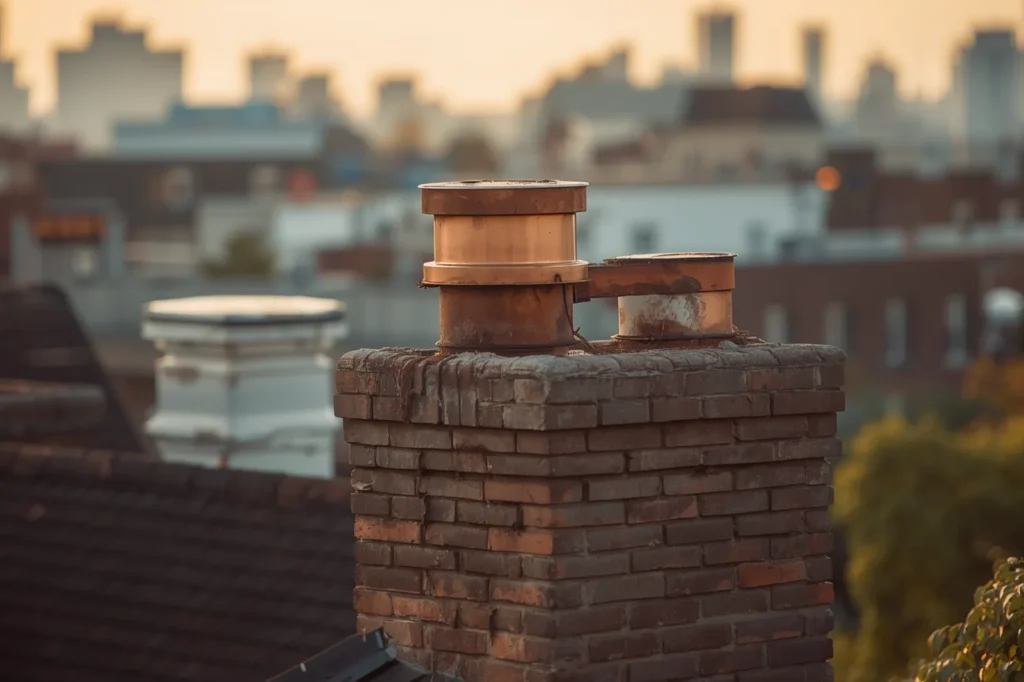
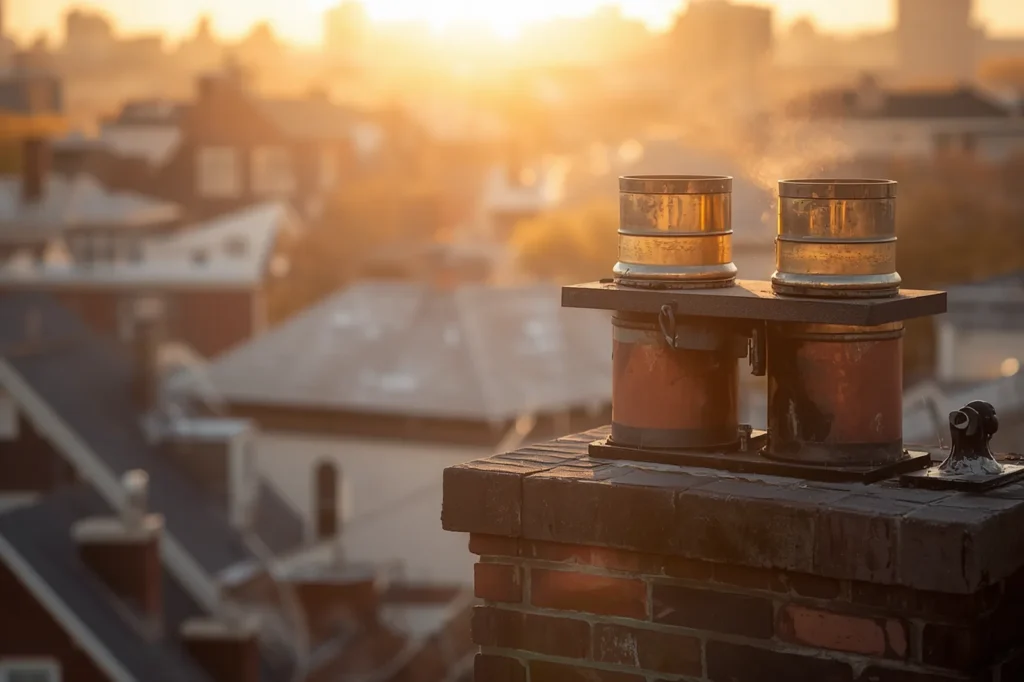
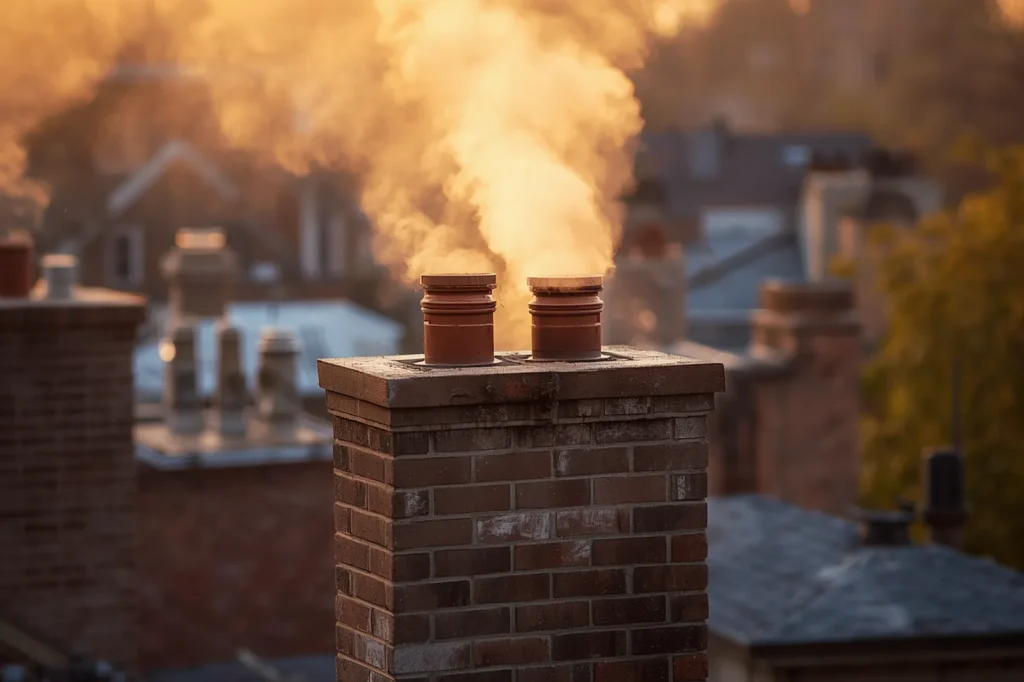
The cap sits on top of the flue tile, or on the crown over a group of flues, and covers the opening. A proper cap has a solid hood to stop rain and snow from dropping straight down the flue, a mesh screen on the sides to keep out birds, squirrels, raccoons and wind-blown debris while letting exhaust out, and a mounting that clamps to the tile or bolts to the crown so a nor'easter cannot lift it.
Without a cap, every rain lands on the smoke shelf, the damper and the firebox. The damper rusts and will not seat, ash turns to a wet paste that smells through the house in humid weather, and in a gas or oil flue the connector corrodes from the base up. Nesting birds are the other issue, and a nest in a flue can block it completely over a summer and send exhaust back into the house at the first fire of the fall.
A cap does not protect the brick. If the crown is cracked and the cap is new, the stack still soaks. That is the single most common misunderstanding we clear up on cap installation calls, and it is why we photograph the crown before fitting one.
How Freeze-Thaw Takes Them Apart
Water expands when it freezes. On a Brooklyn roof in January, a crown or a mortar joint can go through that cycle many times in a single week, and each one pushes a crack a little wider. The signs below are what we look for from the roof, and each one points to the crown, the cap or both.
- A hairline crack across the crown that has grown into an open gap, often running from the flue tile corner to the edge
- The crown lifting or separating from the top course of brick along one side, with daylight visible at the joint
- Pieces of crown or mortar wash lying on the roof membrane below the stack
- Spalling or flaking brick faces on the top three or four courses only, with sound brick below
- White efflorescence streaking down from the crown
- A cap that is missing, rusted through, or lying on the roof after a storm
- A rusted damper, wet ash smell or nesting material in the firebox, which points to no cap or a damaged screen
Repair or Recast: How We Decide on a Crown
Not every cracked crown needs to come off. The decision rests on what the crown is made of, how far the cracks go and whether the brick under it is still sound. We follow the same sequence on every stack.
- Sound the crown and check the overhangWe tap the surface for hollow spots, look for an overhang and drip edge, and confirm whether it is a true concrete crown or a mortar wash. A wash with no overhang is nearly always a recast candidate.
- Map the cracksHairline surface cracks in a solid concrete crown with intact edges can be sealed with a flexible crown coating. Cracks that pass through the full thickness, lift at the edge or run around the flue tile cannot.
- Check the top coursesIf the brick under the crown is spalled or the joints are open, the top courses are rebuilt first with a reclaimed brick match and Type N mortar so the new crown has a sound base.
- Form and pour a cast-in-place crownThe old wash is removed, forms are set to give an overhang with a drip edge on all sides, a bond break is wrapped around the flue tile, and a reinforced concrete crown is poured with a slope away from the flue.
- Seal and capThe tile joint is sealed with a flexible sealant, the crown is cured and coated, and a correctly sized stainless cap is fitted so the stack is protected top to bottom.
Cap Sizing for Rowhouse Multi-Flue Stacks
A detached frame house south of Empire Boulevard usually has one or two flues in a stack and takes a single-flue cap clamped to each tile. The limestone and brownstone rows between Eastern Parkway and Lincoln Place are different. A party-wall stack can carry three, four or more flues serving fireplaces on two floors and the boiler below, often with tiles of different heights poking through a mortar wash. A single clamp-on cap per tile works only when every tile is sound and projects far enough to grip.
Where the tiles are flush, broken or crowded, the right answer is a multi-flue cap: a single stainless hood on legs bolted to the crown, sized to clear every flue by enough margin that the exhaust from one does not get pulled down into another. Getting that spacing right matters most when a wood fireplace and a gas boiler share a stack, because cross-draft between those two flues is how smoke ends up in a bedroom.
The same stacks line the blocks in Prospect Heights and Bedford-Stuyvesant, and the sizing rules carry over. Whether the crown needs a crown repair or full recast first is the question we answer from the roof before any cap is ordered, because bolting a multi-flue cap to a crumbling wash just means doing the job twice. Owners in Flatbush frame houses with single stacks usually get away with a simpler cap, but the crown check still comes first.
Frequently Asked Questions
Can I just seal the cracks in my crown instead of recasting it?
If it is a true concrete crown with an overhang, the edges are intact and the cracks are shallow surface cracks, a flexible crown coating can seal it and add years. If it is a thin mortar wash, or the cracks go through the full thickness or the crown has lifted from the brick, sealing is a short-term patch over a failing part. We tell you which one you have from the roof with photos.
Does every chimney need a cap?
Yes. An open flue takes rain, snow, birds and debris directly, and the damage shows up as a rusted damper, wet ash smell, blocked flues and corroded boiler connectors. A cap is one of the least expensive parts on a chimney and one of the most protective. The only caveat is that it must be sized and mounted correctly, and it must not be mistaken for a crown repair.
What material should a chimney cap be?
Stainless steel, for the Brooklyn climate. Galvanized caps rust through in a few seasons, especially with salt in the air from the Atlantic side of the borough, and a rusted cap stains the crown and eventually fails. Stainless holds up to weather and to the acidic condensate in gas flues. Copper is also durable and some owners choose it for the look on a restored stack.
How long does a recast crown last?
A properly formed, reinforced concrete crown with an overhang, a drip edge and a flexible joint at the flue tile should outlast the mortar wash it replaces by a wide margin, because it is built to shed water and move with the tile instead of cracking against it. A coating applied after curing adds further protection. We inspect it on the annual visit, and small maintenance keeps it sound.
Why does my crown keep cracking after I patch it?
Usually because it was poured tight against the flue tile with no bond break. Clay tile expands when the flue heats and the crown does not, so the tile pushes the crown apart from the inside every time there is a fire or the boiler runs hard. A patch fills the crack but the movement continues. A recast with a wrapped tile joint and a flexible sealant solves the cause.