
Chimney Sweep and Masonry in Clinton Hill
Slate mansards and tall Italianate stacks call for copper, lead and patience. Our Crown Heights crew brings all three to Clinton Hill chimneys.
Why does my Clinton Hill chimney leak only during heavy wind-driven rain?
Because wind-driven rain tests the flashing, not the roof. On a mansard or slate roof, step flashing runs under each course of slate and counter-flashing is let into the chimney mortar joints. When either one has lifted, or the mortar around it has crumbled, a nor'easter pushes water sideways under the metal. Calm rain runs off. The fix is new copper flashing and lead counter-flashing, not roof cement.
Three Kinds of Chimney on Clinton Hill Streets
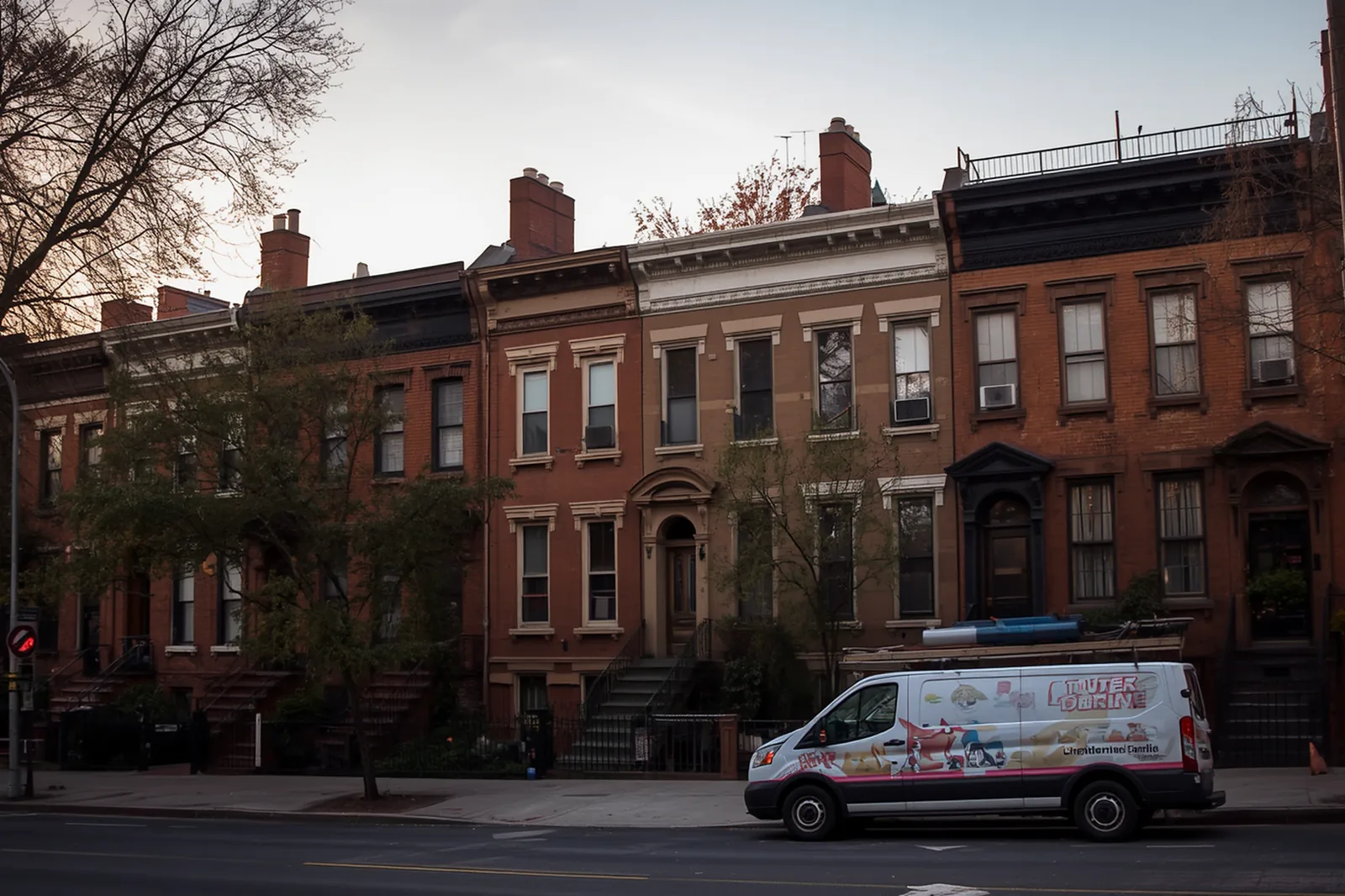
Clinton Hill has three building types that each put a chimney in a different situation. The Italianate brownstones have flat roofs and party-wall stacks like the rest of brownstone Brooklyn. The freestanding mansions on Clinton Avenue have mansard and slate roofs with multiple tall stacks rising through steep pitched surfaces. The large pre-war apartment houses near Pratt have one big boiler stack and, often, a sealed incinerator flue beside it.
The mansions are where the trade gets interesting. A stack that penetrates slate has to be flashed with step pieces woven into each course and counter-flashing cut into the brick, and the metal has to outlast the slate around it. Original work was often copper or lead. Later repairs in galvanized steel or roof cement are now the most common source of water stains near the fireplace on an upper floor.
Tall freestanding stacks also take wind that a party-wall stack never feels. Nor'easters work on the mortar joints of the top courses, the crown cracks, and over enough winters a stack starts leaning. We look for that from the street before we ever get on the roof.

Where We Spend Our Time on Clinton Hill Chimneys
Flashing and crown work lead the list in Clinton Hill because that is where mansard and slate roofs fail first. We fabricate copper flashing to the pitch and the slate exposure, let lead counter-flashing into raked-out mortar joints, and recast crowns in place with an overhang that drips clear of the brick face. Done in those materials, the repair should outlast the next slate job.
The brownstones and apartment houses bring the same sweeping, inspection and liner work we do across Crown Heights, with one difference: more of the fireplaces here are still burning wood. Creosote builds faster in tall, cool flues, so annual sweeps are not optional on a working fireplace.
- Copper step flashing and lead counter-flashing on slate and mansard roofs
- Crown recasts and tuckpointing on tall freestanding stacks
- Annual sweeps and creosote removal for wood-burning fireplaces
- Stainless steel flue liners for boiler conversions in brownstones and apartment houses
- Level 2 camera inspections for purchases and insurance questions
Chimney Leak Repair
Water near a fireplace has four possible sources, and sealing the wrong one wastes money. We trace the actual path on Crown Heights rowhouses and pre-war buildings, then fix that path with the right material.
Learn more →Chimney Crown Repair
The crown is the slab that seals the top of the chimney around the flues, and on most Crown Heights stacks it is a thin mortar wash that cracked years ago. We rebuild crowns as reinforced cast-in-place slabs with an overhang and drip edge, so water sheds away from the brick.
Learn more →Chimney Tuckpointing
Mortar joints are the sacrificial part of a chimney: they are meant to wear before the brick does. We grind out failed joints on Crown Heights stacks and repoint them in a lime-rich Type N mortar that matches the original in strength and color.
Learn more →Chimney Flashing Repair
Flashing is the metal that bridges the chimney and the roof, and it fails quietly under layers of tar. We cut out the old work, install new base flashing in copper or aluminum, and let counter-flashing into the brick joints so the seal does not depend on caulk.
Learn more →Chimney Sweep
A proper sweep removes soot and creosote from the firebox to the flue cap and ends with a camera look at what is left behind. Our crew works Crown Heights rowhouses, pre-war co-ops and frame houses with the same drop-cloth discipline.
Learn more →Chimney Inspection
Buying a rowhouse, converting a boiler, or just unsure what is behind the firebox? We run NFPA 211 Level 1 and Level 2 inspections with a flue camera and give you a written report you can hand to a buyer, a co-op board or an insurer.
Learn more →
Representative Work in Clinton Hill
- Project type
- Crown recast and copper flashing
- Area
- Freestanding house with a slate mansard roof, Clinton Avenue area, Clinton Hill
- Problem
- Water stains kept appearing on the ceiling beside a third-floor fireplace after every storm with wind behind it. A roofer had already smeared roof cement around the stack twice. The crown was cracked across its full width and the old galvanized step flashing had rusted through under the slate.
- Solution
- We removed the roof cement and the rusted metal, lifted the slates around the stack and wove in new copper step flashing course by course. Lead counter-flashing went into freshly raked mortar joints, and the crown was recast in place with a proper slope and drip edge. The slate went back with the original exposure so the repair disappears from the street.
- Materials
How We Cover Clinton Hill from Crown Heights
Clinton Hill lies northwest of Crown Heights, a short run for a crew that works the Eastern Parkway blocks every week. We bring the same ladders, roof hooks and staging we use on tall pre-war apartment buildings in Crown Heights, which matters on a mansard roof where access is the hard part of the job.
Bedford-Stuyvesant borders Clinton Hill to the east, and Prospect Heights sits just south. Flatbush, East Flatbush and Brownsville round out the neighborhoods our crew covers, all within a short drive.
Part of our Areas We Serve Around Crown Heights service area.
Frequently Asked Questions
Can you flash a chimney on a slate roof without breaking the slates?
Yes, that is the normal way to do it. We lift the slates around the stack with a slate ripper, remove the old metal, and weave new copper step flashing into each course before re-hanging the slates with copper nails or hooks. A few slates usually crack during removal on an old roof, so we bring matching salvage slate for replacements. Nothing gets glued, caulked or cemented in place of proper flashing.
My Italianate brownstone has a fireplace on every floor. Which flues can I actually use?
Only a camera inspection can answer that for your house. Each fireplace should have its own flue, but after a century of alterations some are blocked, some have been joined to a neighbor, and most are bare brick. We scan every flue, mark which are intact and separate, and recommend a stainless steel flue liner for the ones you intend to burn in. Sealed fireplaces that stay sealed still get a note in the report.
How do I know if a tall chimney stack is leaning?
Sight up the corner of the stack from the sidewalk against a vertical reference like the building edge. A lean, a visible step in the courses, or a gap opening between the stack and the roof surface are all reasons to call before the next storm. Leaning stacks on freestanding houses are usually the result of mortar joints that have washed out on the weather side. We assess whether repointing will hold it or the top courses need to come down and be rebuilt.
Do the pre-war apartment buildings near Pratt need chimney service?
Their boiler stacks do, and so do any old incinerator flues that were sealed decades ago but are still open to the weather at the top. We work with managing agents and supers to inspect the stack from the roof, check the crown and cap, and camera the boiler flue for breaks in the clay flue tile. A stainless steel flue liner is typical when the building converted from oil to gas.
How often should a wood-burning fireplace in Clinton Hill be swept?
Once a year at minimum, and sooner if you burn most evenings in winter. Tall, cool flues like the ones in these houses let smoke condense into creosote faster than a short flue would. If we find a glazed creosote layer rather than loose soot, that calls for creosote removal with different tools, not a standard sweep. We will tell you which you need after looking.
Will copper flashing look wrong on an old house?
New copper is bright for a season and then weathers to brown and eventually green, which is exactly what the original metal on these houses did. On a slate mansard it is the historically correct material and the one most likely to still be there in another fifty years. Where appearance matters, we can keep exposed counter-flashing minimal and let the slate do the work.
Schedule a Clinton Hill Chimney Visit
Call Crown Heights Chimney Sweep at (347) 555-0188 or send the form. Mention whether the roof is flat, slate or mansard so we bring the right access gear.