

Chimney Leak Repair in Crown Heights
Water near a fireplace has four possible sources, and sealing the wrong one wastes money. We trace the actual path on Crown Heights rowhouses and pre-war buildings, then fix that path with the right material.
Why is my chimney leaking when it rains?
There are four common paths. Water can fall straight down an uncapped flue onto the smoke shelf. It can run through a cracked crown into the brick core. It can soak through eroded mortar joints and spalled brick on the stack. Or it can slip under failed flashing where the chimney meets the roof. Each shows up differently inside the house, and a roof visit tells us which is active.
When a Crown Heights chimney is leaking
Where the stain appears tells us a lot. Water in the firebox usually came down the flue. Stains at the ceiling line near the stack point to flashing or crown. Damp plaster mid-wall on a chimney breast means water is traveling inside the brick core, which usually starts at the crown or open joints. We confirm on the roof before touching anything.
- Water stains on the ceiling or wall next to the chimney breast on the top floor
- A damp or dripping firebox after rain, with no water elsewhere in the room
- Bubbling paint or plaster on the chimney breast several floors below the roof
- White efflorescence blooming on the brick inside or outside near the stack
- A musty smell from an unused fireplace that gets worse in humid weather
- Rust streaks running down the stack from a cap or flashing, or a rusted damper
- Spalling brick faces or crumbling mortar joints visible above the roofline
How we find and fix a chimney leak in a rowhouse
- Interior inspection firstWe look at the stain pattern, check the firebox and smoke shelf for standing water, and note which floors show damage. In a four-story rowhouse the entry point can be several floors above the stain, so we trace the chimney breast up to the roof.
- Roof and stack inspectionOn the flat roof we examine the crown for cracks and missing overhang, probe the mortar joints, look for spalled brick, check whether each flue has a cap, and inspect the flashing where the stack meets the membrane or the parapet. On a pre-war building we also check the parapet coping beside the chimney.
- Water test when the source is unclearIf the roof visit does not make the path obvious, we run water on one element at a time, flue, crown, brick and flashing, with someone inside watching. This isolates the path and avoids repairing the wrong one.
- Repair the active path with the right materialA missing cap gets a stainless cap. A cracked crown gets a cast-in-place crown with a drip edge. Eroded joints get tuckpointing in Type N mortar. Failed flashing gets new copper or aluminum base flashing with lead or copper counter-flashing cut into the brick. We do not caulk over a problem and call it fixed.
- Address the secondary pathsChimney leaks are rarely a single failure. Once the main path is fixed, we close the obvious secondary ones at the same visit, since the roof is set up and the crew is there.
- Confirm and documentWe photograph the completed work, water-test it where practical, and explain what was fixed and what, if anything, should be watched. For a co-op or a sale, we provide a written summary.
The right material for each leak path
Every path into a chimney has a correct material, and the common failure we inherit is the wrong one: roofing cement smeared on a crown, caulk on flashing, or Portland-heavy mortar in a soft limestone stack. We use the materials that have held up on Brooklyn roofs for a century.
- Stainless steel or copper caps on every open flue, since the flue is the most direct path for water
- Cast-in-place crown, reinforced and poured with an overhang and drip edge, replacing mortar-wash crowns that crack
- Type N mortar for tuckpointing joints on 1900s brick, which is softer than modern Portland mixes and moves with the old masonry
- Copper flashing as the long-life choice for base and step flashing; aluminum where budget or an existing aluminum system calls for it
- Lead counter-flashing or copper counter-flashing let into a reglet cut in the mortar joint, not surface-applied
- Breathable masonry water repellent on sound brick after repairs, never a film-forming sealer that traps moisture
- Reclaimed brick match when spalled units have to be replaced in a visible stack
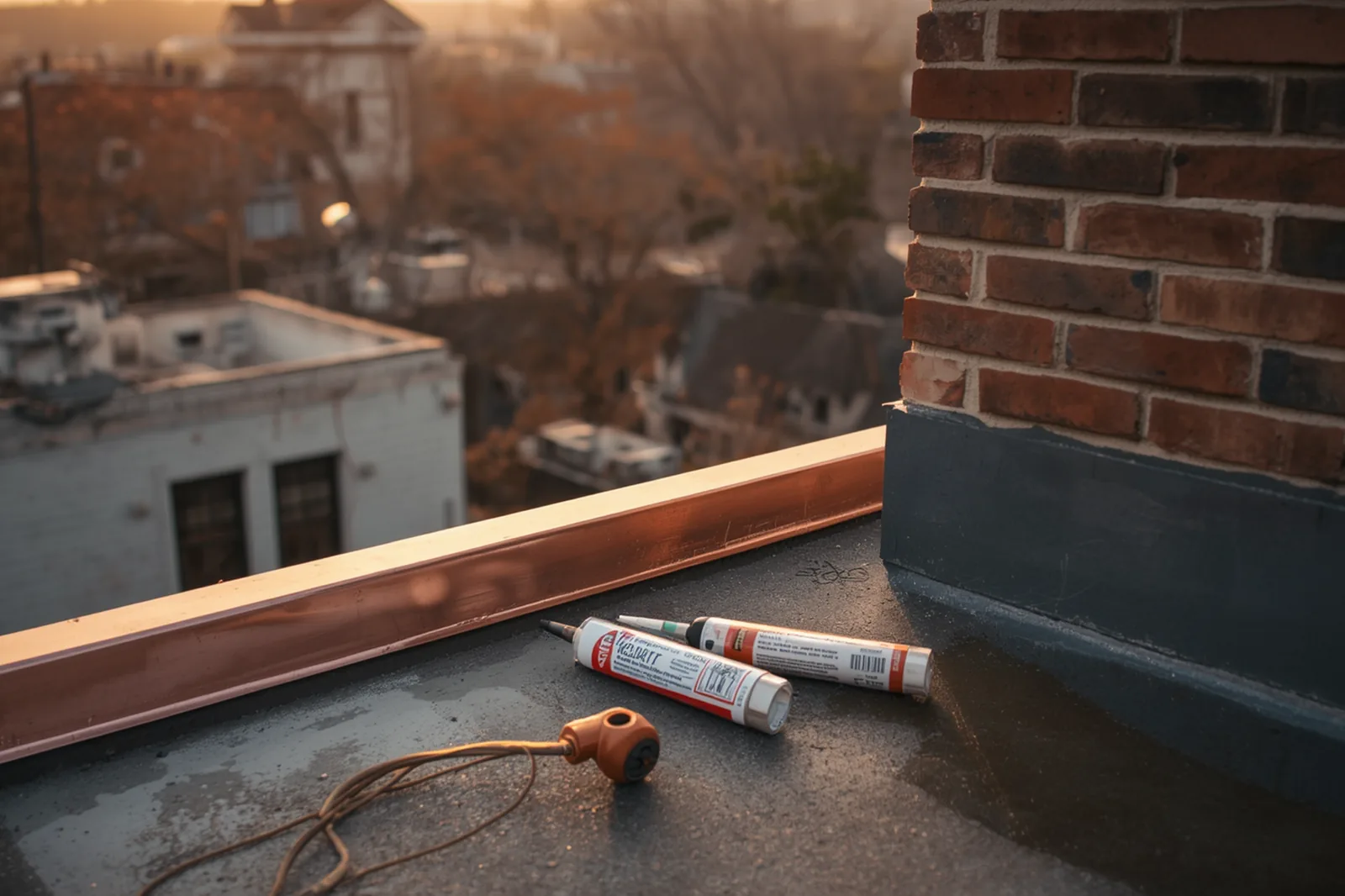
Rowhouses, flat-roof apartment buildings, and frame houses
On limestone and brownstone rowhouses the chimney sits on a party wall and the roof is flat built-up or modified bitumen. Leaks here tend to be crown and flue related, because the stack is tall and exposed and the flashing is often buried under layers of roofing. We separate chimney leaks from roof membrane leaks at the same visit, since a stain near the chimney is not always the chimney.
Pre-war apartment buildings have large stacks beside parapets, and water often enters where the chimney, the parapet coping and the roof flashing meet. Top-floor tenants see the damage first and management calls us. Detached Victorian frame houses in southern Crown Heights have pitched roofs with step flashing against the chimney, which is the classic flashing leak and the easiest to confirm and fix properly in copper.
Representative leak repair in Crown Heights
- Project type
- Crown recast and copper flashing on a rowhouse stack
- Area
- Crown Heights, Brooklyn
- Problem
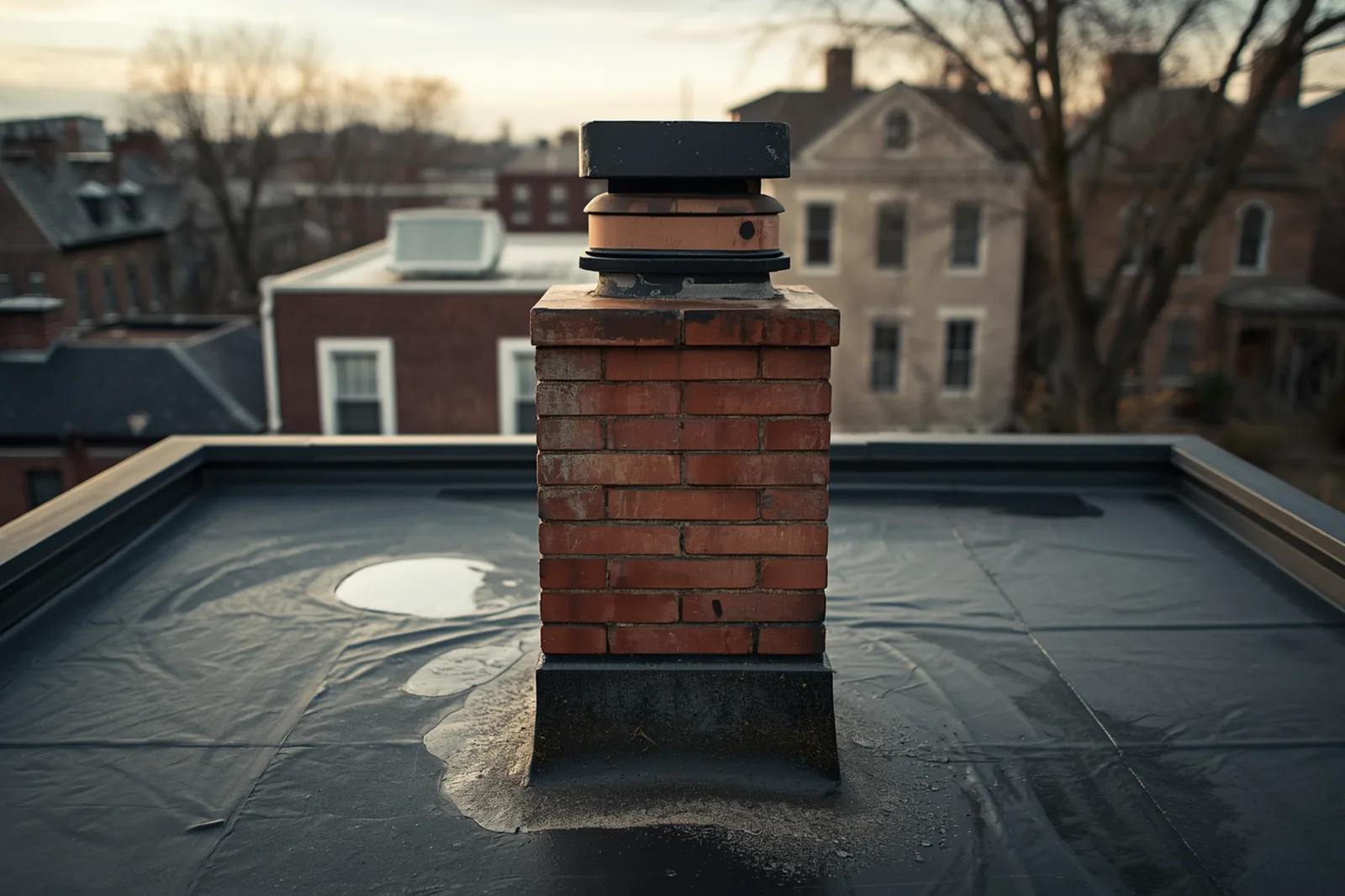
- A recent job type we handle is a limestone rowhouse with a top-floor ceiling stain beside the chimney breast and a damp parlor firebox, where a roofer had already resealed the membrane twice without result.
- Solution
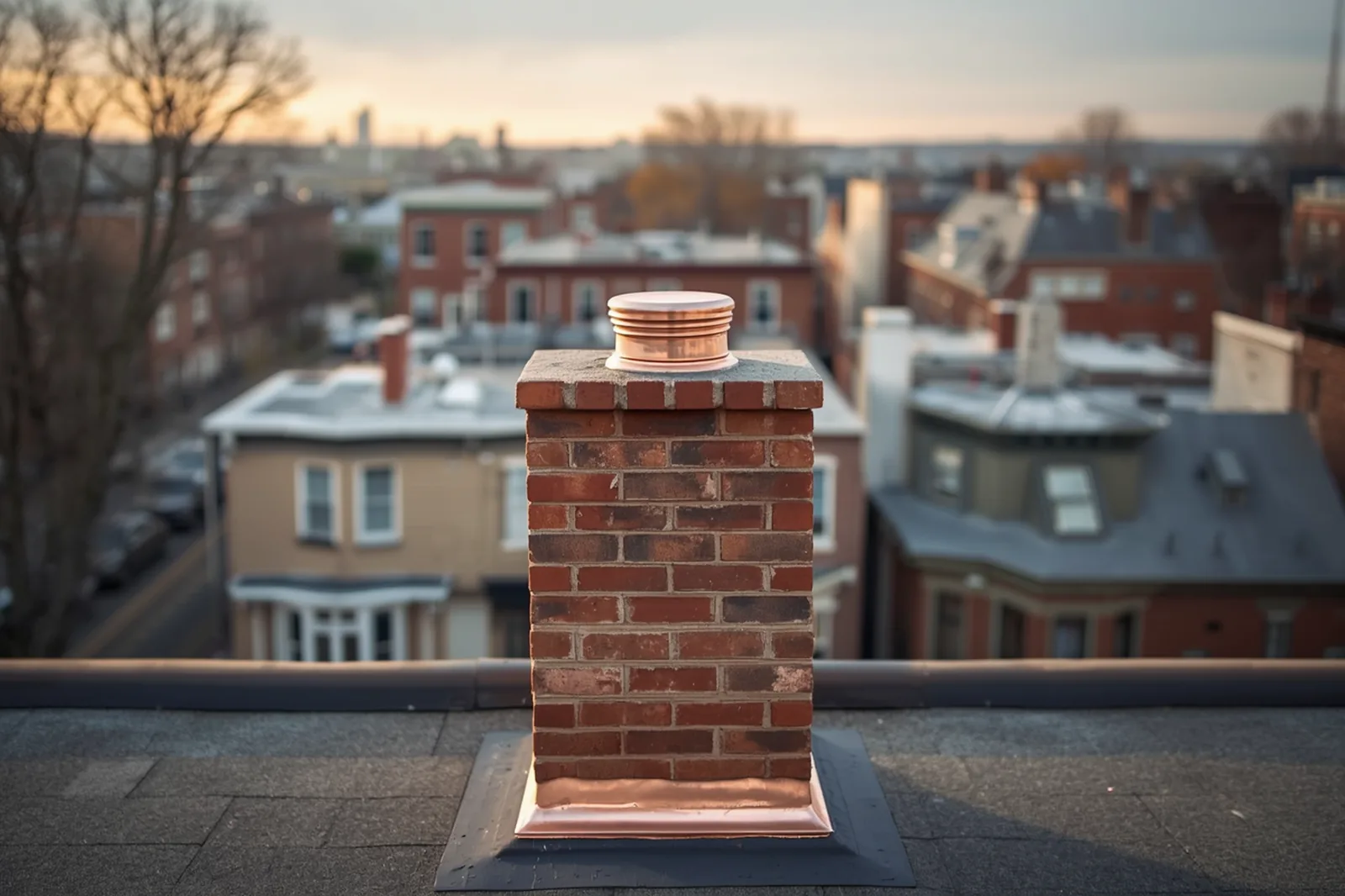
- The roof visit showed a mortar-wash crown cracked through, no caps, and base flashing buried in roofing cement. We poured a cast-in-place crown with a drip edge, installed new copper flashing with lead counter-flashing cut into joints repointed in Type N mortar, capped all flues in stainless, and water-tested each element. The stains dried and stayed dry.
- Materials

Before and After
Chimney Leak Repair Across Our Service Area
Related Services
Why chimney leaks are routine in Crown Heights
The housing stock is a century old and most of its chimneys have had no cap and a mortar-wash crown for decades. Nor'easters drive rain sideways into open joints, summer storms leave ponding water around the base of the stack on an aging flat roof, and winter freeze-thaw opens every hairline crack a little more each year.
We work the same leak patterns in Bedford-Stuyvesant, Prospect Heights and Clinton Hill rowhouses, and in the brick buildings of East Flatbush. The fix is almost never exotic, but it has to be the right fix for the actual path, done in the right material. That is the whole job.
Frequently Asked Questions
My roofer sealed around the chimney and it still leaks. Why?
Because the water is probably not entering at the roof line. Roofers work the membrane and the flashing seam, which is one of four paths. If the crown is cracked or the flues are uncapped, water enters above the roof and travels down inside the brick, then shows up at the ceiling right where a flashing leak would. We test each path separately so the repair matches the entry point.
How can water leak in when it has not rained in days?
Brick and the chimney core hold water like a sponge and release it slowly, so stains can appear or spread days after a storm. Condensation is another source: a flue serving a gas appliance with no liner produces moisture that soaks into the masonry from inside. If the dampness is constant rather than storm-related, we look hard at the flue and the liner, not just the exterior.
Is efflorescence a sign of a leak?
It is a sign that water is moving through the masonry and carrying salts to the surface, which is the same thing. White efflorescence near the top of a stack usually means an open crown or joints. Inside the house on a chimney breast, it means water is traveling the full height of the stack. Either way it tells us the brick is wet and the path needs to be found.
Should I use a chimney waterproofing sealer?
Only after the real entry points are repaired, and only a breathable, vapor-permeable water repellent. Painting a film-forming sealer on wet or damaged brick traps moisture inside and accelerates spalling, which we see often on Brooklyn stacks. A repellent on sound, repointed brick is a reasonable final step. It is never a substitute for a crown, cap or flashing repair.
Can a chimney leak damage the structure of a rowhouse?
Over time, yes. Water in the chimney core rusts the steel lintels over fireplace openings, rots the wood framing that sits against the chimney breast, and loosens the brick itself through freeze-thaw. A leaning chimney stack above the roof is often the end result of years of saturated mortar. Catching the leak at the stain stage is far cheaper than a rebuild.
What drives the cost of a chimney leak repair?
Which path is leaking and how many of them. A missing cap is the least involved fix. A crown recast, a flashing replacement in copper, or tuckpointing a full stack each take more time and material, and a chimney with all of these failing is a larger project. We identify the path before quoting so you pay for the repair that actually stops the water.
Find the real path and stop the water
Call (347) 555-0188 for a chimney leak inspection in Crown Heights and nearby Brooklyn neighborhoods. We check the flue, crown, brick and flashing before we recommend a repair.