
Chimney Sweep and Masonry in Bedford-Stuyvesant
Bedford-Stuyvesant holds the largest run of intact Victorian brownstones in the country, and most of their chimneys have never been relined. Our Crown Heights crew sweeps, inspects, rebuilds and repoints them.
Should I have the chimney inspected before renovating a Bed-Stuy brownstone?
Yes, and before the walls are closed, not after. A renovation changes what the chimney does: fireplaces get reopened, the boiler gets replaced, bathrooms and kitchens get vented. A camera inspection tells your contractor which flues are intact, which are shared, and which need a stainless steel flue liner. Finding a cracked flue after new plaster is up costs far more than finding it first.
Brownstone Chimneys on Bed-Stuy Blocks
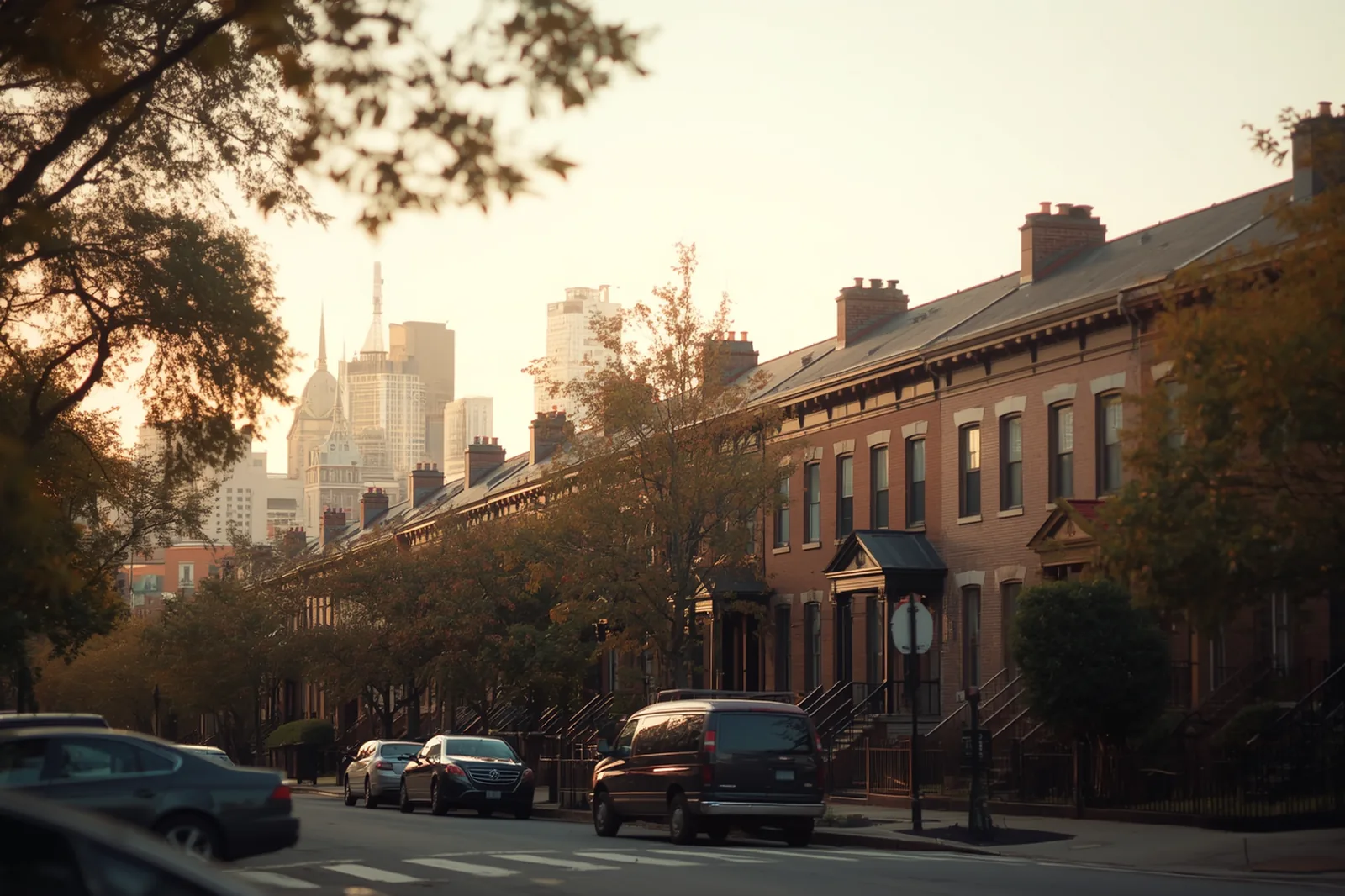
Walk a Bedford-Stuyvesant block and nearly every house is a Victorian brownstone with a flat built-up roof, a cornice at the front and a parapet shared with the neighbor. The chimney stacks ride on the party walls, and in a full-width house each stack can carry a fireplace flue from every floor plus the flue for whatever heats the house.
Because so many of these houses are mid-renovation, we see chimneys at every stage of neglect and repair. A common pattern: the roof was redone, the kitchen is new, but the stack above the roof was left with the same crumbling mortar joints and a crown that is just a thin mortar wash. The new roof membrane is then flashed to a chimney that is actively shedding brick faces.
Inside the flues, decades of coal and later oil left a glaze that nobody removed before the house went to gas. Orphaned flues are everywhere here: a high-efficiency boiler now vents through the side wall, and the water heater is left alone on a flue sized for a coal furnace. That flue runs cold and wet, and the damage shows up as water stains near the old fireplace openings and spalling brick above the roof.

The Chimney Work Bed-Stuy Renovations Actually Need
Rebuilding the stack above the roofline is the job we do most in Bedford-Stuyvesant, because that is where a century of freeze-thaw has done its worst and where a new roof makes the damage obvious. We take the stack down to sound brick, rebuild with reclaimed brick that matches the neighbors, and finish with a cast-in-place crown and lead counter-flashing cut into the mortar joints.
Below the roof, the priority is lining. Every flue that will serve an appliance or a reopened fireplace should get a stainless steel flue liner sized to that use. We coordinate with general contractors so the liner goes in before the finish work, and we document the condition of every flue, including the ones you plan to leave sealed.
- Chimney rebuilds above the roofline with reclaimed brick match and Type N mortar
- Stainless steel flue liners for boilers, water heaters and reopened fireplaces
- Camera inspections timed to your renovation schedule, before walls close
- Tuckpointing and crown work on stacks that are sound but weathered
- Sweeps and creosote removal where wood-burning fireplaces are back in service
Chimney Leak Repair
Water near a fireplace has four possible sources, and sealing the wrong one wastes money. We trace the actual path on Crown Heights rowhouses and pre-war buildings, then fix that path with the right material.
Learn more →Chimney Crown Repair
The crown is the slab that seals the top of the chimney around the flues, and on most Crown Heights stacks it is a thin mortar wash that cracked years ago. We rebuild crowns as reinforced cast-in-place slabs with an overhang and drip edge, so water sheds away from the brick.
Learn more →Chimney Tuckpointing
Mortar joints are the sacrificial part of a chimney: they are meant to wear before the brick does. We grind out failed joints on Crown Heights stacks and repoint them in a lime-rich Type N mortar that matches the original in strength and color.
Learn more →Chimney Flashing Repair
Flashing is the metal that bridges the chimney and the roof, and it fails quietly under layers of tar. We cut out the old work, install new base flashing in copper or aluminum, and let counter-flashing into the brick joints so the seal does not depend on caulk.
Learn more →Chimney Sweep
A proper sweep removes soot and creosote from the firebox to the flue cap and ends with a camera look at what is left behind. Our crew works Crown Heights rowhouses, pre-war co-ops and frame houses with the same drop-cloth discipline.
Learn more →Chimney Inspection
Buying a rowhouse, converting a boiler, or just unsure what is behind the firebox? We run NFPA 211 Level 1 and Level 2 inspections with a flue camera and give you a written report you can hand to a buyer, a co-op board or an insurer.
Learn more →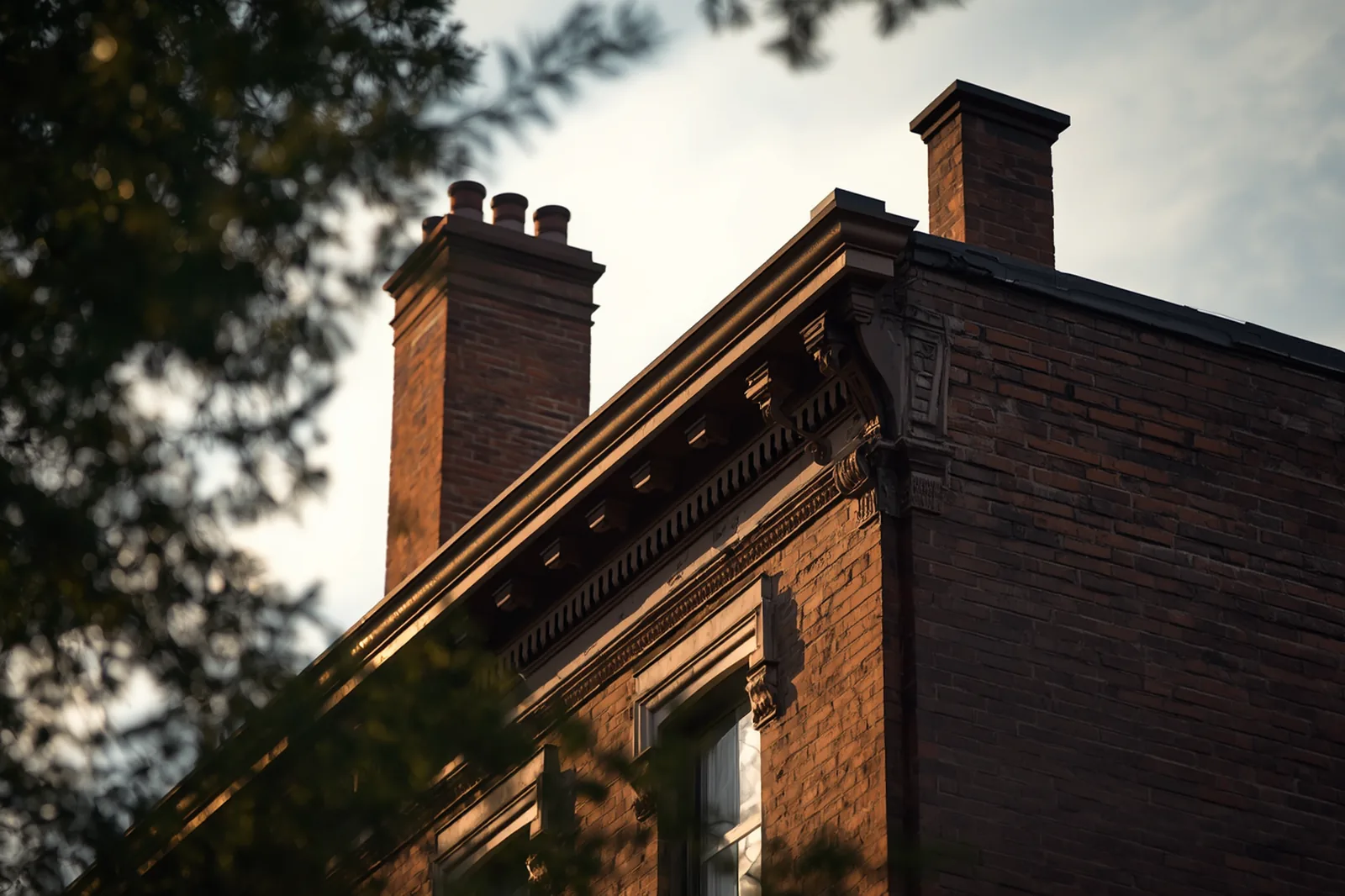
Representative Work in Bedford-Stuyvesant
- Project type
- Full chimney rebuild above the roofline
- Area
- Victorian brownstone under renovation, Bedford-Stuyvesant
- Problem
- A roofer installing a new modified-bitumen roof refused to flash into the existing stack because the brick faces were spalling and the top courses rocked by hand. The crown was a cracked mortar wash and the mortar joints had washed out to the depth of a finger.
- Solution
- We took the stack down to the first sound course above the roof deck, salvaged what brick could be reused and matched the rest with reclaimed brick of the same size and color. The rebuild went up in Type N mortar with the two live flues carried through in new clay flue tile sections, then a cast-in-place crown with a drip edge and lead counter-flashing let into a reglet so the roofer could tie in cleanly. The owner got photos of every stage for the renovation file.
- Materials
Crown Heights to Bed-Stuy Is a Short Trip
Bedford-Stuyvesant sits just north of Crown Heights across Atlantic Avenue, so your block is well inside our everyday range. Our crew is already working on limestone rows and brownstones in Crown Heights most days, and getting to a Bed-Stuy roof adds a few minutes, not an afternoon.
Clinton Hill borders Bed-Stuy on the west and is covered by the same crew. South of Crown Heights we handle Prospect Heights, Flatbush, East Flatbush and Brownsville, so a landlord with buildings in two of these neighborhoods can book them together.
Part of our Areas We Serve Around Crown Heights service area.
Frequently Asked Questions
My contractor says the chimney is fine because the roof is new. Is that enough?
No. A new roof tells you about the membrane, not about the stack it is flashed to or the flues inside it. We regularly find stacks with washed-out joints and cracked crowns under brand-new roofing, and the first winter sends water down the flue into fresh plaster. Have the stack and flues inspected separately from the roof, ideally before the roofer arrives so any rebuild happens first.
What does it cost to rebuild a brownstone chimney above the roof?
It depends on the height of the stack, how many flues it carries, and how much of the existing brick can be reused, so we price it after seeing the roof. What we can tell you is what drives the number: the number of courses that have to come down, whether the flues need new clay flue tile or a stainless steel flue liner, and roof access. We give a written scope with each estimate so you can compare it line by line.
Do I need a liner if I only use the fireplace a few times a year?
If the flue is bare brick or has cracked clay flue tile, yes. Occasional use is still combustion, and a cracked flue can let heat or carbon monoxide into the wall cavity next to a bedroom. Many Bed-Stuy fireplaces were sealed for decades and their flues have never been seen by anyone, so get a camera inspection first. If the flue is intact, a sweep and a cap may be all it needs.
Can you work with my general contractor's schedule?
That is how most of our Bedford-Stuyvesant jobs run. We prefer to inspect while the walls are open, line the flues before the finish trades start, and do the roofline masonry before or alongside the roofer. Tell us where the project stands and we will fit the chimney work into the sequence rather than forcing a return visit after the house is done.
Why is there white powder on the chimney brick above my roof?
That is efflorescence, mineral salts carried to the surface by water moving through the brick. On a Bed-Stuy stack it usually means the crown or the joints are letting water in, or a gas appliance is condensing inside an unlined flue. The powder itself is harmless, but the water path behind it is what spalls brick faces every winter. We trace the source before we clean the surface.
How soon can you come out to Bed-Stuy?
Same-week in most cases. We work Monday through Saturday, 7:30 AM to 6:30 PM, and Bedford-Stuyvesant is a short run from where our crew spends most of its days in Crown Heights. Active leaks and smoke backing into a room get moved to the front of the line. Tell us what you are seeing when you call and we will slot it accordingly.
Get Your Bed-Stuy Chimney Looked At
Call (347) 555-0188 or use the form. Tell Crown Heights Chimney Sweep whether the house is mid-renovation and we will time the visit to your project.