What are the signs of a chimney leak?
The reliable signs are water stains on the ceiling or wall beside the chimney, a damp musty smell from the fireplace after rain, white efflorescence on the brick, spalling brick faces, rusted damper parts, dripping sounds inside the flue, and crumbling mortar at the top of the stack. Each points to a different entry point, most often the crown, the flashing or an uncapped flue.
Water Finds the Three Weak Points First
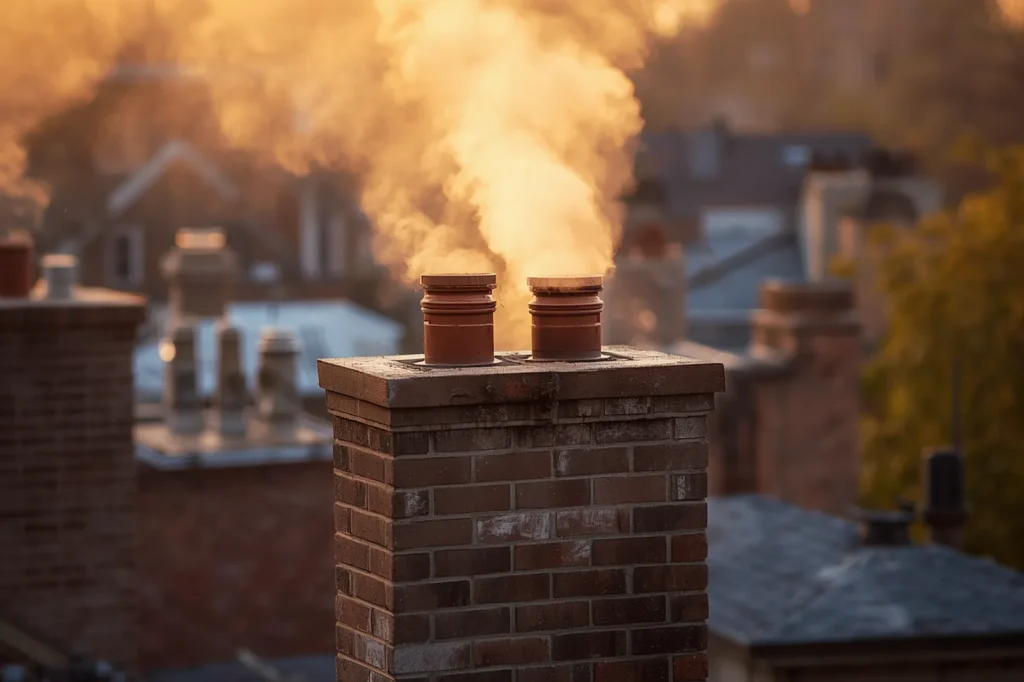
A masonry chimney is a brick column standing above the roof in the weather with a hole in the top. Rain gets in three ways: through a cracked crown, through failed flashing where the stack meets the roof membrane, and straight down an uncapped flue. On the flat built-up and modified-bitumen roofs of Crown Heights rowhouses, where the stack often rises out of a parapet wall, all three are common, and often more than one is active at once.
The trouble is that water travels. A leak at the crown can show up two floors down as a stain beside a bedroom closet. This guide lists the seven signs we trust, explains which entry point each one points to, and then covers three things owners mistake for leaks every winter.
The Seven Signs We Trust
Any one of these is worth a call. Two or more together almost always mean the chimney, not the roof, and our chimney leak repair visits start with finding which of them you have.
- Water stains near the fireplace or on the ceiling beside the chimney, usually brown-ringed and growing after heavy rain rather than after a thaw
- White efflorescence on brick, the chalky salt deposit left behind when water moves through masonry and evaporates, which means the brick is wet from inside
- Spalling or flaking brick faces on the stack above the roof, where water soaked in and froze, popping the fired skin off the brick
- A rusted damper or rusted firebox grate, because an open flue with no cap lets rain fall directly onto the steel
- A musty, wet-ash smell from the firebox after rain, which is water hitting old creosote and soot
- Crumbling mortar joints or a visibly cracked chimney crown when you look at the top of the stack from the roof or a neighboring window
- Dripping or ticking sounds inside the flue during a storm, or a puddle on the smoke shelf when the damper is opened
Crown, Flashing or Cap: Matching the Sign to the Source
The crown is the sloped concrete or mortar wash on top of the brick that sheds water away from the stack. When it cracks, water runs down between the flue tile and the brick, inside the chimney, and shows up as efflorescence, spalling at the top courses, and stains that appear high on the wall near the roof. A cracked crown is the most common source we find on rowhouse stacks, and a crown repair or recast is usually the first thing we recommend.
Flashing is the metal seal between the stack and the roof membrane. On a flat roof it is a base flashing turned up the brick with counter-flashing let into a mortar joint above it. When the counter-flashing pulls out of its reglet or the membrane cracks at the base, water runs down the outside of the chimney inside the house and stains the ceiling right at the roof line, often on the downhill side of the stack. That is a flashing repair rather than a masonry job, and a roofer who only recoats the membrane rarely fixes it.
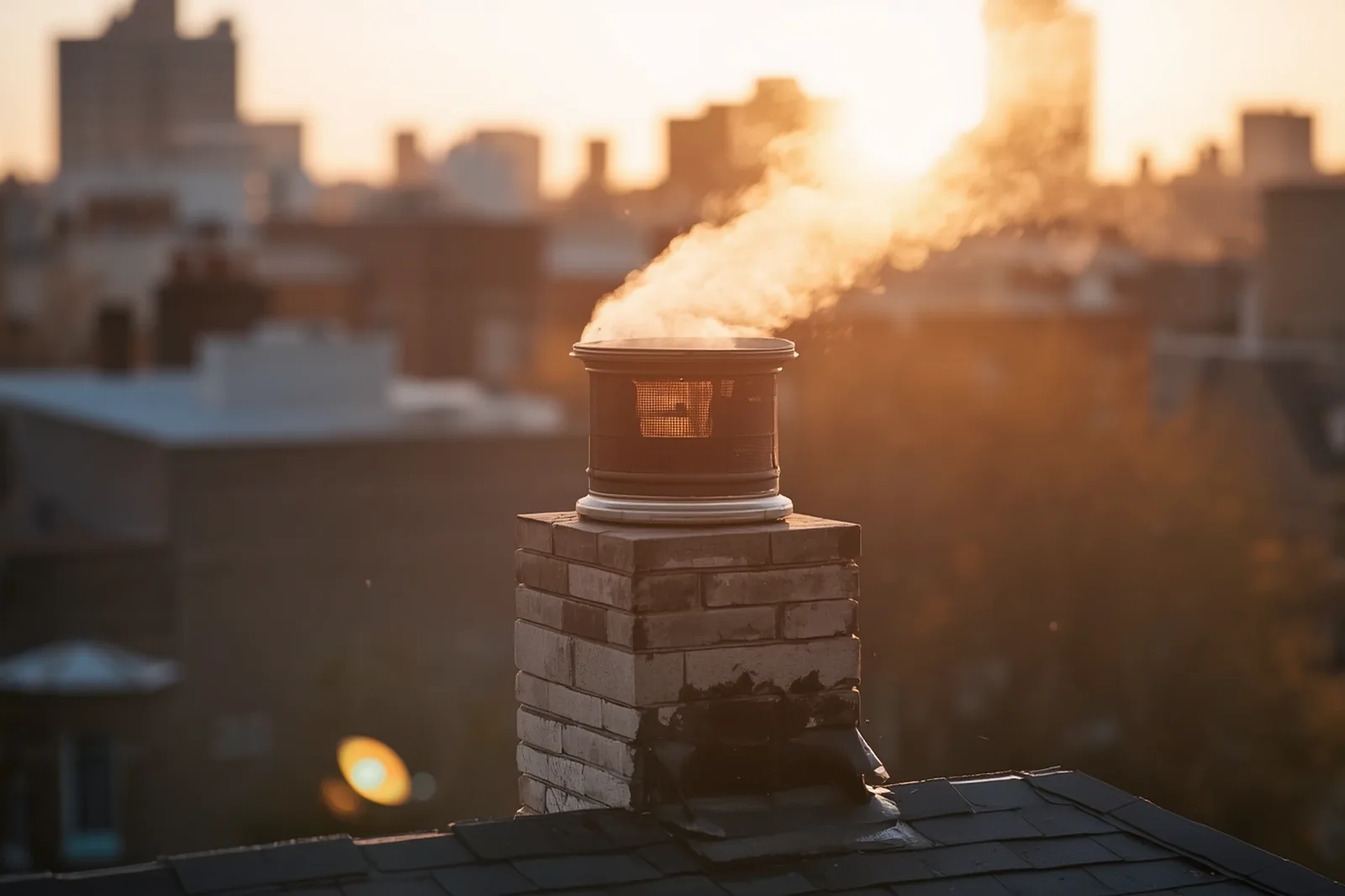
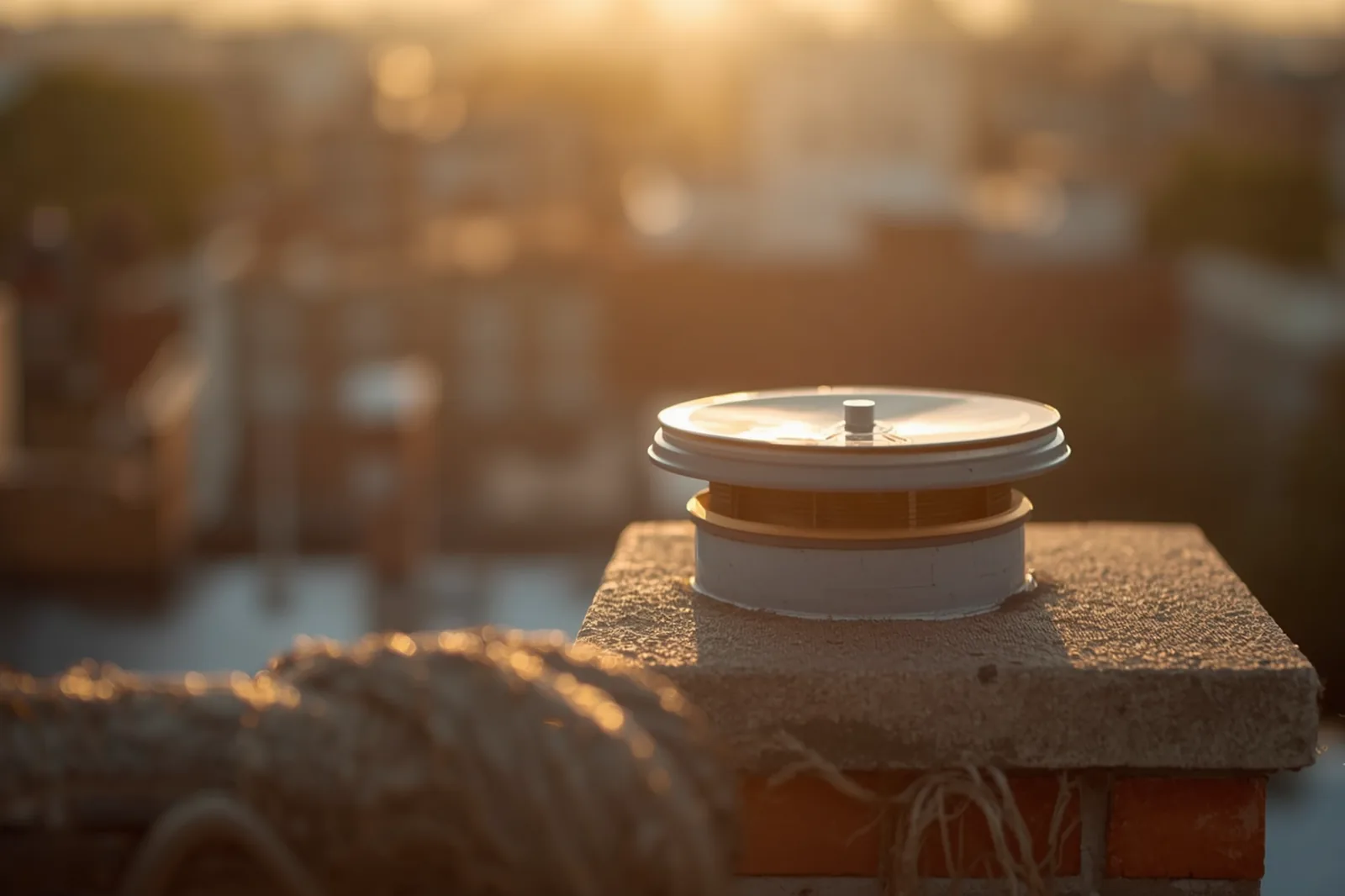
A missing cap lets rain straight down the flue. The signs are a rusted damper, wet ash smell, a puddle on the smoke shelf and, in a gas flue, a boiler connector that corrodes from the bottom. A properly sized stainless cap from a cap installation is the cheapest fix on this list and the one most often skipped.
Three Things That Only Look Like Leaks
Condensation from a gas appliance is the one that fools the most people. Gas exhaust carries a great deal of water vapor, and in a cold, oversized, unlined masonry flue it condenses on the tile and soaks into the brick. The result is efflorescence, damp patches and sometimes dripping at the cleanout, with no rain involved at all. The tell is timing: it appears when the boiler runs in cold weather, not after a storm. The fix is a correctly sized stainless liner, not roof work.
Plumbing and roof drains come second. Rowhouse chimneys often sit near a roof drain or a bathroom stack, and a stain beside the chimney breast may be a leaking drain line or a failed roof seam that has nothing to do with the masonry. Water tests from the roof, one component at a time, separate these quickly.
The third is old staining. Many rowhouses carry stains from a leak that was fixed years ago and never repainted. If the stain is dry to the touch, does not darken after rain and the plaster is sound, it is history, not a current problem. A moisture meter settles it in seconds.
Why Crown Heights Stacks Leak the Way They Do
The limestone and brownstone rows along the side streets off Eastern Parkway were built with brick stacks capped by a thin mortar wash rather than a proper crown. After a century of freeze-thaw cycles those washes are cracked through, and many have been patched with roofing cement, which holds for a season and then separates. The brick below has often been repointed with a hard modern mortar that traps water instead of letting the joint breathe.
The large pre-war apartment buildings on the Parkway itself have taller stacks rising through flat roofs with parapets, and their failures are more often flashing related, because the roof has been recoated repeatedly without the counter-flashing ever being reset. South of Empire Boulevard, in the detached Victorian frame houses, the common issue is a stack that was never capped and a crown that was never built.
The same construction shows up across the border in Prospect Heights and Bedford-Stuyvesant, and in the frame houses of Flatbush, so the diagnosis follows the same logic. Nor'easter wind driving rain sideways into the stack is the event that usually reveals a leak that has been building for years.
How We Confirm the Source Before Quoting a Repair
Guessing is expensive, because a recast crown will not stop a flashing leak and new flashing will not stop a cracked crown. We isolate the source first.
- Interior surveyWe locate every stain, check moisture with a meter, note the floor and the side of the chimney it appears on, and ask when it shows up: after rain, after a thaw, or when the boiler runs.
- Roof inspectionFrom the roof we examine the crown for cracks and separation, the cap, the flashing and counter-flashing, the brick faces and the mortar joints, with photos of each.
- Controlled water testWhere the source is not obvious, we wet one component at a time, starting low at the flashing and finishing at the crown, with someone inside watching for the first drip.
- Flue camera when neededIf condensation or internal water paths are suspected, a camera scan shows wet tile, open joints and the water line inside the flue.
- Written findings and one repair planYou get the photos, the identified source, and a single plan in order of priority, so the repair addresses the cause rather than the symptom.
Frequently Asked Questions
My roofer says the roof is fine but the stain keeps coming back. What now?
That pattern almost always means the water is entering through the chimney itself, at the crown or the cap, rather than at the roof membrane. Roofers recoat the membrane and reseal the base of the stack, which does nothing for a cracked crown or an open flue. A controlled water test from the roof, one component at a time, will show where the water is actually getting in.
Is efflorescence on my chimney dangerous?
The white salt itself is harmless, but it is proof that water is moving through the brick from the inside, and that water is what causes spalling, mortar loss and eventually a leaning or unstable stack. Treat efflorescence as a diagnostic sign, find the source, and fix it. Once the water stops, the deposits can be brushed off and will not return.
Can a chimney leak when it has not rained?
Yes, and when it does the cause is usually condensation from a gas boiler or water heater venting into an oversized, unlined masonry flue. Gas exhaust is full of water vapor, and it condenses on cold tile and soaks the brick. The fix is a stainless steel liner sized to the appliance, which keeps the exhaust warm and carries it out before it can condense in the masonry.
How urgent is a cracked chimney crown?
More urgent than it looks, because every freeze-thaw cycle widens the crack and pushes water deeper into the stack. A crack caught early can sometimes be sealed, while one left through several winters usually means spalled brick, open joints and a full recast. If you can see a crack from the roof, have it looked at before the next cold season.
Will a chimney cap stop my leak?
Only if the water is coming straight down the flue, which shows as a rusted damper, wet ash smell and a puddle on the smoke shelf. A cap does nothing for a cracked crown or failed flashing. Every stack should have a cap regardless, but we confirm the source before telling anyone a cap is the whole answer.