
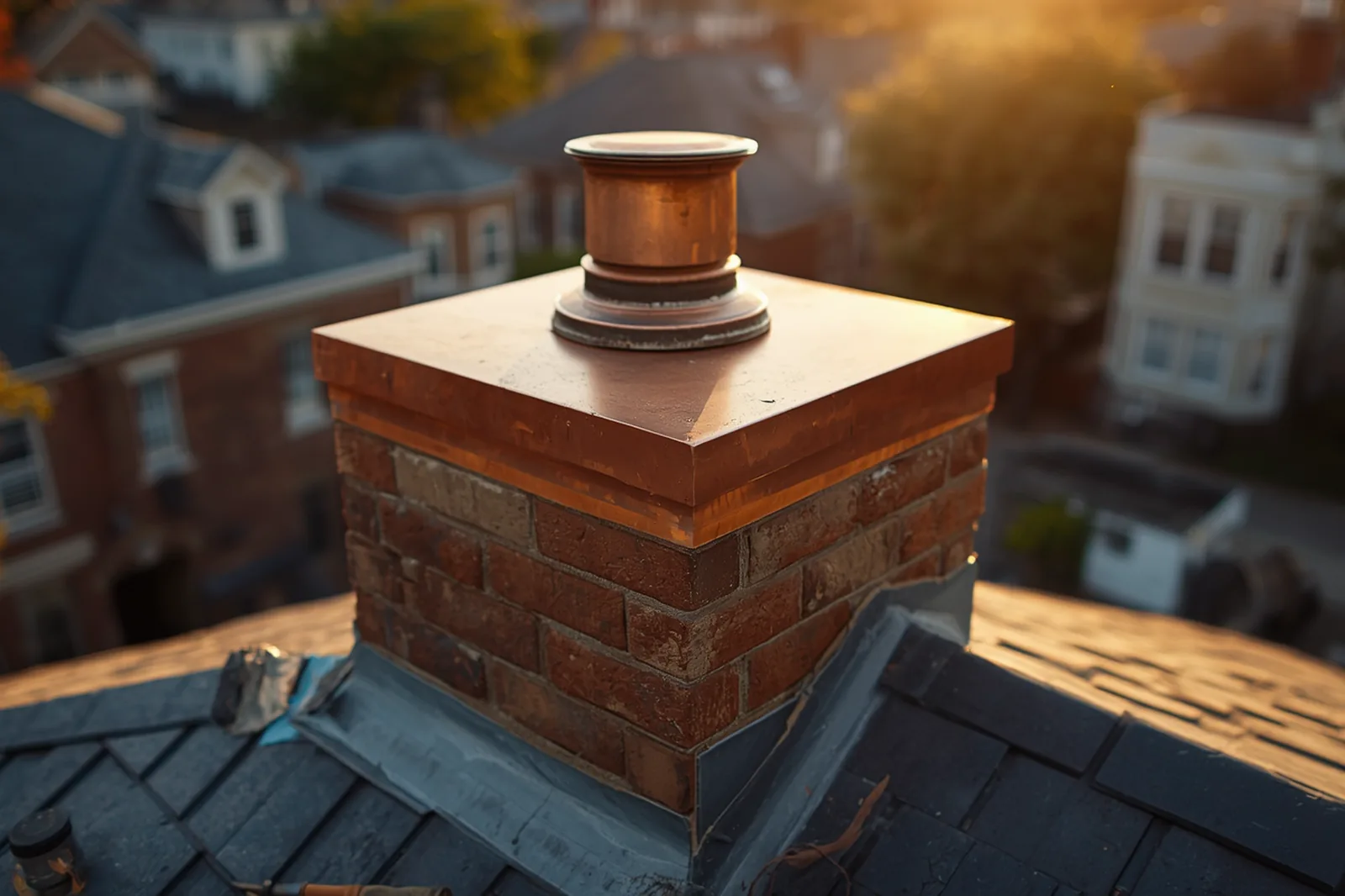
Chimney Flashing Repair in Crown Heights
Flashing is the metal that bridges the chimney and the roof, and it fails quietly under layers of tar. We cut out the old work, install new base flashing in copper or aluminum, and let counter-flashing into the brick joints so the seal does not depend on caulk.
How do I know if my chimney flashing is leaking?
Look for water stains on the ceiling right beside the chimney, usually within a foot or two of where the stack passes through. On the roof, flashing that has lifted away from the brick, is held on with roofing cement, or shows rust or open seams is failing. Water from a flashing leak appears after rain and dries between storms, unlike condensation or crown leaks that linger.
When a Crown Heights chimney needs flashing repair
Flashing is a two-part system. Base flashing turns up from the roof against the chimney, and counter-flashing comes down from the brick to lap over it. When either part is missing, surface-mounted or sealed only with tar, water finds the gap the first time the roof and the chimney move at different rates, which they always do.
- Ceiling stains on the top floor within a couple of feet of the chimney, worse after wind-driven rain
- Flashing visibly pulled away from the brick or sitting on top of the roofing instead of under it
- Roofing cement or caulk piled along the base of the chimney, cracked and curling
- Rust streaks on the roof membrane below the chimney from corroding galvanized flashing
- Counter-flashing that is surface-nailed to the brick rather than set into a mortar joint
- Daylight visible between the chimney and the roof deck from inside an attic or top-floor closet
- A new roof was installed and the chimney flashing was reused or tarred over
How we reflash a chimney on a flat or pitched Brooklyn roof
- Diagnose on the roofWe confirm the leak is flashing and not the crown, the brick or the flue by inspecting all four, and sometimes by water-testing the flashing alone. On a flat rowhouse roof we check how the membrane terminates against the stack. On a frame house with a pitched roof we look at the step flashing and the cricket, if any.
- Remove old flashing and tarLayers of roofing cement and old metal are cut away down to clean brick and a sound roof deck or membrane. We cut the old counter-flashing out of the joints. Any rotted decking against the chimney is flagged for the roofer or replaced if small.
- Install new base flashingOn a flat roof, base flashing is formed to turn up the chimney face and extend out onto the membrane, where it is sealed into the roofing system. On a pitched roof we install step flashing woven into the shingle courses along the sides, with an apron at the front and a back pan or cricket behind the chimney to divert water around it.
- Cut reglets and set counter-flashingWe grind a reglet into a mortar joint above the base flashing, bend the counter-flashing into it, and lock it in place with lead wedges, then repoint the joint with Type N mortar. The counter-flashing laps over the base flashing by a generous margin so water never has a direct path in.
- Address the parapet junctionOn pre-war buildings where the chimney meets a parapet, the flashing has to tie into the parapet's own flashing and coping. We detail that corner specifically, since it is where most apartment-building chimney leaks originate.
- Test and photographWe run water on the finished flashing with someone inside, photograph the completed work from the roof, and explain which parts are metal, which are sealed, and what to watch for the next time the roof is replaced so the flashing is not buried again.
Copper, aluminum, lead: choosing flashing metal for Brooklyn
Flashing metal has to survive salt air, nor'easters and movement between a brick stack and a roof. Galvanized steel is the budget choice and rusts out here within a few seasons, so we do not use it. Copper is the long-life standard; aluminum is a reasonable mid-range option when it is kept away from mortar contact; lead is still the best material for counter-flashing let into brick joints.
- Copper flashing for base, step and apron flashing that will outlast the roof
- Lead counter-flashing set into cut reglets, soft enough to dress tight against the brick
- Copper counter-flashing where the owner wants a single metal on a restored stack
- Aluminum base flashing as a lower-cost option, isolated from mortar with a membrane to prevent corrosion
- Type N mortar to repoint the reglet joint after the counter-flashing is set
- Modified-bitumen or compatible flashing membrane to tie base flashing into a flat roof system
- Soldered copper seams at corners rather than caulked joints

Flat rowhouse roofs, parapet chimneys, and pitched frame-house roofs
On limestone and brownstone rowhouses the roof is flat and the flashing is often buried under multiple roofing layers. We cut the chimney free, install proper base and counter-flashing, and tie the base into the membrane, coordinating with the roofer if a new roof is going on. Doing the flashing in copper means it survives the next reroof rather than being torn up with the old membrane.
Pre-war apartment buildings have chimneys against parapets, where chimney flashing, parapet flashing and coping all meet and all tend to fail at once. We handle the chimney side and detail into the parapet work. Victorian frame houses in southern Crown Heights have pitched roofs with step flashing, which is the classic flashing repair: woven step flashing, an apron, a back pan, and counter-flashing in the joints, usually in copper on a house of that age.
Representative flashing work in Crown Heights
- Project type
- Copper reflash with lead counter-flashing on a rowhouse stack
- Area
- Crown Heights, Brooklyn
- Problem
- A recent job type we handle is a limestone rowhouse where the top-floor ceiling stained beside the chimney after every windy rain, and the roof showed the chimney base buried in layers of roofing cement with the counter-flashing surface-nailed to the brick.
- Solution
- We removed the roofing cement and old metal, installed new copper flashing turned up the stack and tied into the modified-bitumen roof, cut reglets into the mortar joints and set lead counter-flashing with lead wedges, repointed the reglet joints in Type N mortar, and water-tested the junction with the owner watching from inside.
- Materials

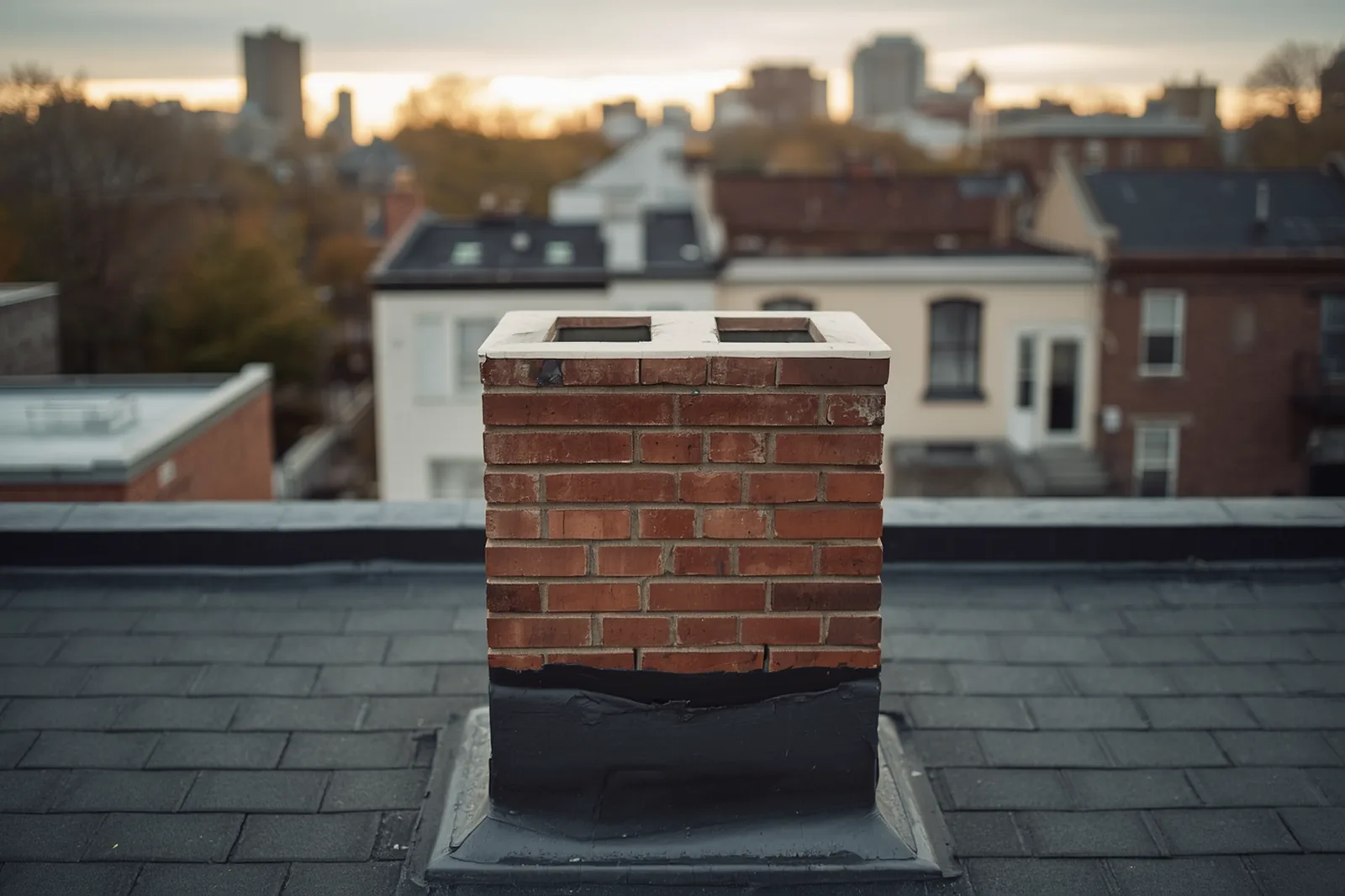
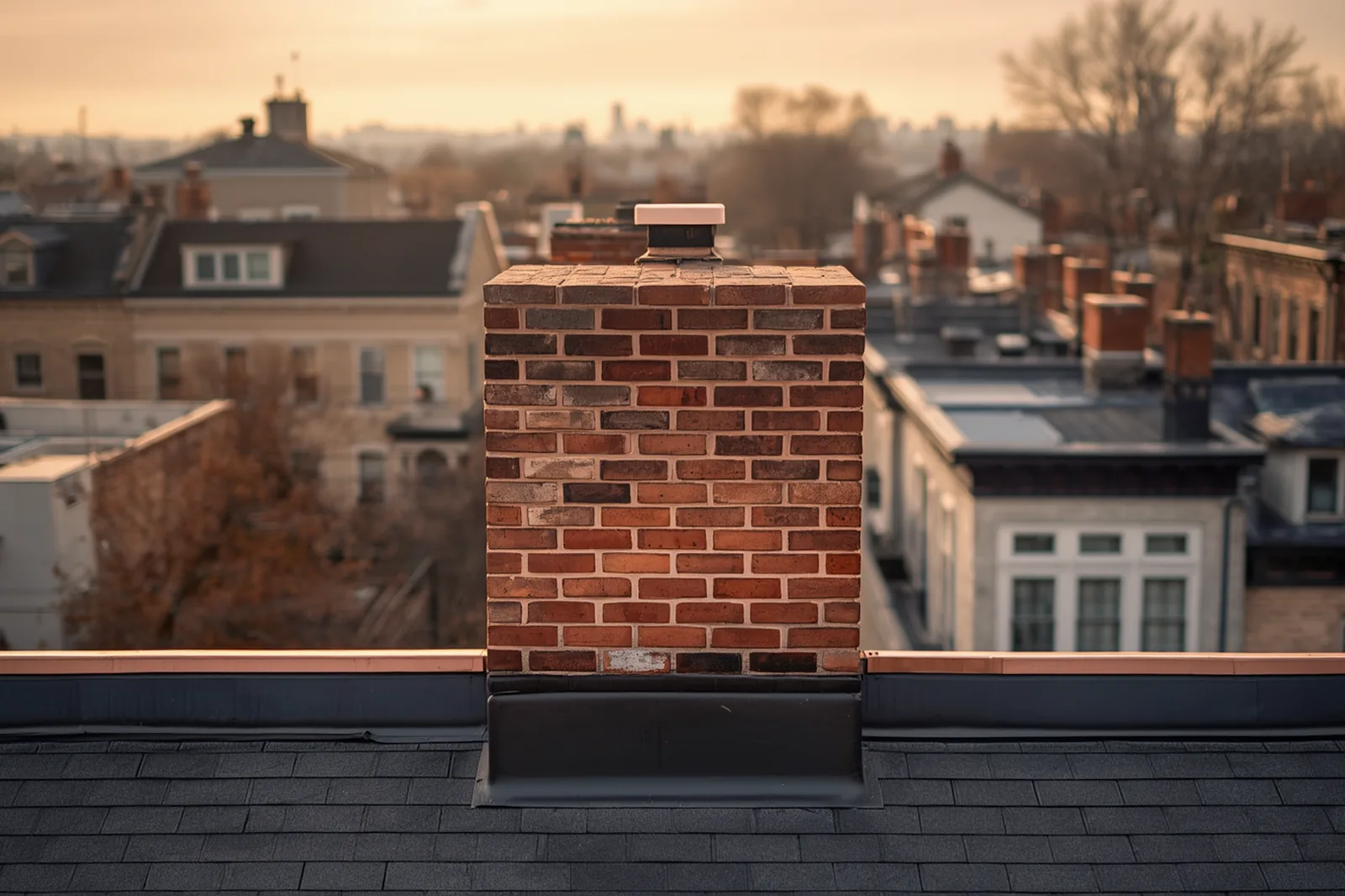
Before and After
Chimney Flashing Repair Across Our Service Area
Related Services
Why flashing fails early on Crown Heights roofs
Salt corrosion from the Atlantic air eats galvanized flashing and fasteners, and nor'easter wind lifts any flashing that is surface-mounted rather than let into the brick. Flat roofs on this housing stock get re-covered every couple of decades, and each time the chimney flashing tends to be tarred over rather than redone, until the whole junction is a mound of cracked roofing cement.
We see the same pattern across Bedford-Stuyvesant and Clinton Hill, and in the East Flatbush brick two-families. Properly let-in counter-flashing over copper base flashing is what the original builders used, and it is what we go back to. It is the difference between a flashing repair that lasts one roof cycle and one that lasts several.
Frequently Asked Questions
Can chimney flashing just be resealed with roofing cement?
It can be, and that is why most of the flashing we replace is buried in it. Roofing cement cracks within a season or two as the chimney and roof move, and each new layer traps water behind the old one. Resealing is at best a temporary stopgap until proper flashing can be installed. The permanent repair is metal base flashing with counter-flashing set into the mortar joints.
Should the roofer or the chimney company do the flashing?
Both trades touch it, and the junction works best when they coordinate. The base flashing has to integrate with the roof system, which is roofing work. The counter-flashing has to be cut into the brick joints and repointed, which is masonry work, and roofers commonly skip it. We do the full chimney side and tie into the roof, and when a reroof is underway we coordinate directly with the roofer.
Is copper flashing worth the extra cost over aluminum?
On a chimney that will see several roof replacements, yes. Copper does not rust, it solders at the corners for a true watertight seam, and it can be reused when the roof is replaced. Aluminum is lighter on the budget but has to be isolated from mortar, cannot be soldered, and has a shorter life in salt air. For a frame house or a visible street-facing stack, copper is usually the right call.
What is counter-flashing and why does it matter?
Counter-flashing is the upper piece of metal that comes out of the brick and laps down over the base flashing. It is set into a groove cut in a mortar joint, so water running down the brick face is thrown onto the base flashing rather than behind it. Surface-nailed counter-flashing with a bead of caulk at the top is the most common shortcut we find, and it leaks as soon as the caulk fails.
How do I know whether the leak is the flashing or the crown?
The timing and location help. Flashing leaks show up during or right after wind-driven rain, close to the ceiling line beside the chimney, and dry quickly. Crown and brick leaks tend to appear lower on the chimney breast, linger for days, and may show efflorescence. We confirm on the roof by inspecting all four paths and water-testing the flashing by itself if there is any doubt.
What drives the cost of chimney flashing repair?
Chimney size, roof type, the metal chosen, how much old roofing cement and metal has to be removed, and whether a parapet junction or a cricket is involved. A small frame-house chimney with step flashing in aluminum is the simple end. A wide rowhouse stack against a parapet, flashed in copper with lead counter-flashing and tied into a membrane roof, is more involved. We quote after seeing the junction on the roof.
Reflash it properly, once
Call (347) 555-0188 for a flashing inspection in Crown Heights and the surrounding Brooklyn neighborhoods. We check the crown, brick and flue at the same visit so the repair matches the leak.