
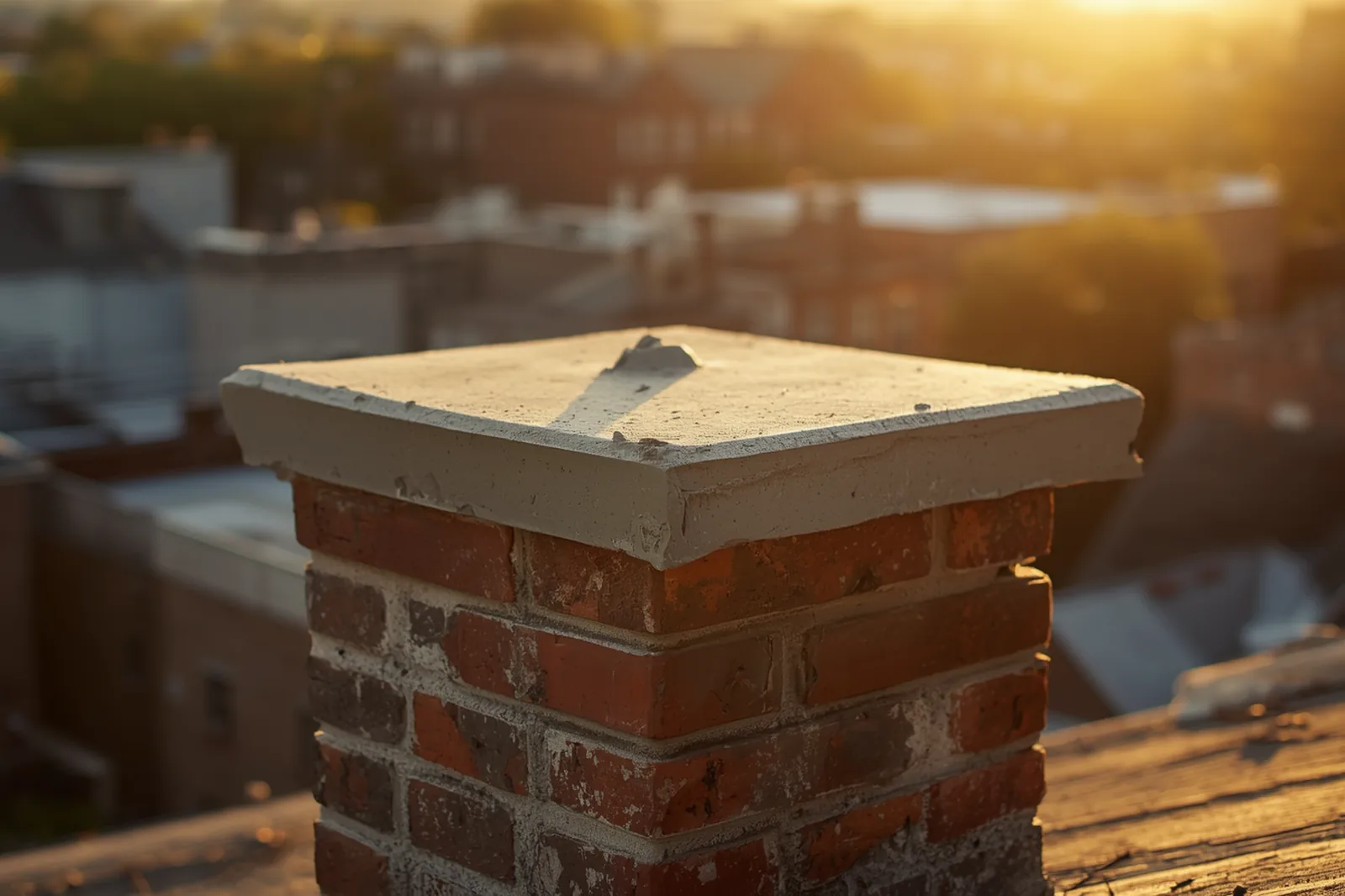
Chimney Crown Repair in Crown Heights
The crown is the slab that seals the top of the chimney around the flues, and on most Crown Heights stacks it is a thin mortar wash that cracked years ago. We rebuild crowns as reinforced cast-in-place slabs with an overhang and drip edge, so water sheds away from the brick.
What is a chimney crown and why does it crack?
The crown is the sloped top surface of the chimney that covers the brick and seals around the flue tiles. Most older crowns are a thin layer of mortar troweled over the top course, with no reinforcement, no overhang and no gap at the tile. Mortar shrinks as it cures, the clay tile expands with heat, and freeze-thaw does the rest. Cracks let water into the brick core.
When a Crown Heights chimney crown needs repair
A failed crown is the most common reason a Crown Heights chimney leaks from the top down. It is also the one repair that protects every other part of the stack, because once the crown sheds water properly, the brick, mortar and flue below it stay dry.
- Visible cracks across the top of the chimney, or pieces of crown lying on the roof
- The crown edge is flush with the brick, with no overhang, so water runs straight down the face
- Spalling brick in the top two or three courses directly below the crown
- Efflorescence or dark staining concentrated at the top of the stack
- Clay flue tiles that rock or have separated from the crown around them
- Roofing cement or caulk smeared over the top of the chimney by a previous repair
- Water stains inside the house near the chimney with no obvious flashing failure
How we recast a crown on a rowhouse or pre-war stack
- Evaluate repair versus recastHairline cracks in an otherwise thick, overhanging crown can be sealed with a flexible crown coating. A thin mortar-wash crown, a crown with open cracks, or one with no overhang gets removed and recast. We make that call on the roof and show you why.
- Remove the failed crownThe old crown is broken out with hand tools and a small demolition hammer, working carefully around the clay flue tiles so they are not cracked. We check the top courses of brick underneath; if they are loose or spalled, we rebuild them in Type N mortar before the new crown goes on.
- Form the new crown with an overhangForms are set so the new crown projects past the brick face on all sides with a drip edge underneath. On a pre-war parapet chimney where one side meets the coping, we detail that junction so water cannot pool against the parapet.
- Isolate the flue tilesA bond break is wrapped around each clay flue tile or stainless steel flue liner so the crown can move independently of the tile. This gap is what the original crowns lacked, and it is why they cracked at the tile every time.
- Pour and finish the cast-in-place crownWe pour a reinforced concrete crown, slope it from the flues to the edges, and trowel a dense finish. The expansion gap at each tile is filled with a high-temperature flexible sealant once the concrete has cured.
- Cure, cap and inspectThe crown is kept damp or covered while it cures so it does not crack early, then we fit or refit caps on each flue and photograph the completed top. A crown done this way is the last one the stack should need.
What a crown should be made of, and what it should not
The original crowns on this housing stock were mortar, which shrinks and has no tensile strength. A proper crown is a concrete slab, reinforced, with an overhang and a drip edge. Type N mortar belongs in the brick joints below it, not in the crown itself. Roofing cement belongs nowhere on a chimney.
- Cast-in-place crown in a reinforced concrete mix, poured in forms with an overhang past the brick face
- Steel or fiber reinforcement to control shrinkage cracking across the slab
- Bond-break material around each clay flue tile or stainless steel flue liner to allow movement
- High-temperature flexible sealant at the flue-to-crown gap
- Elastomeric crown coating for hairline cracks on crowns that are otherwise sound and properly built
- Type N mortar for rebuilding loose top courses before the crown is poured
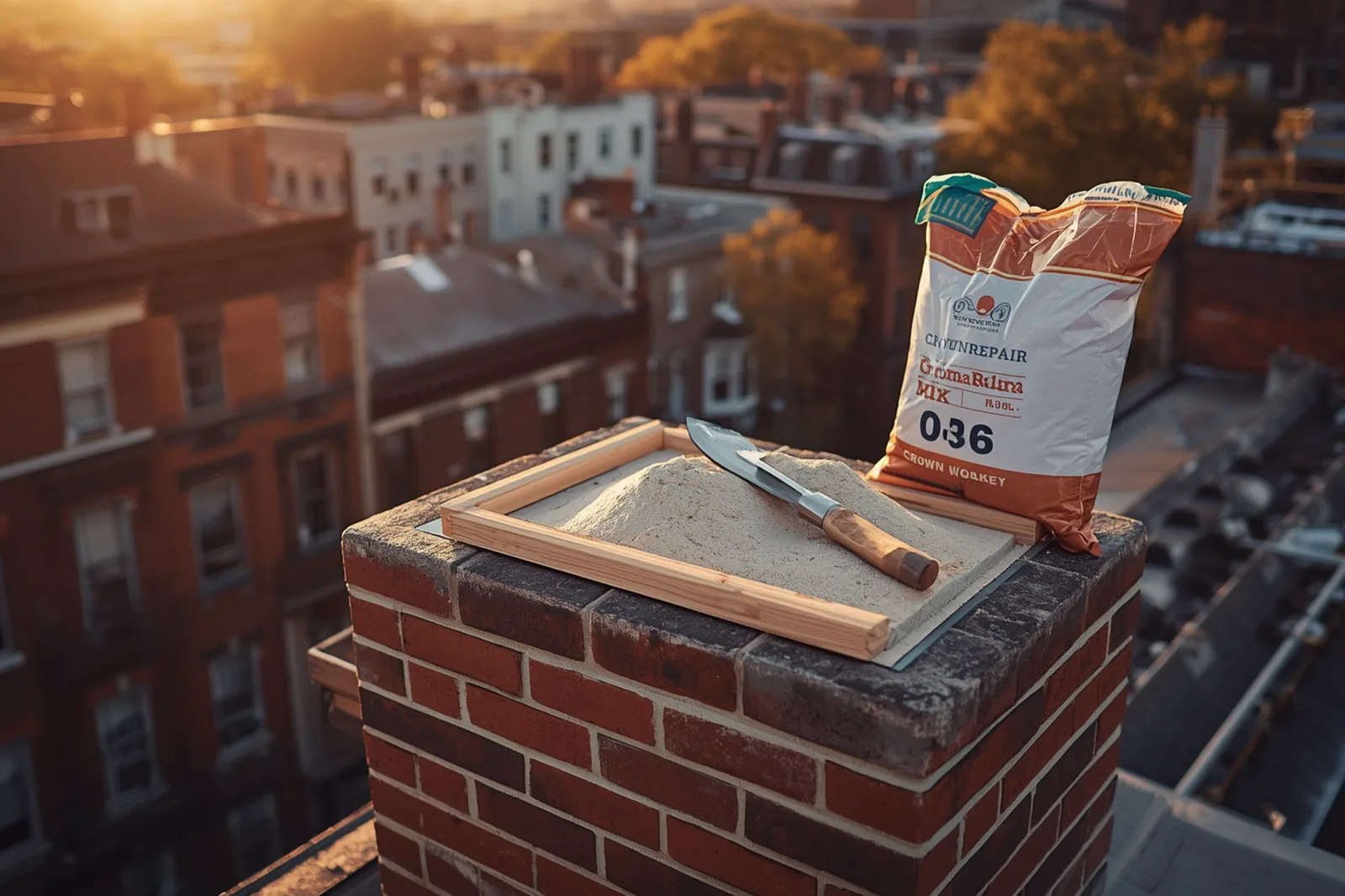
Multi-flue rowhouse stacks versus single-flue chimneys
Limestone and brownstone rowhouses have wide stacks with several clay flue tiles projecting through the crown, and each tile is a crack point in a mortar-wash crown. Recasting these means forming around multiple flues of different heights and isolating each one. The crown often has to be wider than the previous one to get a true overhang on a party-wall chimney where one face is shared.
Pre-war apartment buildings on Eastern Parkway have large single or double boiler flues in a stack that often meets the parapet. The crown there is bigger, the flue may carry a stainless steel flue liner with its own top plate, and the parapet coping has to be detailed into the work. Frame houses have small single-flue crowns that are quick to recast and where the overhang matters most because the brick below is fully exposed.
Representative crown work in Crown Heights
- Project type
- Crown recast on a multi-flue rowhouse stack
- Area
- Crown Heights, Brooklyn
- Problem
- A recent job type we handle is a brownstone rowhouse stack where the mortar-wash crown had cracked around all three clay flue tiles, a previous owner had smeared roofing cement over it, and the top two courses of brick were spalling on the weather side.
- Solution
- We removed the failed crown and the roofing cement, rebuilt the loose top courses in Type N mortar with reclaimed brick match, formed a cast-in-place crown with an overhang and drip edge, isolated each tile with a bond break and flexible sealant, and refitted stainless caps once it cured.
- Materials

Before and After
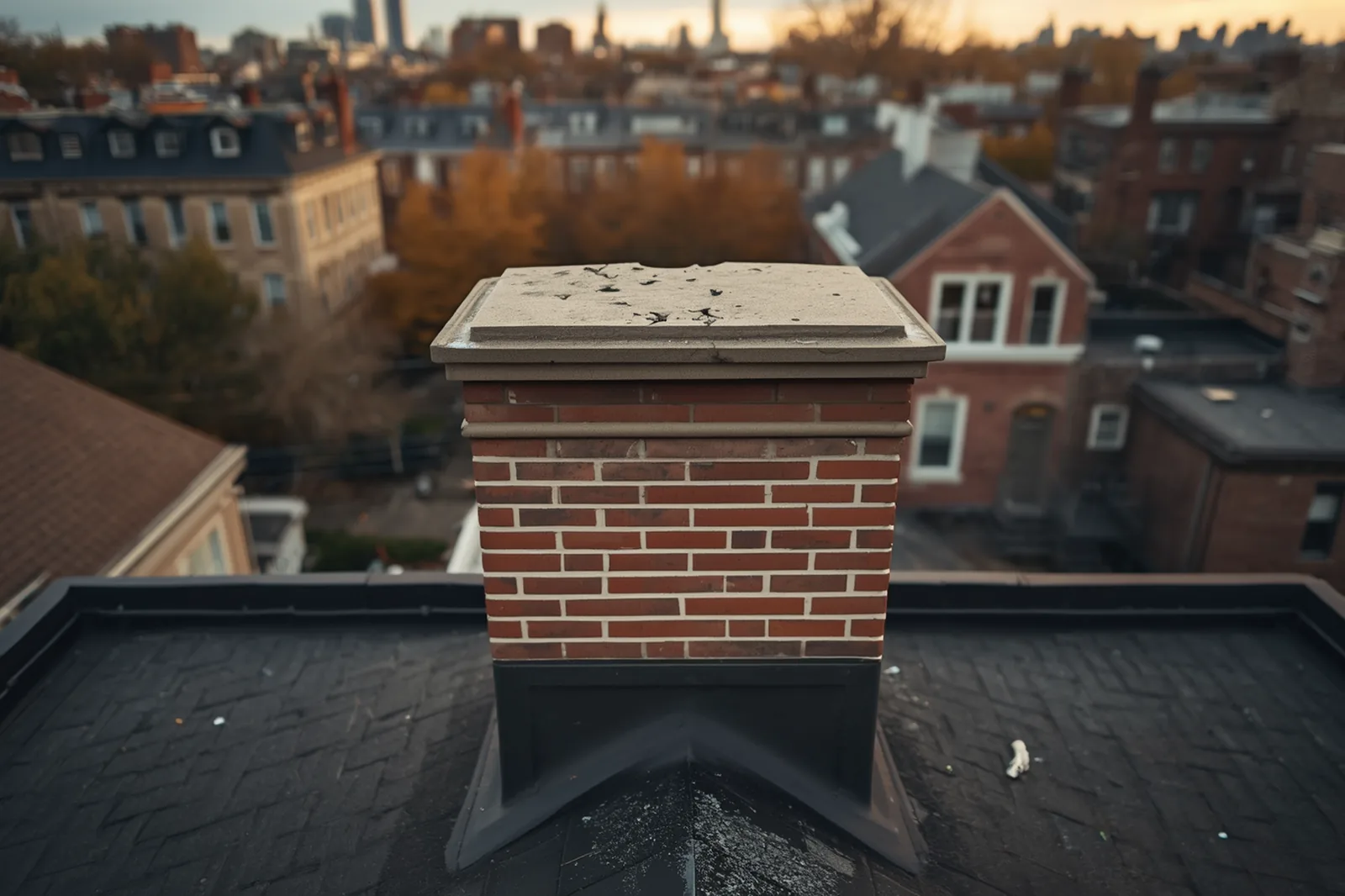
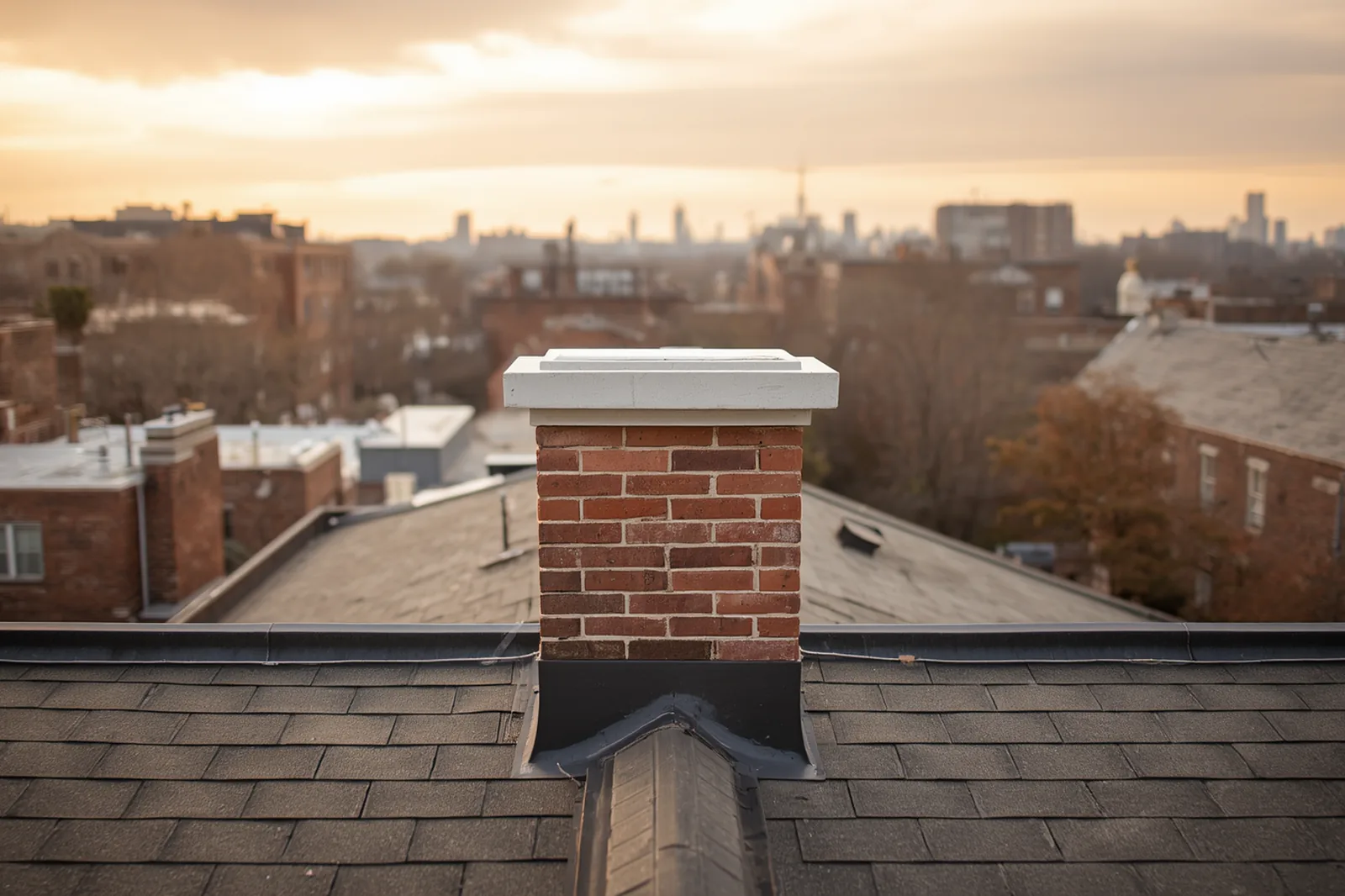
Chimney Crown Repair Across Our Service Area
Related Services
Crowns and the Crown Heights freeze-thaw cycle
A mortar-wash crown holds water in every hairline crack. Brooklyn winters give dozens of freeze-thaw cycles, and each one widens the crack. By spring the water is running into the top courses, and by the following winter those bricks are spalling. This is how most of the deteriorated stacks we rebuild in Crown Heights started, with a crown that could have been recast for a fraction of the cost.
Summer does its share too. Ponding on an aging flat roof keeps the base of the stack damp, and heat from a hot clay tile against a rigid crown with no bond break pushes the crack open. The pattern is identical in Prospect Heights and Clinton Hill rowhouses. A proper cast crown with an overhang and isolated tiles breaks the cycle.
Frequently Asked Questions
Can a cracked chimney crown be patched instead of replaced?
Sometimes. If the crown is a proper thick concrete slab with an overhang and the cracks are hairline, a flexible elastomeric crown coating seals it and extends its life. If the crown is a thin mortar wash, has open cracks, has no overhang, or has separated from the flue tiles, patching only hides the problem for a season. We tell you which situation you have from the roof.
How long does a cast-in-place crown last?
A reinforced concrete crown with a proper overhang, drip edge and bond breaks around the flues should last for decades without significant cracking, which is far longer than any mortar crown. The flexible sealant at the flue gap is the maintenance item and may need renewing over time. Keeping caps on the flues also keeps the crown from taking water from inside.
Why does the crown need to overhang the brick?
Because water running off a flush crown runs straight down the brick face, soaking the top courses and the joints. An overhang with a drip edge underneath throws water clear of the brick. Most original Crown Heights crowns were flush, which is a big reason the top courses on these stacks are the first to spall. The overhang is a small detail with a large effect.
Should the crown be repaired before or after a new cap or liner?
Before, if both are needed. Caps anchor to the crown and liners terminate with a top plate sealed to it, so a cracked crown undermines both. If we are installing a liner we recast the crown first and bring the liner through it. If we find a failed crown during a cap installation, we explain the order and usually do the crown and caps in one mobilization.
Will you need to rebuild brick to repair the crown?
Only if the top courses have been damaged by water from the failed crown, which is common on stacks that have leaked for years. We check once the old crown is out. If a few bricks are loose or spalled, we reset or replace them with reclaimed brick match in Type N mortar before pouring. If a whole section is loose, that becomes a partial rebuild and we discuss it before continuing.
What drives the cost of a chimney crown repair?
Crown size and the number of flues to form around, whether the old crown and roofing cement have to be removed, how many top courses need rebuilding, and roof access. A single-flue frame house crown is the simple end. A wide party-wall stack with four flues and spalled upper courses is more involved. The quote is set after we see the top of the stack, not from the ground.
Guides on this topic
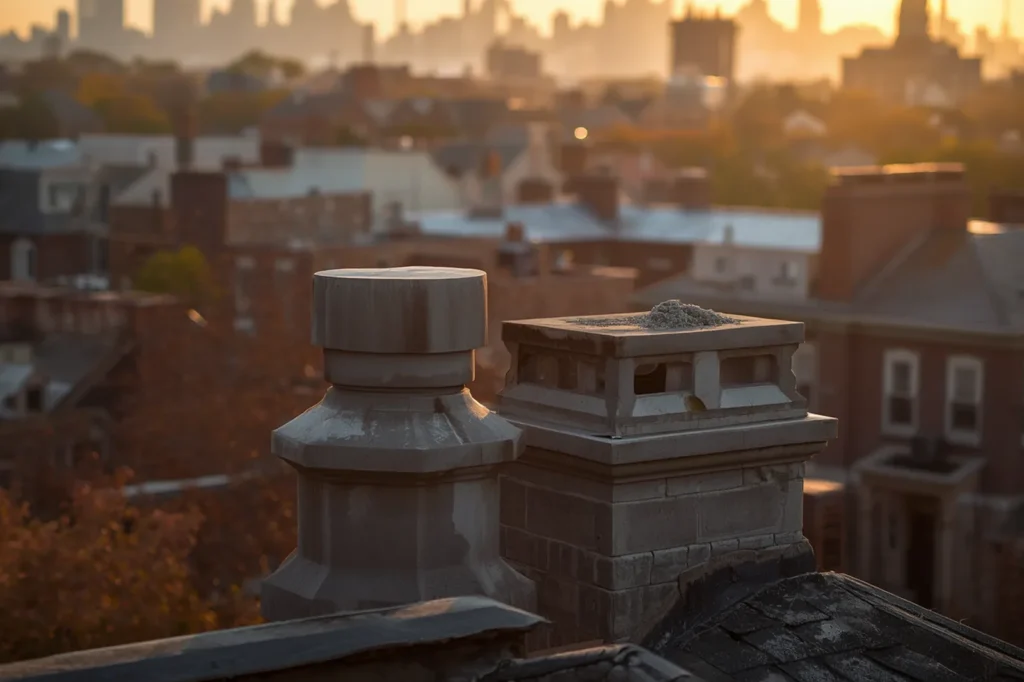
Chimney Crown vs Chimney Cap: The Two Parts That Fail First on Crown Heights Roofs
The crown is the sloped masonry top that sheds water off the brick and the cap is the metal cover that keeps rain and animals out of the…
Read the guide →
Seven Signs Your Crown Heights Chimney Is Leaking (and Three Things That Only Look Like Leaks)
Most chimney leaks on Crown Heights roofs enter through a cracked crown, failed flashing or a missing cap, and each one leaves a different signature inside the house,…
Read the guide →Fix the top and protect the whole stack
Call (347) 555-0188 for a crown assessment in Crown Heights or nearby Brooklyn neighborhoods. We photograph the top of the stack and tell you whether it is a seal, a recast or a rebuild.