
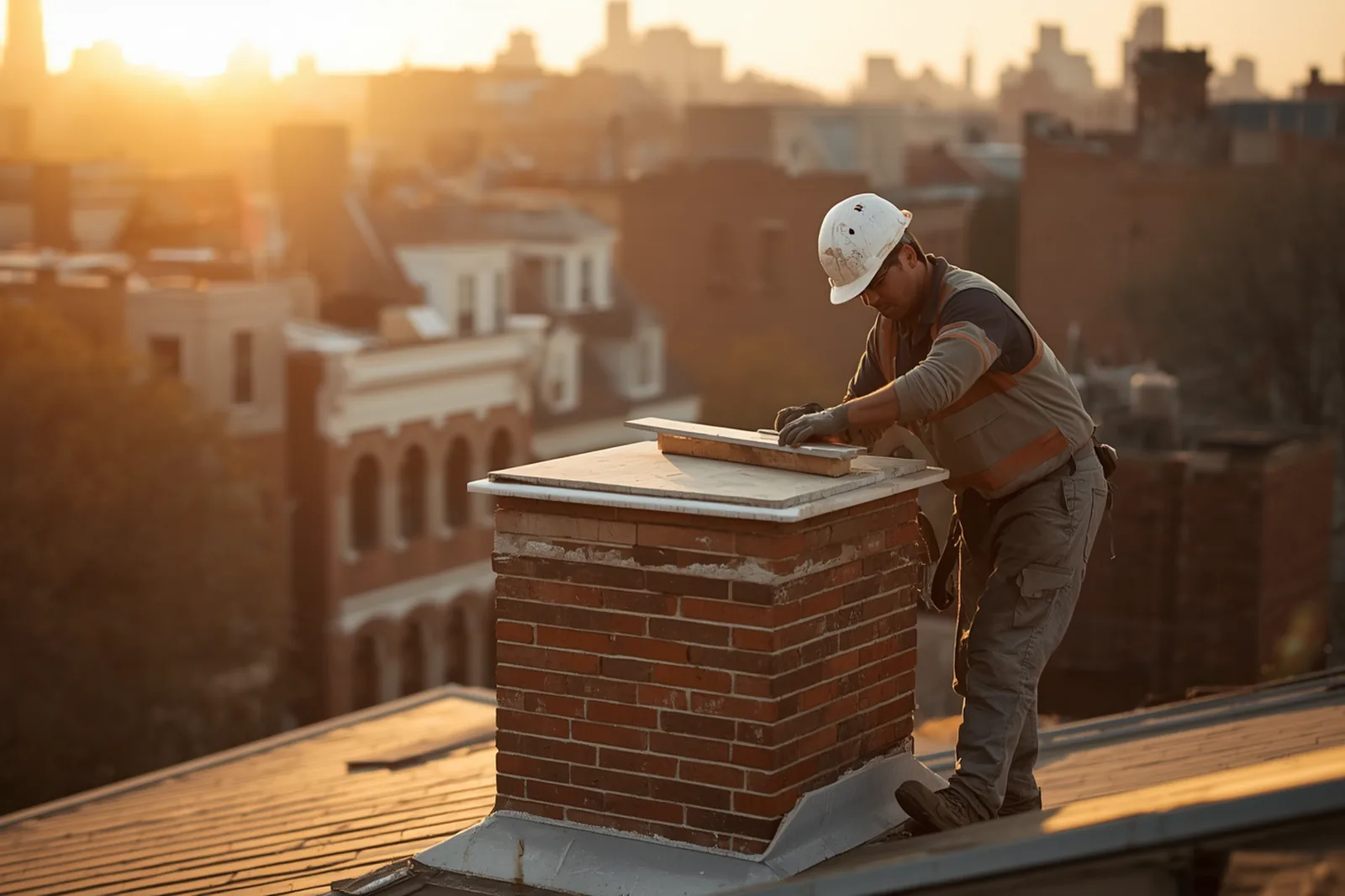
Chimney Tuckpointing in Crown Heights
Mortar joints are the sacrificial part of a chimney: they are meant to wear before the brick does. We grind out failed joints on Crown Heights stacks and repoint them in a lime-rich Type N mortar that matches the original in strength and color.
What is tuckpointing and when does a chimney need it?
Tuckpointing, or repointing, is removing deteriorated mortar from the joints between bricks and packing in new mortar. A chimney needs it when joints are recessed, crumbling, or you can push a key into them, when sand collects on the roof at the base of the stack, or when water stains appear inside near the chimney. Done in time, it prevents spalling brick and a full rebuild.
When a Crown Heights chimney needs tuckpointing
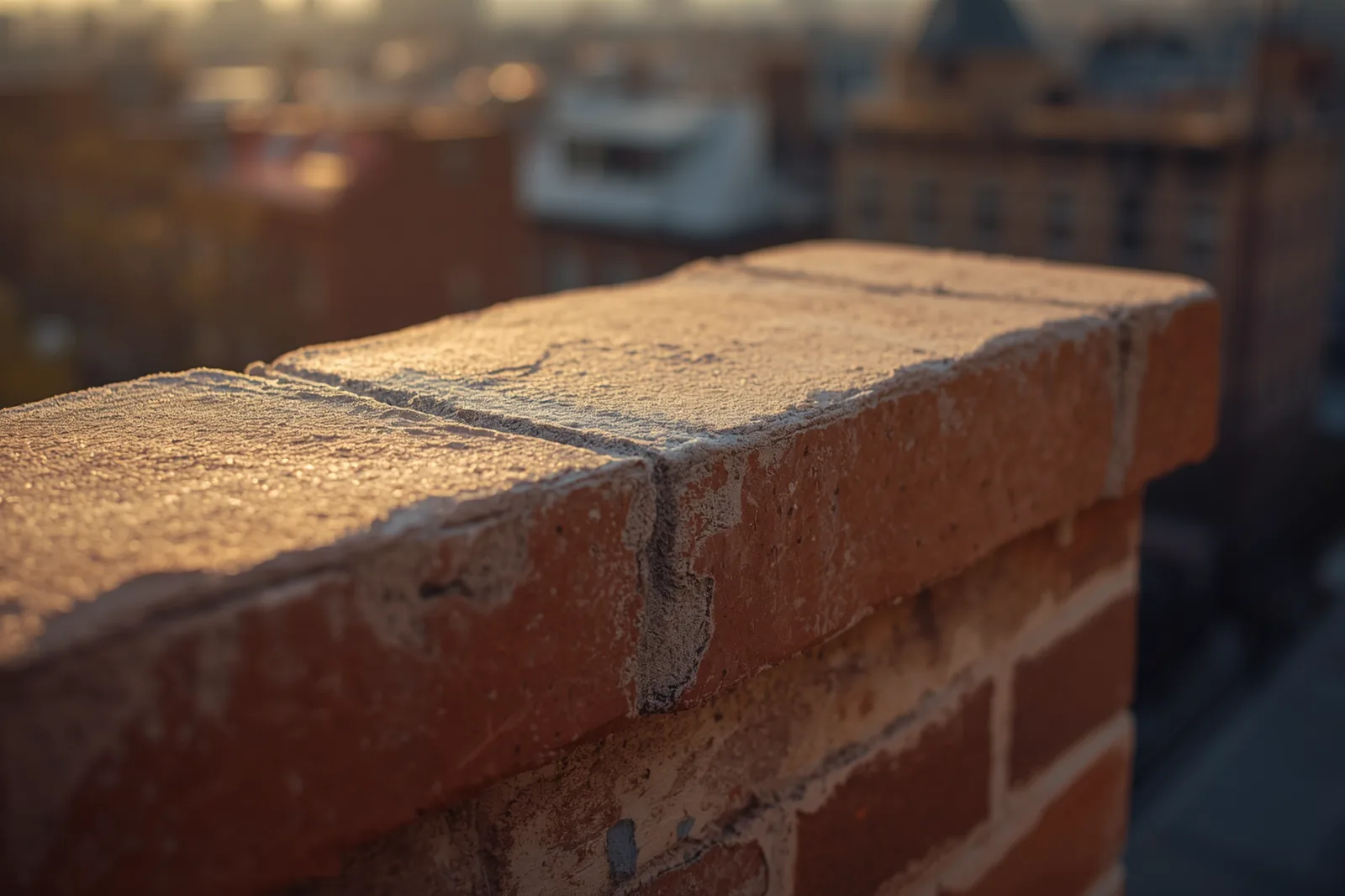
Joints fail from the top of the stack down, because the top takes the most weather and the least sun. By the time you can see open joints from the yard, the upper courses are usually well past repointing and into rebuild territory. We assess from the roof, course by course, and tell you where the line is.
- Mortar joints recessed well behind the brick face, or missing entirely near the top of the stack
- Mortar sand and small chips collecting on the roof membrane around the chimney base
- Crumbling mortar joints you can scrape out with a fingernail
- Spalling or flaking brick faces, which start once the joints stop shedding water
- White efflorescence tracking down the stack from open joints
- Hairline daylight visible between bricks from inside an attic or top-floor closet
- A previous repointing in hard gray Portland mortar that is now popping out in strips
How we repoint a stack on a rowhouse roof
- Assess the joints and the brickFrom the roof we probe joints with a pick, note the depth of erosion, check brick faces for spalling, and look for a lean or step cracks. We also identify the original mortar, which on 1900s Crown Heights brick is almost always a soft lime mortar, so the replacement has to match.
- Protect the roof and the houseFlat roofs get plywood and tarps under the work area to protect the membrane from grinder debris and dropped tools. Flue openings are covered so grit does not fall onto the smoke shelf. On a parapet-edge chimney we set up with proper fall protection.
- Grind out failed joints to sound depthJoints are cut out with a grinder and hand chisels to a depth of at least twice the joint width, until we reach sound mortar. We work carefully around the brick edges so the units are not chipped. Shallow scratch-and-smear repointing is what we are usually replacing, and it never holds.
- Match and mix the mortarWe mix Type N mortar, which has enough lime to stay softer than the brick, and tint it to match the original joint color with mineral pigments and sand selection. A test patch cures before we commit to a color on a visible street-facing stack.
- Pack and tool the jointsJoints are dampened, then packed in lifts with a pointing trowel and compressed so there are no voids. Once thumbprint hard, each joint is tooled to the original profile, whether that is concave, flush, or the raked joint common on this era of brickwork.
- Cure, clean and inspectFresh joints are kept from drying too fast in summer and protected from frost in cold weather. We brush off any haze, remove the protection, and photograph the finished stack. If the crown or cap also needed attention, we address it in the same mobilization.
Why mortar choice decides whether repointing lasts
A mortar harder than the brick destroys the brick. Old Brooklyn common brick and limestone are soft; modern Type S or straight Portland mixes are hard, and when the wall moves with temperature and moisture the brick faces pop instead of the joint. Type N is the correct middle ground for most stacks here, and we go softer where the original mortar calls for it.
- Type N mortar, a lime-cement blend with enough flexibility for 1900s brick
- Natural hydraulic lime mortar for the softest historic brick and limestone where even Type N would be too hard
- Mineral pigments and local sand selection to match joint color and texture, not paint or stain
- Reclaimed brick match for the occasional spalled unit replaced during repointing
- Breathable water repellent applied after the mortar has fully cured, where exposure justifies it

Rowhouse party-wall stacks, pre-war buildings, and frame house chimneys
On limestone and brownstone rowhouses the chimney shares a party wall, so the stack above the roof is often wider than it is deep and exposed on three sides. The street-facing side matters for appearance, and we match mortar color carefully there. The rear side takes the weather and is where joints fail first. Partial repointing of the upper courses is common when the lower stack is still sound.
Pre-war multifamily buildings have large boiler stacks and parapet-adjacent chimneys where the joints and the parapet coping fail together. We coordinate with building management for roof access and often repoint the chimney and the adjacent parapet in one scope, since water from one reaches the other. Frame houses have slender exterior chimneys that are fully exposed and often need repointing on all four faces at once.
Representative tuckpointing in Crown Heights
- Project type
- Tuckpointing on a 1910s rowhouse
- Area
- Crown Heights, Brooklyn
- Problem
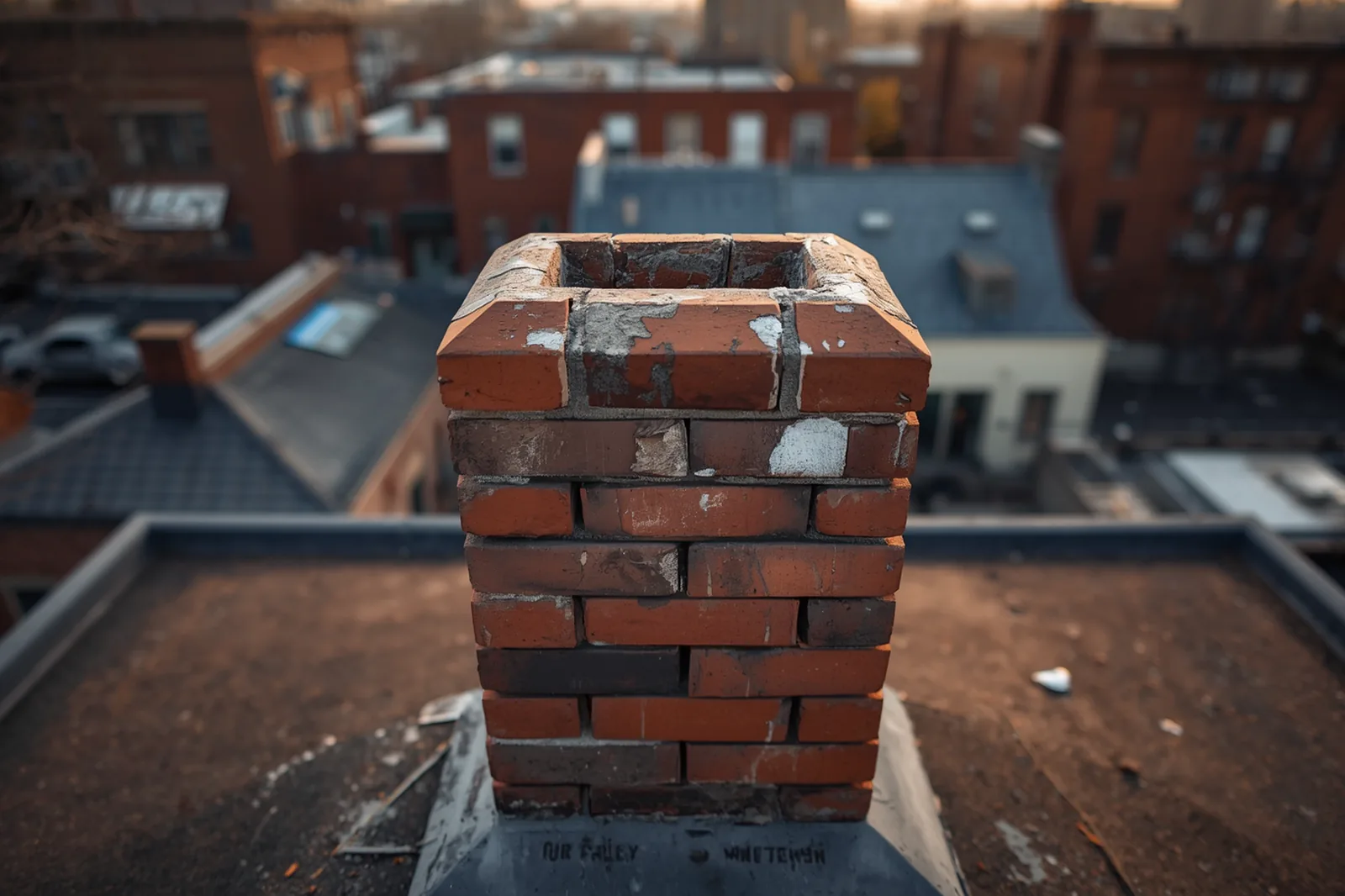
- A recent job type we handle is a limestone rowhouse with a tall party-wall stack where the upper courses had open joints on the rear face, mortar sand on the roof, and the beginnings of spalling where a previous owner had patched with hard gray mortar.
- Solution
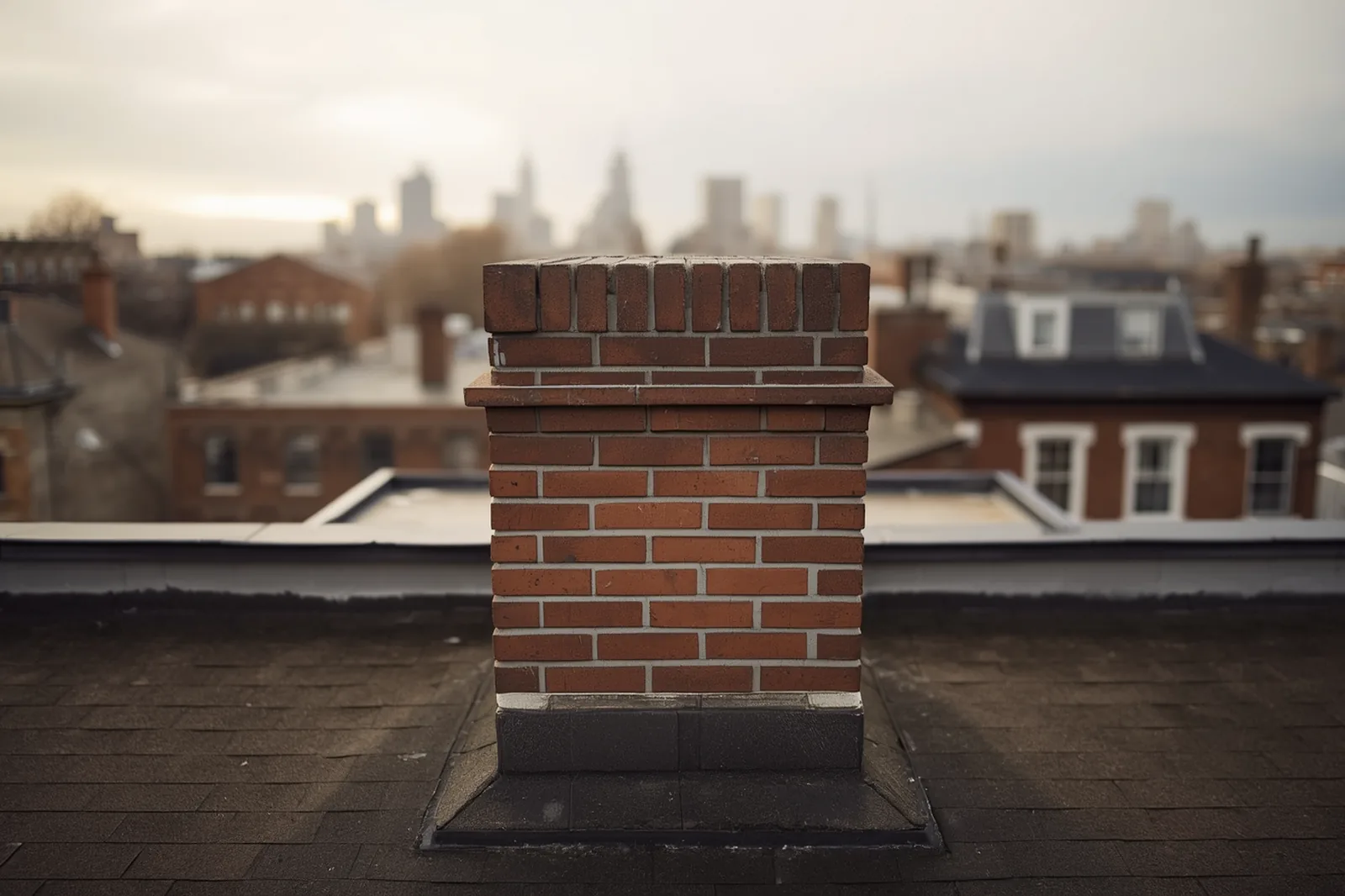
- We ground out the failed joints to sound depth, removed the hard patches without damaging the brick, replaced a handful of spalled units with reclaimed brick match, and repointed the exposed faces in a tinted Type N mortar tooled to the original concave profile. The crown was sound, so the stack needed nothing further.
- Materials
Before and After
Chimney Tuckpointing Across Our Service Area
Related Services
What Brooklyn weather does to a mortar joint
Crown Heights chimneys sit above flat roofs with nothing to shelter them. Nor'easter rain soaks the stack, winter freezes it, and the expanding ice pushes mortar out of the joints a fraction at a time. Salt in the coastal air works into the joints as well. After a century of this, the top few feet of most stacks have little original mortar left.
The bigger problem is past repairs. Many stacks in Crown Heights, Bedford-Stuyvesant and Prospect Heights were repointed decades ago in hard gray Portland mortar, and the brick around those joints is now spalling. Correcting that means removing the hard mortar carefully and repointing in the right mix, which takes longer than repointing a stack that was never touched.
Frequently Asked Questions
How do I know if my chimney needs tuckpointing or a rebuild?
It comes down to the brick, not the mortar. If the brick units are sound and only the joints have eroded, repointing restores the stack. If a large share of the brick faces are spalled, the stack is leaning, or courses have shifted, repointing cannot hold it together and a rebuild from the roofline up is the honest answer. We assess course by course from the roof and show you photos so the decision is clear.
Will the new mortar match the old brickwork?
On a visible stack we take it seriously. The color comes from the sand and mineral pigments, not from paint, and we cure a test patch before committing. Fresh mortar always looks lighter for the first months and weathers toward the original. On a rear-facing stack above a flat roof that nobody sees, we still match reasonably but spend the effort on depth and compaction instead.
Why not use a harder mortar so it lasts longer?
Because a hard mortar does not fail, the brick next to it does. Old Brooklyn brick is soft and moves slightly with temperature and moisture. A Portland-heavy joint is rigid, so the stress goes into the brick face and it pops off, which is far more expensive than a joint that eventually needs repointing again. Matching the mortar to the brick is the whole discipline of repointing historic masonry.
Can tuckpointing be done in winter?
Mortar needs to cure above freezing for several days, so cold-weather repointing requires protection and heat, and we generally schedule exterior chimney work from spring through fall. Very hot, dry summer days are also a problem because the mortar dries before it cures, so we mist and shade fresh joints. If a stack is actively leaking in winter, we can make a temporary repair and schedule the proper repointing when the weather allows.
Do you repoint the whole chimney or just the bad area?
Only the failed joints, to the extent they have failed. Most stacks need the top courses done on all faces and perhaps the weather side further down, with the lower stack left alone. Repointing sound joints wastes money and risks chipping good brick. We mark the extent on the roof and explain it before we start grinding.
What drives the cost of chimney tuckpointing?
The height and width of the stack, how many faces and courses need work, the depth of erosion, whether hard old mortar has to be removed, and roof access. A few courses on a frame house chimney is a short job. A tall rowhouse party-wall stack with all faces failing and brick replacements is a bigger one. We measure the extent on the roof and quote the actual area.
Repoint the stack before the brick goes
Call (347) 555-0188 for a roof-level assessment of your chimney joints in Crown Heights or nearby Brooklyn neighborhoods. We bring a pick, a camera and a mortar sample.