What should a Prospect Heights brownstone owner know about the chimney?
Most Prospect Heights rowhouse chimneys are original party-wall stacks with several clay tile flues serving fireplaces and the boiler. NFPA 211 recommends an inspection every year, and in these houses the common findings are open tile joints, shared flues, missing caps and cracked crowns. Exterior work visible from the street in the historic district should be checked against Landmarks rules before it starts.
The housing stock around Vanderbilt and Underhill
The Landmarks Preservation Commission designated the Prospect Heights Historic District in 2009, covering roughly 850 buildings, most of them rowhouses built from the mid-1800s into the early 1900s in Italianate, Romanesque, Renaissance Revival and related styles. Walk Prospect Place, Park Place or St. Marks Avenue between Vanderbilt and Underhill and nearly every stack on the roofline dates from the house's construction.
Those blocks share their bones with the rowhouses just east in Crown Heights: three- and four-story brownstone or limestone fronts, raised stoops, flat roofs with parapets, and chimneys built into the party walls. Closer to Atlantic Avenue and Flatbush Avenue the picture changes, with newer condo buildings around the Atlantic Yards site that have no masonry chimneys at all and rely on direct-vent equipment.
This guide is for the rowhouse owners. Our crew covers Prospect Heights from our base a few blocks away in Crown Heights, and the stacks here are the same construction we work on every week.
Party-wall stacks with multiple flues
A Prospect Heights rowhouse chimney is not one flue. It is a stack built into the wall shared with the neighbor, holding several separate clay tile flues side by side: typically one for each fireplace on the parlor and upper floors, and one for the furnace or boiler in the cellar. The stack on the opposite party wall may hold the neighbor's flues and yours in the same brick.
The flues are clay tile, stacked in sections and mortared as the chimney went up, and they jog sideways where they pass around a fireplace above. Those offsets are where tile joints open first and where deposits collect. The mortar between tiles has had more than a century to wash out, and the brick around the flues was laid in soft lime mortar.
Because the stack is shared, a problem in one flue is a problem for the whole wall. A cracked tile on a boiler flue puts flue gases into brick that also carries the neighbor's parlor flue. That is why the inspection has to cover every flue in the stack, not only the one with the fireplace you use.

Historic district considerations
Inside the historic district, the Landmarks Preservation Commission regulates changes to the exterior of a building that are visible from the street. A chimney stack above the roofline is part of that exterior. Routine maintenance such as sweeping, interior relining and repointing in matching mortar is generally straightforward, but visibly changing the stack, adding a tall metal extension, or replacing a masonry top with something that looks different can require LPC review.
The practical rule we follow: if the work changes what the stack looks like from the sidewalk, check with LPC before it starts. If it keeps the stack looking as it does, document the existing condition with photos and match the materials. A reclaimed brick match and a mortar tinted to the existing joints matter more here than almost anywhere else in Brooklyn.
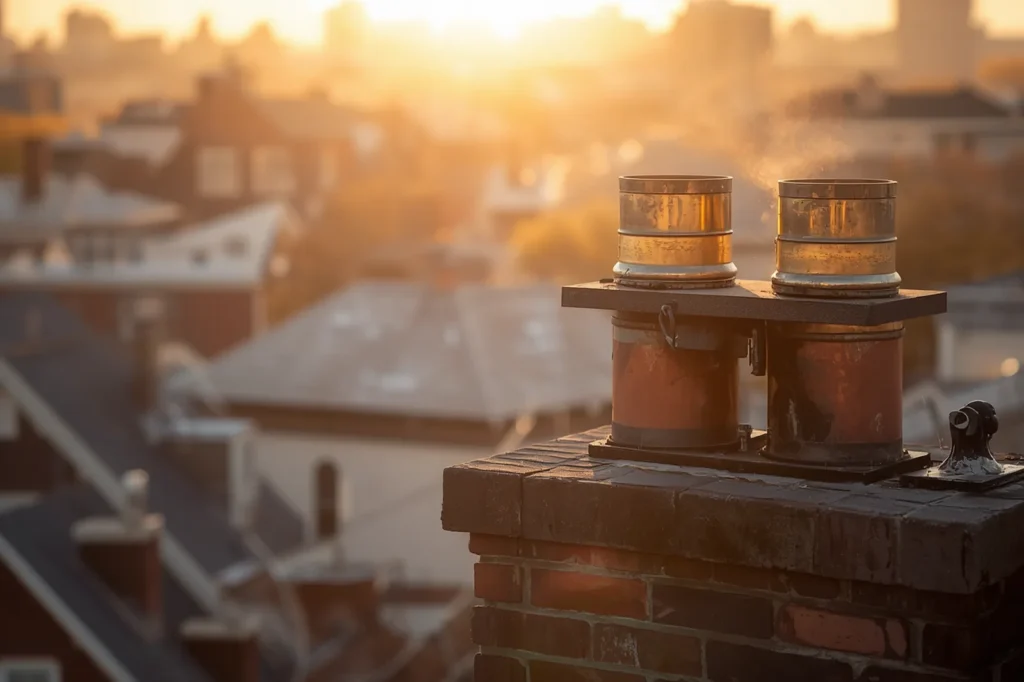
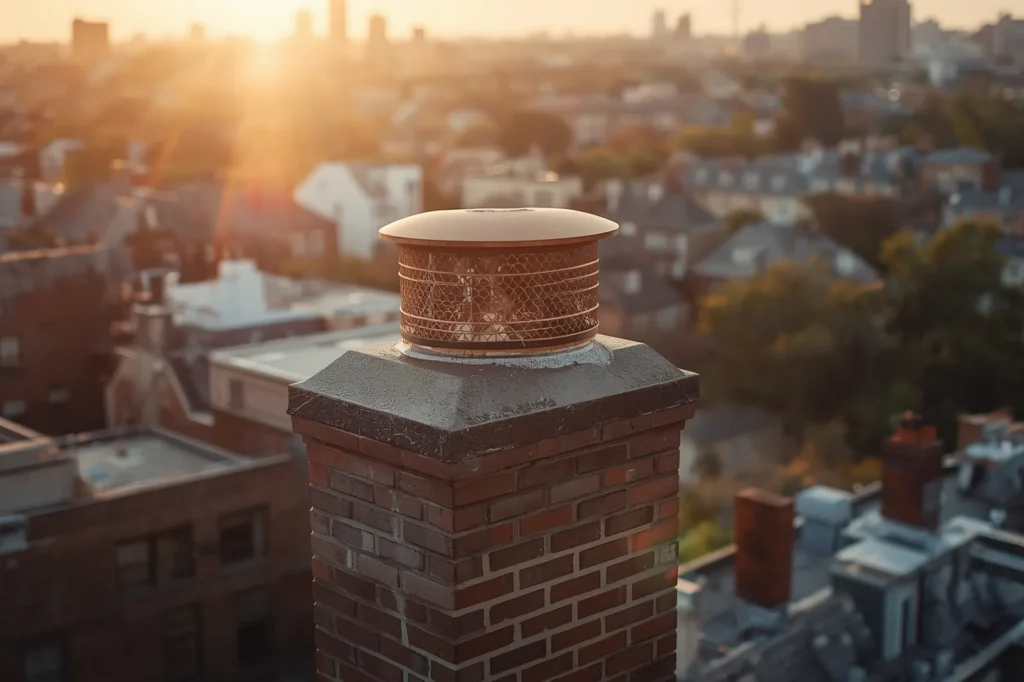
Caps are the common question. A low-profile stainless or copper cap on an existing flue is usually not something that changes the character of the building, but a bright galvanized multi-flue cover on a stack facing the street is the kind of thing that draws attention. We lean toward copper on street-facing stacks in the district for exactly that reason.
Common findings in Prospect Heights inspections
After enough camera scans in these blocks the findings repeat. None of them are unique to Prospect Heights, but the age and the shared construction make them more likely here than in the younger brick houses further out.
- Open or missing mortar between clay flue tiles, especially at the offsets
- Fireplaces on two floors sharing a single flue after a renovation decades ago
- A gas boiler or water heater venting into an original clay flue with no liner
- No cap on any flue, with a bird's nest or debris on the smoke shelf
- A cracked crown that has let water into the top courses of the stack
- Efflorescence and spalling brick on the stack above the roofline
- A damper rusted from decades of rain through an open flue
- A gas log set installed in a fireplace whose flue was never scanned
Working fireplaces vs decorative ones
Many Prospect Heights listings describe a fireplace as decorative, and many owners of a decorative fireplace would like it to work. Decorative usually means one of three things: the flue was bricked off at some point, the flue is shared or compromised and should not be burned in, or nobody has ever looked and the word is a precaution.
A camera scan separates the cases. A flue that is intact and unobstructed can often be put back into service with a sweep, a cap and possibly a new damper. A flue with cracked tiles or open joints needs a stainless steel liner before a fire is lit in it. A flue that is bricked off or that shares a run with the boiler is a bigger conversation and sometimes the honest answer is that it stays decorative.
Either way, the fireplace you do use needs a yearly chimney sweep, and NFPA 211 recommends every chimney, fireplace and vent be inspected at least annually whether it is used or not, because the boiler flue in the same stack runs all winter regardless.
Service from nearby Crown Heights
Crown Heights Chimney Sweep is a local crew, not a storefront, and Prospect Heights is a few minutes from the blocks we work most. We sweep wood, gas and oil flues, run camera scans, install stainless liners, recast crowns, fit caps, and repoint and rebuild stacks above the roofline with matched brick and mortar.
For buyers and sellers in the district, a documented Level 2 chimney inspection with footage is the standard, and we deliver the report the same day where the flue allows. For owners, the annual sweep and Level 1 check is the habit that keeps the stack out of trouble. The same crew covers the attached rows in Bedford-Stuyvesant to the north.
If you own a rowhouse between Flatbush Avenue and Washington Avenue and have never had the stack scanned, tell us the block and what you burn and we will schedule a visit that covers every flue in the wall.
Frequently Asked Questions
Do I need Landmarks approval to repair my chimney in Prospect Heights?
It depends on whether the work changes the exterior appearance from the street. Sweeping, camera inspection and interior relining do not. Repointing and rebuilding in matching brick and mortar generally keep the stack looking as it did, which is the goal. Visibly altering the stack, adding a tall extension or changing the top in a way that reads differently from the sidewalk may need LPC review. When in doubt, we document the existing condition and you check with LPC before the work starts.
How often should a Prospect Heights brownstone chimney be inspected?
Every year, following NFPA 211. In these houses that annual check covers more than one flue, because the party-wall stack usually holds a boiler flue as well as the fireplaces. A wood-burning fireplace used through the winter should be swept as part of that visit. If you are buying or selling, a Level 2 inspection with a camera scan of every flue is the standard.
My boiler and my fireplace seem to share a chimney. Is that a problem?
They may share a stack without sharing a flue, which is normal: the stack holds several separate tile flues. If they share a single flue, that is a draft and carbon monoxide concern and a code concern, and it is a common finding in houses that were divided into apartments. A camera scan from each opening shows which case you have. Shared flues are usually resolved with a dedicated stainless liner for the boiler.
Can a decorative fireplace in a Prospect Heights rowhouse be made to work again?
Often, yes. If the flue is intact and unobstructed on camera, a sweep, a cap and possibly a new damper may be all it takes. If the clay tiles are cracked or the joints are open, a stainless steel liner sized for the firebox makes it safe to burn in. If the flue was bricked off or shares a run with the boiler, the answer is more involved and sometimes the fireplace is best left decorative. The scan tells you which.
Do you serve the condo buildings near Atlantic Yards too?
Most of the newer buildings around the Atlantic Yards site use direct-vent or sealed-combustion equipment and do not have masonry chimneys, so there is usually nothing for a chimney crew to do there. Our work in Prospect Heights is almost entirely in the rowhouses and the older apartment buildings with masonry stacks. If a building has a masonry boiler stack, we handle it the same way we do on Eastern Parkway.