
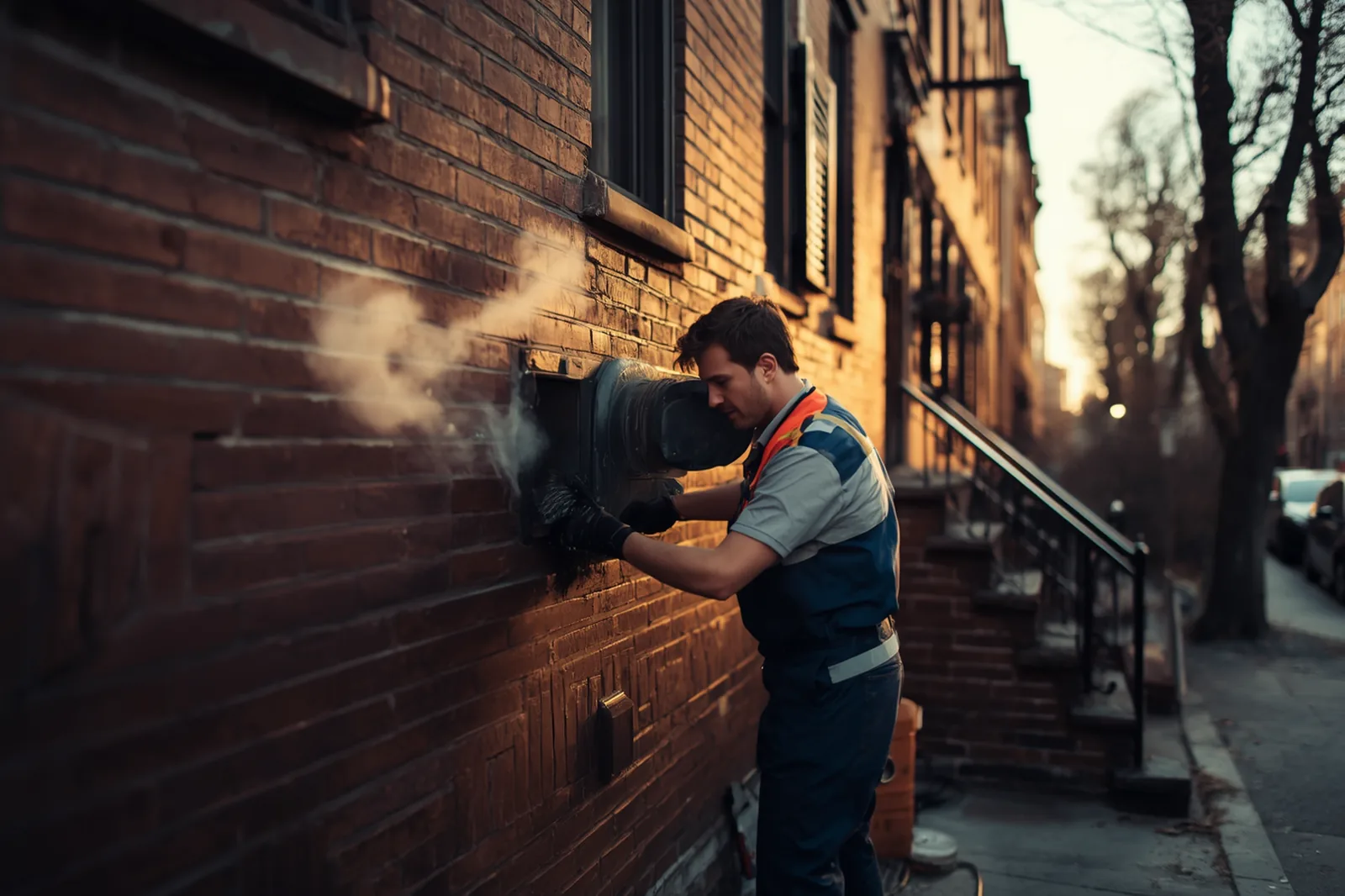
Dryer Vent Cleaning in Crown Heights
Brooklyn dryers often vent through long runs to a rear wall, a roof, or a basement areaway. We clean the full duct from the dryer connection to the exterior hood and show you the airflow difference.
Why does my dryer take two cycles to dry clothes?
In most cases the exhaust duct is restricted by lint, not the dryer. A clogged vent traps moist air in the drum, so clothes stay damp and the machine runs hot. Signs are a hot laundry room, a burning smell, lint around the exterior hood, or a flap that no longer opens. Cleaning the full duct run, not just the hose behind the dryer, usually restores normal drying time.
When a Crown Heights dryer vent needs cleaning
Dryer lint is dry, fine and flammable, and it packs into every elbow and screw point in the duct. Short runs clog slowly; the long, multi-elbow runs typical of Brooklyn rowhouses and basement laundry rooms clog fast and are the ones that start fires.
- Clothes need a second cycle, or the dryer shuts off on a thermal limit mid-cycle
- The laundry area is noticeably hot and humid while the dryer runs
- A burnt or scorched smell near the dryer, even with a clean lint screen
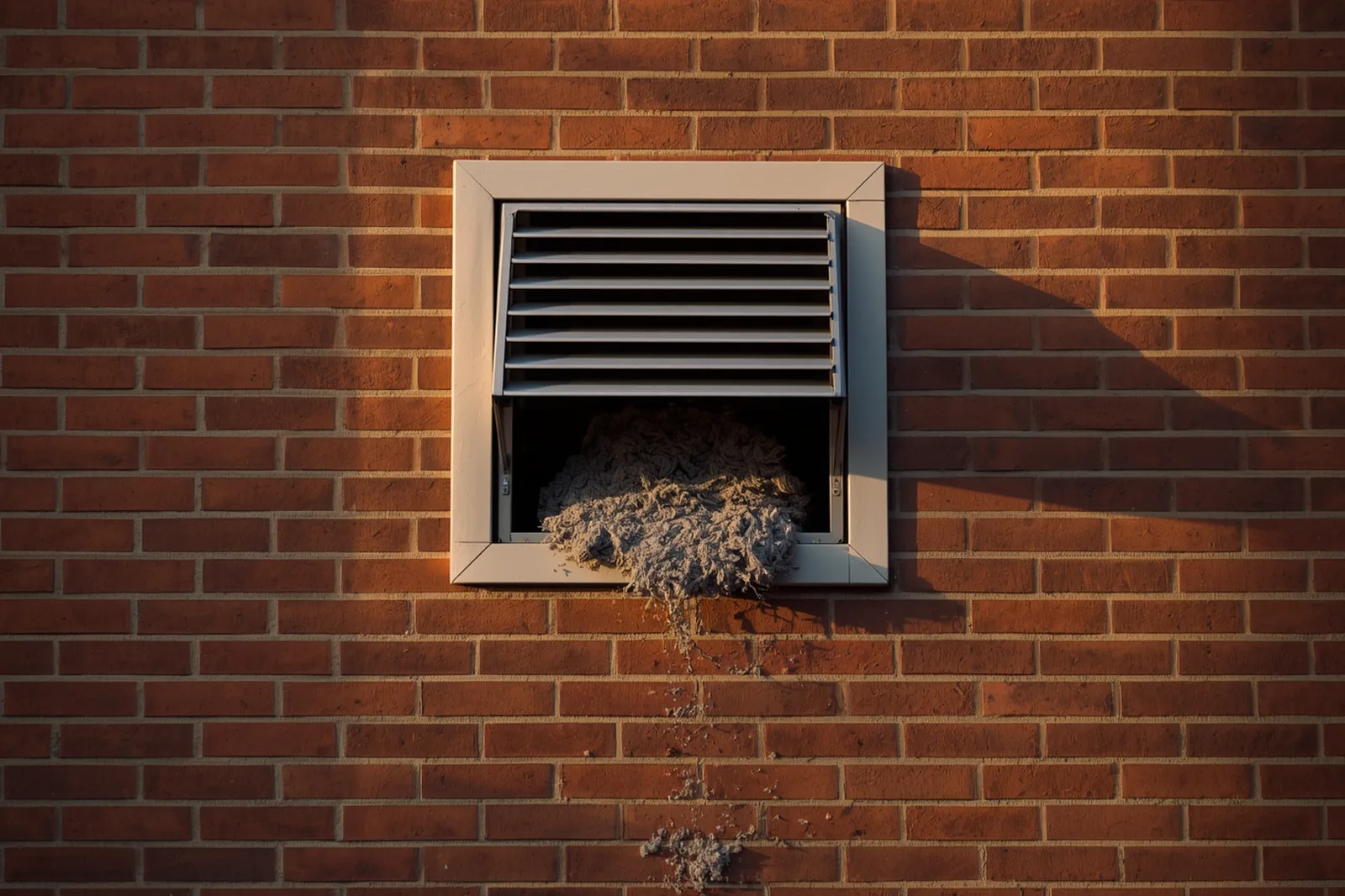
- Lint collecting on the exterior hood, the roof, or in the rear yard below the outlet
- The exterior flap stays shut while the dryer runs, or no air comes out
- You moved into a rowhouse or apartment and nobody can say when the duct was last cleaned
- A booster fan was added years ago because the run was too long, and it is now noisy or silent
How we clean a dryer duct in a rowhouse or basement
- Trace the runWe find where the duct actually goes, which in a Crown Heights rowhouse can mean through a cellar, up a wall chase, and out the rear or onto a flat roof. We note the length, the number of elbows, and the duct material. Many older installs used foil or vinyl flex, which we flag.
- Protect the space and pull the dryerDrop cloths go down, the dryer is disconnected from gas or power as needed and moved, and the transition hose is removed. We inspect the dryer's own lint trap housing and clear what we can reach there.
- Rotary brush with vacuum captureA rotary brush on flexible rods runs the full length of the duct while a HEPA vacuum pulls lint back toward us. We work from the inside out and, where the termination is reachable, from the outside in so both ends of long runs are fully cleared.
- Clear the termination and check the damperWe clean the exterior hood, free the flap or louver, and remove any screen that has been added, since screens trap lint and are not permitted on dryer terminations. On roof terminations we confirm the cap is intact and not holding water.
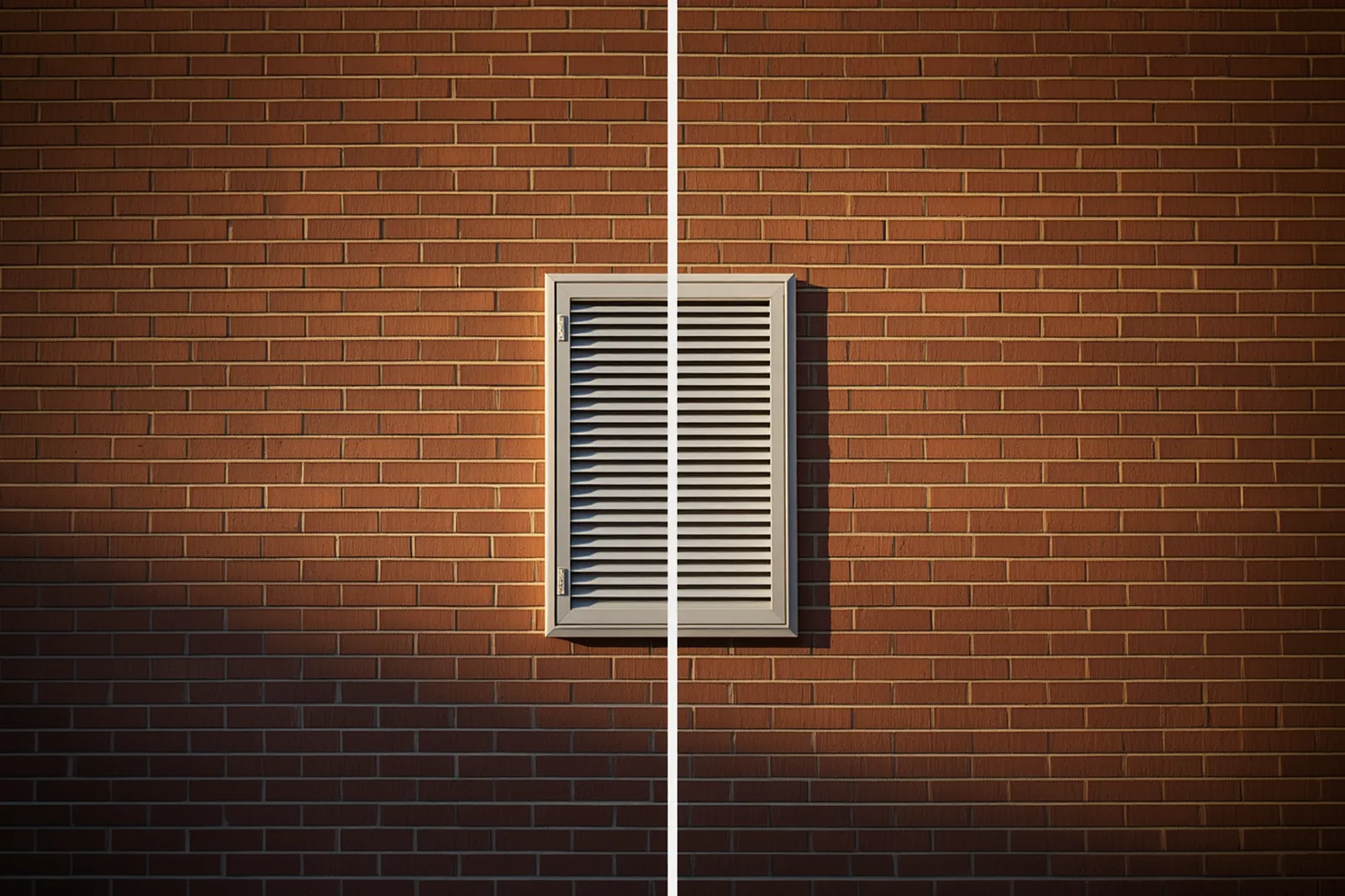
- Reconnect and verify airflowThe dryer goes back with a proper semi-rigid transition, clamped not screwed, and we run it to confirm strong airflow at the exterior. You see the before and after, and we tell you if the duct material or route itself should be replaced.
Duct materials and what we recommend
The duct carries hot, moist, lint-laden air, so material matters as much as cleaning. Smooth-wall rigid metal duct with the fewest elbows is what every dryer manufacturer specifies, and it is what we recommend for the long runs we see here. We do not install products we would not put in our own homes.
- Rigid galvanized or aluminum duct with smooth interior walls as the standard for any concealed run
- Semi-rigid aluminum transition between the dryer and the wall, kept short and unkinked
- Foil and vinyl flex duct flagged for replacement: it sags, traps lint in the ribs, and is not rated for concealed runs
- Foil tape or clamps at joints, never screws, which snag lint
- Exterior hoods with a free-swinging damper and no screen, with a bird guard only where it does not restrict airflow

Rowhouses, co-ops, and stacked apartment laundries
In a single-family limestone rowhouse or a Victorian frame house, the dryer is usually in the cellar or a rear kitchen extension and vents through the rear wall or up to the roof. These are long runs with several elbows, so an annual cleaning makes sense and a rigid duct upgrade often pays for itself in drying time. We handle gas and electric dryers and shut off and relight gas appliances properly.
Pre-war apartment buildings and co-ops on and around Eastern Parkway present shared vertical ducts or individual in-unit dryers vented into shafts. Those need coordination with building management, and in some cases the building's engineer. We clean individual unit runs and common terminations and provide a service record the board or managing agent can keep on file.
Representative dryer vent work in Crown Heights
- Project type
- Full duct cleaning and transition replacement in a cellar laundry
- Area
- Crown Heights, Brooklyn
- Problem
- A recent job type we handle is a limestone rowhouse with a gas dryer in the cellar vented through a long run to the rear yard, where clothes needed two cycles and the exterior flap had stopped moving.
- Solution
- We traced the run, found crushed foil flex behind the dryer and a packed elbow at the wall, cleaned the full duct with rotary brushes and HEPA capture from both ends, cleared the hood, and replaced the transition with semi-rigid aluminum. Airflow at the hood was strong on the test run and drying time returned to a single cycle.
- Materials
Before and After
Dryer Vent Cleaning Across Our Service Area
Related Services
Why Brooklyn dryer runs clog faster
Crown Heights homes were not built with dryers in mind. Laundry ended up wherever there was a water line and a drain, which in a rowhouse means the cellar, far from an exterior wall. The resulting ducts run long, turn often, and were frequently installed with whatever flex hose was on the truck.
Rear yard terminations on this block pattern sit low, where leaves and snow pile up, and roof terminations on flat roofs take wind-driven rain from nor'easters. Both conditions let moisture into the duct, and wet lint packs hard. We see identical setups in East Flatbush and Flatbush frame houses, where basement laundries are the norm.
Frequently Asked Questions
How often should a dryer vent be cleaned in a Brooklyn rowhouse?
Once a year is the right interval for most households, and more often for a large family or a run with several elbows. Short, straight runs through an exterior wall can go longer. If you notice longer drying times or a hot laundry room before the year is up, that is the duct telling you it is time. A cleaning takes less time than the second cycles you are running.
Is a clogged dryer vent actually a fire risk?
Yes, and it is one of the more common causes of residential fires. Lint is fine, dry fuel, and a restricted duct makes the dryer run hotter than designed. The combination of heat and packed lint at an elbow or a crushed section is where ignition starts. Cleaning the full duct and replacing flex with rigid metal removes both parts of that equation.
Can you clean a dryer vent that goes up to a flat roof?
Yes. Roof terminations are common on rowhouses where the rear wall is not an option, and we clean those from the dryer end and from the roof. We check the roof cap for a working damper, standing water and bird nesting while we are up there. Flat roofs with parapets give safe footing; where access is only by hatch, we plan for that.
Do you work on gas dryers?
We do. The gas supply is shut at the appliance valve before we move the dryer, and the flexible gas connector is inspected when we reconnect it. If the connector is old, kinked or an uncoated brass type, we tell you to have it replaced. We relight and test the dryer before we leave.
Should I replace the foil hose behind my dryer?
Almost always yes. Foil and vinyl flex duct sags, kinks behind the dryer, and holds lint in its ribs, and most manufacturers do not permit it. A short semi-rigid aluminum transition from the dryer to the wall, with rigid duct in the wall and ceiling, is what we install. It costs little and it is where most of the restriction we find lives.
What drives the cost of dryer vent cleaning?
Run length, the number of elbows, the termination location, and the condition of the duct. A short wall run with easy access is the simplest. Long cellar-to-roof runs, roof-only access, or a duct that has to be partially replaced add time. We give you the figure after tracing the run and before any work starts.
Cut drying time and the fire risk in one visit
Call (347) 555-0188 to book dryer vent cleaning in Crown Heights or nearby Brooklyn neighborhoods. We clean the full run, not just the hose behind the machine.